
No products in the cart.
Return To Shop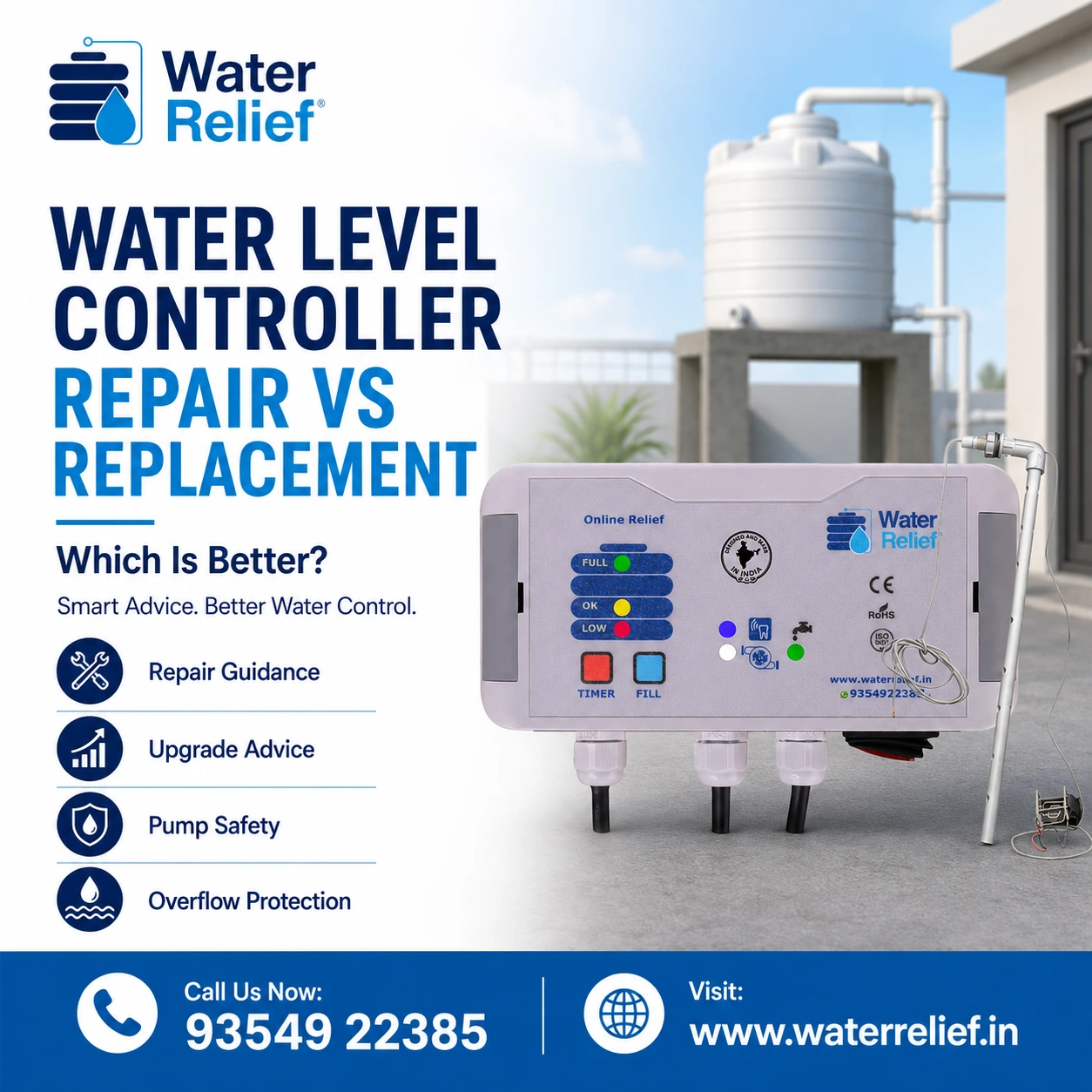
Water Level Controller Repair vs Replacement is an important decision when your system stops starting the pump, fails to provide automatic cut-off, or causes tank overflow. A minor sensor or wiring fault may only need repair, while an old or repeatedly failing controller may be better replaced with a modern system.
An automatic water level controller makes daily water management easier by operating the pump according to tank levels. However, voltage fluctuations, damaged sensors, loose wiring, moisture, or worn electrical components can affect its performance over time.
Common Signs That a Water Level Controller Needs Attention
A faulty automatic water level controller may not stop working completely. Sometimes it gives small warning signs before a major failure.
Common symptoms include:
- Pump not starting automatically
- Pump not stopping when the tank becomes full
- Water overflowing from the overhead tank
- Wrong tank-level indication
- Controller turning on and off repeatedly
- Pump running even when the source tank is empty
- Burnt smell from the control panel
- Loose or damaged sensor wires
- Manual mode working but automatic mode failing
- Controller lights blinking incorrectly
- Frequent fuse or MCB tripping
- Delayed pump response
Ignoring these signs can lead to water wastage, motor damage and higher electricity consumption.
When Water Level Controller Repair Is Better
Repair is usually the better choice when the controller is relatively new and the problem is limited to a specific part.
Minor Sensor Problems
Water-level sensors may become dirty, loose or damaged over time. Mineral deposits, corrosion or broken wires can affect their performance.
If the controller panel is working properly, replacing or cleaning the sensors may solve the problem at a low cost.
Loose Wiring or Connection Faults
Vibration, moisture and poor installation can loosen electrical connections.
A technician can inspect:
- Sensor wires
- Pump connections
- Relay terminals
- Power supply wires
- Starter connections
- Earthing
If the fault is limited to loose wiring, repair is usually sufficient.
Faulty Relay or Contactor
The relay or contactor controls the pump’s switching operation. If it becomes weak or damaged, the pump may not start or stop correctly.
Replacing this component may restore the water pump controller without replacing the complete system.
Power Supply Component Failure
Voltage fluctuations can damage small components such as:
- Fuse
- Transformer
- Capacitor
- Power-supply board
- Surge-protection component
If the main circuit board is still healthy, replacing the damaged part can be economical.
Controller Is Still Under Warranty
If the device is covered by warranty, repair should normally be the first option.
Contact the manufacturer or authorised service provider instead of opening the controller through an untrained electrician.
Repair Cost Is Low
Repair makes sense when the cost is significantly lower than the price of a new controller and the remaining system is in good condition.
When Replacement Is Better
Replacement becomes the better choice when the controller is old, repeatedly failing or unable to provide important safety features.
The Controller Is Very Old
Older controllers may have outdated components and limited protection.
Even after repair, another part may fail soon. In such cases, installing a modern automatic water pump controller may provide better reliability.
Frequent Breakdowns
If the controller has already been repaired several times, continuing to spend on repairs may not be economical.
Frequent failures also increase the risk of:
- Tank overflow
- Water shortage
- Pump damage
- Electrical faults
- Resident complaints
A new controller may reduce these ongoing problems.
Burnt or Severely Damaged Circuit Board
A burnt circuit board is one of the strongest signs that replacement may be necessary.
Repairing a heavily damaged board may provide only a temporary solution. Moisture, short circuits or voltage surges can damage several components together.
Spare Parts Are Not Available
Some older models use discontinued relays, sensors or circuit boards.
If genuine parts are unavailable, local modifications may reduce safety and reliability. Replacement is usually better in this situation.
Missing Dry Run Protection
An old controller may only provide automatic tank filling without source-water protection.
A modern system with dry run protection can stop the pump when the underground tank or water source becomes empty.
This feature can help prevent:
- Motor overheating
- Seal damage
- Pump failure
- High repair costs
If the old controller cannot support this safety feature, replacement may be worthwhile.
Water Tank Auto Cut Off Is Unreliable
The water tank auto cut off feature must work reliably. If the pump occasionally continues running after the tank becomes full, water can overflow.
Repeated cut-off failure may indicate a serious problem in the controller, relay, sensors or wiring. If repairs do not solve it permanently, replacement is safer.
The Existing Controller Does Not Match the Pump
The controller must match the pump’s:
- Horsepower
- Voltage
- Single-phase or three-phase supply
- Starter type
- Load capacity
An undersized controller may overheat or fail repeatedly. In this case, replacing it with a correctly rated model is necessary.
Your Water System Has Changed
A property may later add:
- Another overhead tank
- A larger pump
- A borewell
- Municipal water detection
- Separate tenant tanks
- A balancing tank
- An underground tank
An old controller may not support the new arrangement. Upgrading the complete water automation system can provide better control.
Repair vs Replacement Comparison
| Factor | Repair | Replacement |
|---|---|---|
| Initial cost | Usually lower | Higher initially |
| Suitable for | Minor faults | Major or repeated faults |
| Controller age | Newer systems | Old or outdated systems |
| Reliability | Depends on fault quality | Usually better |
| Spare parts | Must be available | New parts included |
| Safety features | Existing features remain | Modern protection available |
| Warranty | Limited repair warranty | New product warranty |
| Long-term value | Good for small faults | Better for recurring problems |
Questions to Ask Before Making a Decision
Before choosing repair or replacement, ask the following questions:
How Old Is the Controller?
A controller that is only two or three years old may be worth repairing. A very old controller with repeated problems may be better replaced.
What Is the Exact Fault?
Do not replace the controller before checking whether the problem is actually caused by:
- Faulty sensor
- Broken wire
- Pump starter
- MCB
- Contactor
- Source tank
- Power supply
Sometimes the controller is not the real cause.
How Much Will the Repair Cost?
Compare the repair cost with the price of a new system.
If the repair cost is close to a large portion of the replacement cost, a new controller may provide better value.
Is the Repair Permanent?
Ask the technician whether the repair is expected to last or whether it is only a temporary adjustment.
Does the Existing System Provide Pump Protection?
A basic controller may stop overflow but may not protect the pump from dry running.
A new controller with better safety features may justify replacement.
Is the Current System Suitable for Your Tanks?
The controller should match the number of tanks, pumps and water sources.
Importance of Professional Diagnosis
A water controller should not be repaired based only on guesswork.
The actual problem may be in the pump, starter, sensors, cables or tank arrangement. Therefore, a technician should test the complete system before recommending replacement.
A professional inspection should include:
- Input voltage
- Controller output
- Relay operation
- Pump current
- Sensor continuity
- Cable condition
- Earthing
- Tank-level response
- Manual and automatic modes
- Dry-run function
- Full-level cut-off
This prevents unnecessary replacement and helps identify safety risks.
How Faulty Controllers Cause Water Overflow
A faulty controller may fail to receive the full-level sensor signal. As a result, the pump continues running even after the overhead tank is full.
A reliable water tank overflow solution requires all three parts to work correctly:
- Full-level sensor
- Controller circuit
- Pump-switching relay or contactor
If any one of these fails, overflow can occur.
Therefore, repeated overflow should be inspected immediately.
How Controller Problems Affect the Pump
A damaged controller can harm the water pump in several ways.
It may:
- Start the pump too frequently
- Run the motor without water
- Fail to stop the pump
- Create repeated on-off cycling
- Send unstable output
- Overload the relay
- Operate during low voltage
A reliable controller protects both the tank and the pump.
Benefits of Replacing an Old Controller
Replacing an outdated system can provide:
- Reliable automatic pump operation
- Better water tank auto cut off
- Dry run protection
- Clear tank-level indicators
- Improved electrical safety
- Support for multiple tanks
- Manual override
- Better pump compatibility
- New warranty
- Lower risk of overflow
A new controller can also improve overall water automation system performance.
How to Extend the Life of a Water Level Controller
Regular maintenance can reduce repair and replacement needs.
Keep the Controller Dry
Install the unit in a protected location away from rain, leakage and excessive moisture.
Check Sensor Wires
Inspect wires for cuts, loose joints and corrosion.
Use Proper Earthing
Correct earthing protects the controller and pump from electrical faults.
Install Voltage Protection
Voltage fluctuations can damage electronic components. A suitable voltage-protection device may be useful.
Clean Tank Sensors
Mineral deposits and dirt can affect sensor performance.
Match the Controller with the Pump
Never use an undersized controller for a high-capacity pump.
Test Automatic Functions
Periodically check:
- Low-level start
- Full-level stop
- Dry-run protection
- Manual override
- Pump indicators
Why Choose Water Relief?
Water Relief provides water-level controller inspection, automation solutions and pump-control systems for residential and commercial properties.
A suitable Water Relief solution can help:
- Automate pump operation
- Prevent tank overflow
- Protect pumps from dry running
- Reduce water and electricity wastage
- Manage underground and overhead tanks
- Replace outdated controllers
- Support multiple tanks and pumps
- Improve overall water management
The controller should be selected according to the pump specifications, tank arrangement and water source.
Conclusion
The choice between repairing and replacing a controller depends on the fault, age, repair cost and condition of the complete system.
Repair is generally suitable for minor problems such as damaged sensors, loose wiring, faulty relays or small power-supply issues. However, replacement is usually better when the controller is old, repeatedly failing, severely burnt or missing important safety features.
A modern automatic water level controller can provide reliable pump control, dry run protection and an effective water tank overflow solution.
Before making a decision, get the complete tank, sensor, controller and pump system professionally inspected.
FAQs
1. Is it worth repairing an old water level controller?
It may be worth repairing if the fault is minor and spare parts are available. However, repeated breakdowns usually make replacement more practical.
2. How do I know whether the sensor or controller is faulty?
A technician can test the sensor continuity, wiring, controller input and relay output to identify the actual fault.
3. Why does the pump continue running after the tank becomes full?
The cause may be a damaged full-level sensor, broken wire, faulty relay or controller circuit problem.
4. Should I replace a controller that does not have dry run protection?
Replacement may be beneficial because dry run protection helps prevent pump overheating and motor damage when the source tank is empty.
5. Can a faulty controller damage the water pump?
Yes. It may cause dry running, frequent switching or continuous operation, which can reduce pump life.
6. Is professional inspection necessary before replacement?
Yes. The fault may be in the sensors, wiring, starter or pump instead of the controller, so proper diagnosis can prevent unnecessary expense.
About author

Related posts
A Water automation system for food processing units helps manage storage tanks and pumps without constant manual checking. It monitors water levels, starts the pump... Continue reading
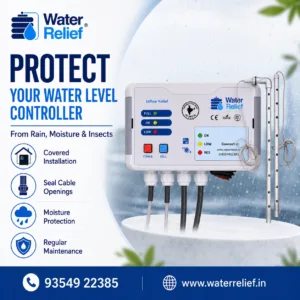
To protect water level controller from rain moisture and insects, the controller should be installed in a dry, covered and properly ventilated location. Direct rain,... Continue reading
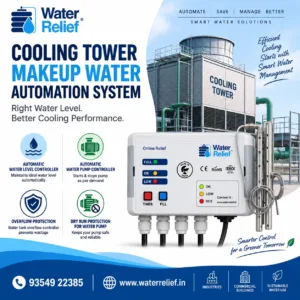
A Cooling tower makeup water automation system helps maintain the required water level in cooling tower tanks without constant manual checking. It monitors the water... Continue reading
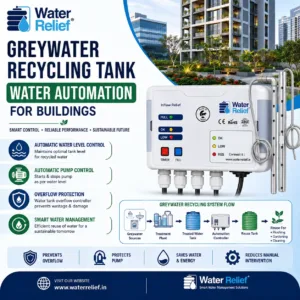
Greywater recycling tank water automation for buildings helps manage recycled water storage and pump operation without constant manual checking. It monitors tank levels, starts the... Continue reading
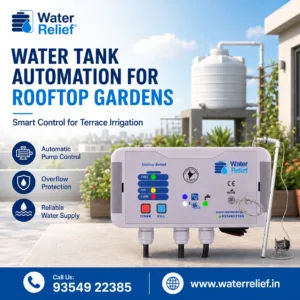
Water tank automation for rooftop gardens helps maintain a reliable water supply for plants without constant manual checking. It monitors the tank level, starts the... Continue reading

Add comment