
No products in the cart.
Return To Shop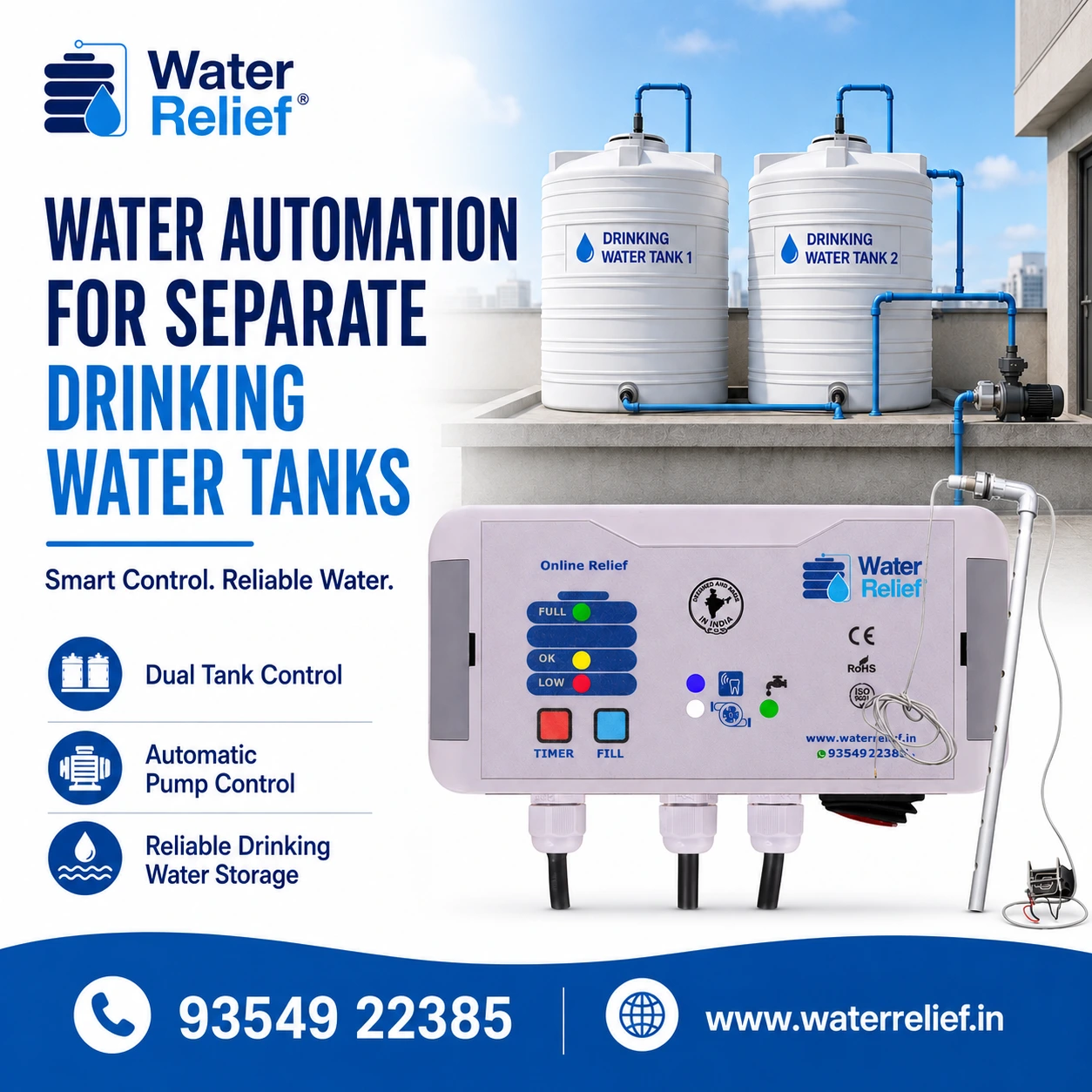
Water automation for separate drinking water tanks helps manage multiple potable-water storage tanks without constant manual checking. The system monitors tank levels, starts the pump when water is needed and stops it once the selected tank reaches the required level.
Many homes, offices, schools, hospitals, hotels and commercial buildings keep drinking water in separate tanks. Therefore, one tank may become low while another remains full. If these tanks are managed manually, staff may need to check levels repeatedly.
A suitable Water automation system can make this process easier. As a result, separate drinking water tanks can be filled more reliably and with less manual pump operation.
Why Separate Drinking Water Tanks Need Automation
Separate drinking water tanks are often used to keep potable water apart from general utility water.
For example, a building may have:
- One drinking water tank
- One general-use water tank
- Separate tanks for different floors
- Separate tanks for staff and visitors
- One main potable-water tank and one reserve tank
Because these tanks may have different usage levels, manual filling can become difficult.
Common problems include:
- One drinking water tank becoming empty
- Another tank remaining full
- Pump running longer than required
- Staff forgetting to stop the pump
- Uneven water distribution
- Frequent manual level checking
- Water wastage
- Higher electricity use
Therefore, an Automatic water level controller can help maintain a more balanced water supply.
What Is a Drinking Water Tank Level Controller?
A Drinking water tank level controller monitors the water level inside potable-water storage tanks.
Sensors are placed at selected low and full levels.
When a tank becomes low, the controller checks whether enough water is available from the source. If water is available, the pump starts automatically.
Once the tank reaches the selected full level, the pump stops.
The basic process is:
Tank low → Source checked → Pump starts → Tank fills → Full level reached → Pump stops
Therefore, the system reduces the need for regular manual pump switching.
Role of an Automatic Water Level Controller
An Automatic water level controller continuously monitors tank levels.
Depending on the setup, it may detect:
- Low water level
- Normal level
- Full tank condition
- Source tank low level
These signals help the controller decide when to start or stop the pump.
As a result, drinking water tanks can be managed according to actual demand.
Role of an Automatic Water Pump Controller
An Automatic water pump controller connects the tank sensors with the pump starter.
It can manage:
- Automatic pump start
- Automatic pump stop
- Full-tank cut-off
- Pump-running indication
- Source-water monitoring
- Manual override
- Multiple tank support
However, the controller should always match the pump horsepower, voltage, phase and starter type.
Benefits of Water Automation for Separate Drinking Water Tanks
Maintains Reliable Water Availability
Drinking water should remain available throughout the day.
When the tank becomes low, the system starts filling automatically. Therefore, the risk of sudden water shortage is reduced.
Reduces Manual Monitoring
Staff do not need to check each tank repeatedly.
This is especially useful in buildings where drinking water tanks are installed on terraces, in service areas or on different floors.
Prevents Unnecessary Pump Operation
The pump runs only when a tank needs water.
Once the required level is reached, the controller stops the motor. As a result, unnecessary pump run time is reduced.
Supports Better Water Distribution
Separate tanks may serve different areas.
Automation can help ensure that each tank receives water according to its own level. Therefore, one tank does not have to remain empty while another is already full.
Saves Electricity
Automatic control reduces unnecessary pump operation.
Since the motor stops when the tank becomes full, electricity use can be more efficient.
Supports Smart Water Management
Smart water management means controlling water according to actual need.
By monitoring separate drinking water tanks, the system can reduce manual decisions and create a more organised water-distribution process.
Dual Tank Water Level Controller for Drinking Water
Many buildings use two separate potable-water tanks.
A Dual tank water level controller can monitor both tanks together.
The system can be configured so that:
- Tank 1 fills when it becomes low
- Tank 2 fills when it becomes low
- The pump stops when the selected tank becomes full
- One tank can be given priority if required
Therefore, both tanks can be managed through one planned control system.
Water Automation for Separate Floor Tanks
Some buildings use separate drinking water tanks for different floors.
For example:
- Ground floor tank
- First floor tank
- Second floor tank
- Staff floor tank
- Guest floor tank
A customised Water automation system can monitor these tanks individually.
As a result, water can be supplied according to each floor’s actual requirement.
Water Automation for Offices
Office buildings may keep potable water in a separate storage tank.
This tank may supply:
- Drinking-water stations
- Pantry areas
- Staff kitchens
- Water dispensers
Automatic tank control helps maintain a reliable stored-water level without regular manual checking.
Water Automation for Schools and Institutions
Schools and institutions may have separate drinking water storage for students and staff.
A controller can help maintain the selected tank level throughout the day.
Therefore, staff can spend less time checking tanks and operating pumps.
Water Automation for Hotels and Guest Facilities
Hotels may use separate potable-water tanks for guest areas, kitchens or staff sections.
Because demand can change throughout the day, automatic filling can help maintain a more reliable water supply.
Water Automation for Hospitals
Hospitals and healthcare facilities may use dedicated potable-water storage for selected areas.
In such cases, tank automation can help maintain water availability. However, the water quality, storage tank hygiene and local potable-water requirements must also be followed.
Smart Water Management for Multiple Drinking Water Tanks
A Smart water management setup may include:
- Multiple potable-water tanks
- Separate floor tanks
- Main source tank
- Reserve tank
- Automatic valves
- Water-level sensors
- Pump controller
This helps the system manage water according to tank level rather than manual schedules.
Features to Check Before Installation
Number of Tanks
The controller should support the actual number of drinking water tanks.
Pump Capacity
The controller must match the pump horsepower and electrical load.
Full-Level Cut-Off
The system should stop the pump automatically when the selected tank becomes full.
Source-Water Monitoring
The controller should check whether enough water is available before starting the pump.
Manual Override
Manual mode is useful during cleaning, maintenance and testing.
Status Indicators
Useful indicators may include:
- Tank low
- Tank full
- Pump running
- Source tank low
- Power available
- Manual or automatic mode
Installation Requirements
Before installation, a technician should inspect the complete drinking water system.
Important details include:
- Number of tanks
- Tank capacities
- Water source
- Pump horsepower
- Pump phase
- Pipe layout
- Distance between tanks
- Floor-wise water demand
- Tank filling priority
- Existing starter panel
- Sensor positions
Therefore, proper planning is important before selecting the controller.
Why Choose Water Relief?
Water Relief provides automatic tank and pump-control solutions for residential, commercial and institutional water-management applications.
A properly selected system can help:
- Automate drinking water tank filling
- Start and stop pumps automatically
- Manage separate tanks
- Reduce manual checking
- Support dual tank control
- Improve water distribution
- Save electricity
- Support smarter water management
The controller should be selected according to the tank layout, pump specifications and building requirements.
Conclusion
Water automation for separate drinking water tanks helps manage potable-water storage with less manual effort.
An Automatic water level controller monitors tank levels, while an Automatic water pump controller controls the pump according to actual demand.
For buildings with two tanks, a Dual tank water level controller can help manage both tanks more efficiently. As a result, the complete Water automation system can support more reliable and organised Smart water management.
FAQs
1. What is water automation for separate drinking water tanks?
It is a system that monitors separate potable-water tanks and automatically controls the pump according to each tank’s level.
2. Can one controller manage two drinking water tanks?
Yes. A dual tank water level controller can monitor and manage two tanks according to their individual water levels.
3. Can separate tanks for different floors be automated?
Yes. A customised system can manage separate floor-wise tanks if the pipeline and pump setup supports it.
4. Does the system reduce manual work?
Yes. It reduces the need to check tank levels and switch the pump on or off repeatedly.
5. Can the controller work with a reserve drinking water tank?
Yes. The system can be configured to manage a main tank and a reserve tank according to the required filling priority.
6. Is professional installation recommended?
Yes. A technician should inspect the tanks, pump, pipes, sensors and electrical system before installation.
About author

Related posts
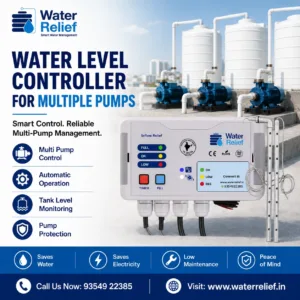
A Water Level Controller for Multiple Pumps is a smart solution for buildings, societies, factories, hotels, schools, hospitals and commercial spaces where more than one... Continue reading
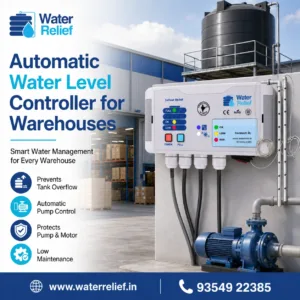
Automatic Water Level Controller for Warehouses is a smart solution for commercial spaces that need regular water supply. Warehouses use water for cleaning, staff washrooms,... Continue reading

Best Water Pump Controller for Commercial Kitchens is important for restaurants, hotels, cloud kitchens, cafes, bakeries and catering units. A commercial kitchen needs water all... Continue reading
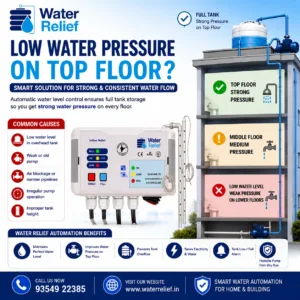
Low water pressure on the top floor is a common problem in many Indian homes, apartments, and residential buildings. People living on upper floors often... Continue reading
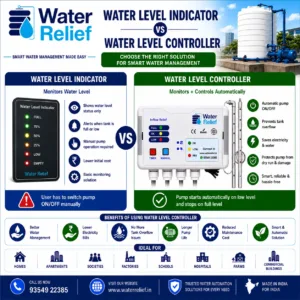
Water management has become an important part of modern homes, apartments, factories, schools, hospitals, and commercial buildings. Manual pump operation often causes water wastage, electricity... Continue reading

Add comment