
No products in the cart.
Return To Shop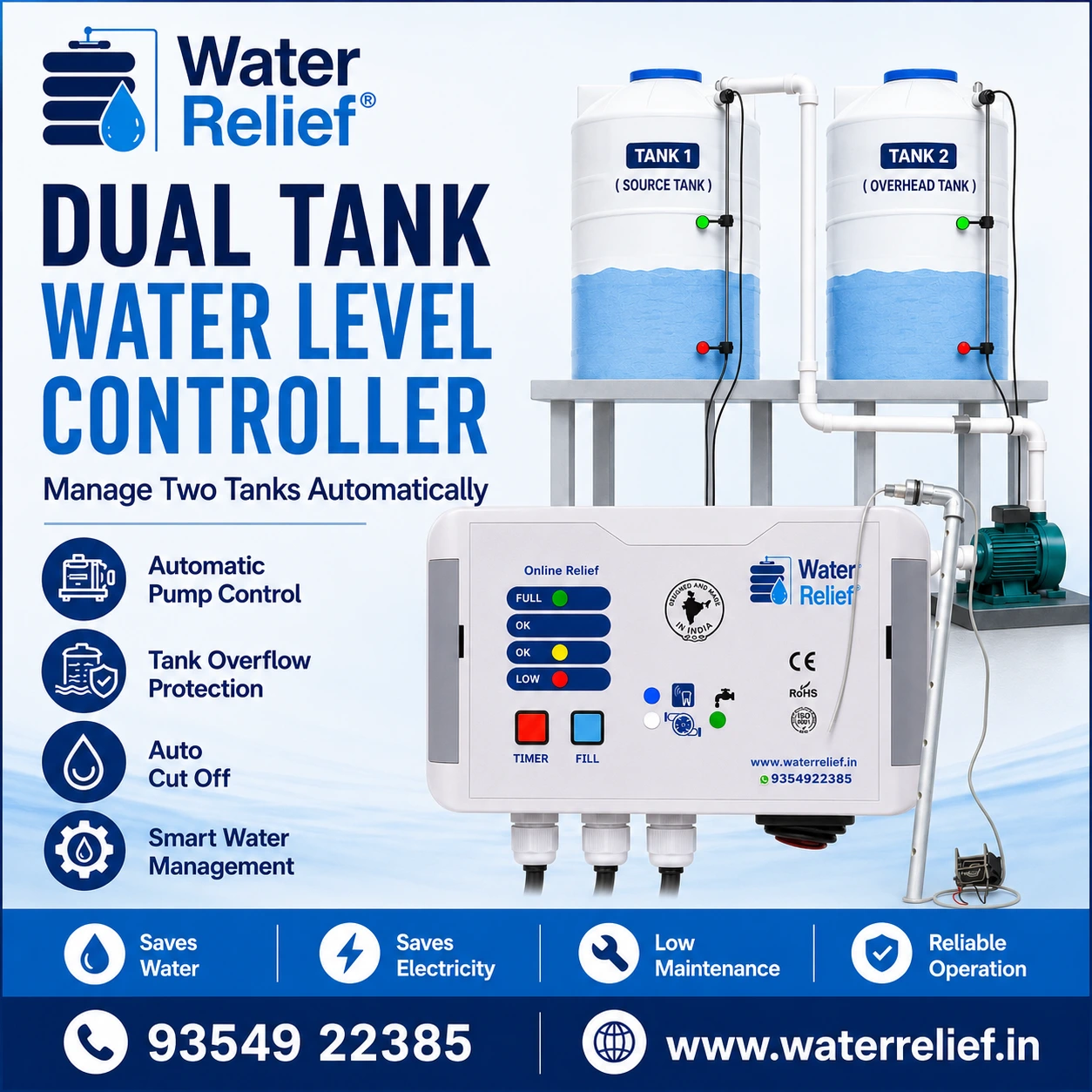
A Dual Tank Water Level Controller helps manage two water tanks automatically without regular manual checking. It monitors the water level in both tanks and controls the pump according to the selected tank arrangement.
This system is useful for homes, builder floors, villas, offices, schools, hotels, commercial buildings and societies where water must move between two tanks. For example, a property may have one underground tank and one overhead tank. In another setup, there may be two overhead tanks supplied by one common pump.
Without automation, someone must repeatedly check both tanks and operate the pump manually. However, this can lead to overflow, water shortage, unnecessary electricity use and pump damage.
A reliable Automatic Water Level Controller simplifies the complete process. It starts the pump when water is required and stops it once the selected tank becomes full. Therefore, the property receives better water availability with less manual work.
What Is a Dual Tank Water Level Controller?
A Dual Tank Water Level Controller is an electronic water-management system designed to monitor and control two tanks.
The controller receives signals from water-level sensors installed inside both tanks. Based on these signals, it automatically operates the water pump.
The system can be used in different arrangements, such as:
- One underground tank and one overhead tank
- One source tank and two destination tanks
- Two overhead tanks supplied by one pump
- Two tanks for separate floors
- Two tanks for residential and commercial areas
- Municipal supply tank and borewell tank
- Main tank and reserve tank
Therefore, the exact working method depends on the property’s water layout.
How Does a Dual Tank Water Level Controller Work?
The controller continuously monitors the low and full levels of both tanks.
In a standard underground-to-overhead arrangement, the system works in the following way:
Overhead tank low → Underground tank checked → Pump starts → Overhead tank fills → Full level detected → Pump stops
If the underground tank does not have sufficient water, the controller prevents the pump from starting. This helps protect the motor from dry running.
In a two-overhead-tank arrangement, the controller may fill one tank first and then the second tank. Alternatively, both tanks may be managed according to their individual water levels.
Why Two Tanks Need Automatic Water Management
Managing two tanks manually can be confusing. One tank may be full while the other remains empty. Similarly, a pump may continue running because the user cannot see the tank level clearly.
Common problems include:
- One tank overflowing
- The second tank remaining empty
- Pump running longer than required
- Residents forgetting to stop the motor
- Unequal water distribution
- Frequent pump switching
- Higher electricity use
- Water shortage during peak hours
- Difficulty managing separate floors
- Pump damage due to an empty source tank
A properly configured Dual Tank Water Level Controller helps prevent these issues.
Benefits of a Dual Tank Water Level Controller
Automatic Control of Two Tanks
The biggest advantage is that both tanks can be monitored automatically.
The controller checks the water level in each tank and operates the pump according to the required sequence. Therefore, users do not need to climb to the terrace or inspect both tanks repeatedly.
Prevents Water Tank Overflow
Overflow is a common problem when multiple tanks are connected to one pump.
A full-level sensor stops water supply when the selected tank becomes full. As a result, the controller acts as an effective water tank overflow solution.
It helps prevent:
- Water wastage
- Damp walls
- Roof damage
- Slippery floors
- Higher water bills
- Excess drainage load
- Damage to external paint
Provides Water Tank Auto Cut Off
The water tank auto cut off feature stops the pump once the tank reaches the selected maximum level.
This automatic cut-off is useful when:
- The tank is installed on a high terrace
- The pump switch is far from the tank
- The property has multiple floors
- Water filling happens at night
- Staff members manage the pump
- Tank levels cannot be checked visually
Therefore, the motor does not continue running after the tank becomes full.
Reduces Manual Pump Operation
Manual control depends on residents, guards, employees or maintenance staff.
However, people may forget to switch the pump on or off. An automated controller removes this dependency and manages the pump according to actual water levels.
Supports Better Water Distribution
In multi-floor homes or commercial buildings, two tanks may supply different areas.
A dual-tank system can help maintain water in both tanks. Therefore, one floor or section does not remain without water while the second tank is full.
Saves Water
Even a few minutes of daily overflow can waste a large amount of water over time.
The controller stops the pump at the correct level. Consequently, water is used more efficiently.
Saves Electricity
A pump that continues running after the tank becomes full wastes electricity.
An Automatic Water Pump Controller operates the motor only when water transfer is required. Therefore, it helps reduce unnecessary energy use.
Protects the Pump
If the source tank becomes empty, the pump may run without water.
A suitable controller prevents pump operation when water is unavailable. This helps reduce overheating, motor damage and repair expenses.
Improves Pump Life
Unnecessary pump operation, repeated manual switching and dry running can reduce motor life.
Automation supports safer pump operation. As a result, the system may improve reliability and reduce frequent maintenance.
Common Dual Tank Configurations
One Underground Tank and One Overhead Tank
This is the most common arrangement.
The underground tank stores incoming water, while the pump transfers it to the overhead tank.
The controller starts the pump when the overhead tank becomes low. It stops the pump when the overhead tank becomes full or when the underground tank becomes empty.
One Underground Tank and Two Overhead Tanks
Many builder floors, villas and commercial properties have two rooftop tanks.
The system may fill:
- Tank 1 first and Tank 2 second
- The lower tank first
- The tank with greater water demand first
- Both tanks through separate valves
- Both tanks according to independent sensors
A customised controller should be selected for this arrangement.
Two Separate Tanks for Different Floors
Some buildings have separate tanks for separate families or floors.
A dual-tank controller can manage both tanks and reduce disputes over water supply.
Main Tank and Reserve Tank
Some properties keep one main tank and one backup tank.
The controller can manage the main tank regularly and use the reserve tank when required.
Municipal Tank and Borewell Tank
A property may store municipal water in one tank and borewell water in another.
The automation system can be designed according to the priority of each water source.
Automatic Water Pump Controller for Two Tanks
An Automatic Water Pump Controller connects the tank sensors with the pump starter.
It manages important pump functions such as:
- Automatic start
- Automatic stop
- Full-tank cut-off
- Low-level detection
- Source-water monitoring
- Dry-run prevention
- Manual override
- Pump-running indication
- Tank-status indication
The controller must match the pump horsepower, phase, voltage and starter type.
Smart Water Management for Multiple Tanks
Modern smart water management is not limited to switching a motor on and off.
A complete system can monitor the source tank, destination tanks and pump status together. It can also prioritise tanks according to the property’s requirements.
Depending on the selected setup, it may support:
- Automatic filling sequence
- Independent tank monitoring
- Shared pump control
- Multiple water sources
- Automatic cut-off
- Water shortage indication
- Manual operation
- Timer-based control
- Municipal supply detection
- Borewell integration
Therefore, dual-tank automation improves the complete movement of water across the property.
Dual Tank Controller for Homes and Villas
Large homes and villas may have separate tanks for:
- Main house
- Servant quarters
- Garden supply
- Guest floor
- Swimming pool support
- Kitchen and utility area
A dual-tank controller helps ensure that both tanks receive water according to their usage.
This reduces manual work and improves the reliability of the household water system.
Dual Tank Controller for Builder Floors
Builder-floor properties often have separate tanks for different floors.
Without automation, residents may face confusion regarding pump operation. One tank may overflow while another remains empty.
A dual-tank controller helps manage the tanks according to actual water levels. Therefore, residents receive a more balanced water supply.
Dual Tank Controller for Commercial Properties
Commercial buildings may use separate tanks for:
- Office areas
- Washrooms
- Pantry
- Fire-support storage
- Staff facilities
- Service areas
- Landscaping
Automatic control helps reduce the workload of maintenance teams and prevents unnecessary overflow.
Dual Tank Controller for Schools and Institutions
Schools, colleges, hospitals and public facilities often have more than one water tank.
The water demand may remain high throughout the day. Therefore, manual control can be unreliable.
A dual-tank water system helps maintain water availability for washrooms, kitchens, hostels, laboratories and staff areas.
Dual Tank Controller for Hotels and Guest Houses
Hotels and guest houses require a continuous water supply for rooms, kitchens, laundry and housekeeping.
Two tanks may serve different sections of the property. A smart controller helps maintain both tanks and reduce the risk of water shortage.
Water Tank Overflow Solution for Two Tanks
A reliable water tank overflow solution is essential when two tanks are connected to one pump.
The full-level sensors stop or redirect the filling process according to the selected system design.
This helps prevent:
- Overflow from one tank
- Continuous pump operation
- Unequal filling
- Water wastage
- Roof and wall damage
- Excess maintenance work
The control logic should be planned carefully because every two-tank arrangement is different.
Water Tank Auto Cut Off for Dual Tank Systems
The water tank auto cut off function is activated when the full-level sensor detects water.
In a dual-tank system, the controller may:
- Stop the pump after both tanks are full
- Stop filling one tank and move to the second
- Close an automatic valve
- Prioritise the low tank
- Stop the pump if the source tank becomes empty
Therefore, the cut-off system should be configured according to the tank arrangement.
Manual Operation vs Dual Tank Automation
| Manual Tank Management | Dual Tank Automation |
|---|---|
| Requires checking both tanks | Monitors both tanks automatically |
| High overflow risk | Provides automatic cut-off |
| One tank may remain empty | Manages filling according to need |
| Depends on residents or staff | Reduces manual dependency |
| Pump may run unnecessarily | Pump runs only when required |
| Difficult to manage separate floors | Supports multi-floor tank systems |
| Higher water wastage | Improves water efficiency |
Therefore, automation is more practical for properties with two tanks.
Features to Check Before Buying a Dual Tank Controller
Number of Tanks Supported
Confirm that the controller is designed to manage two tanks in the required arrangement.
Pump Compatibility
The controller should match the pump horsepower, voltage, phase and starter type.
Tank Filling Sequence
Check whether the system can fill one tank first, both tanks independently or both according to priority.
Source Tank Protection
The controller should stop the pump when the underground or source tank becomes empty.
Overflow Protection
Both destination tanks should have reliable full-level sensors.
Automatic Cut-Off
The system should provide immediate pump cut-off when the selected filling condition is completed.
Manual Override
Manual control is useful during servicing, testing and emergencies.
Status Indicators
The controller should display:
- Tank 1 low
- Tank 1 full
- Tank 2 low
- Tank 2 full
- Pump running
- Source tank empty
- Power supply
- Fault condition
Durable Sensors
The sensors should be suitable for long-term water-tank installation.
Installation Requirements
Before installation, a technician should inspect the complete water setup.
The following details should be checked:
- Number of tanks
- Tank capacity
- Tank location
- Water source
- Pump horsepower
- Pump phase
- Existing starter panel
- Pipe arrangement
- Distance between tanks
- Building height
- Water filling sequence
- Separate floor requirements
- Municipal supply timings
- Borewell connection
- Required automatic valves
Correct installation is important because dual-tank systems may have different control requirements.
Why Choose Water Relief?
Water Relief provides automatic water-management solutions for homes, builder floors, villas, societies, institutions and commercial properties.
A suitable Water Relief system can help:
- Manage two tanks automatically
- Prevent tank overflow
- Provide automatic pump control
- Support water tank auto cut off
- Protect the pump from dry running
- Improve water distribution
- Reduce manual monitoring
- Save water and electricity
- Support customised tank arrangements
The controller can be selected according to the number of tanks, pump specifications, water source and property requirements.
Conclusion
A Dual Tank Water Level Controller provides an efficient way to manage two water tanks automatically.
It monitors the water level in both tanks, starts the pump when required and stops it after the selected tank becomes full. Therefore, it reduces overflow, water wastage and manual work.
An Automatic Water Pump Controller also helps protect the pump and improve electricity efficiency. Moreover, the water tank auto cut off feature ensures that the motor does not continue running unnecessarily.
By installing a customised system, homes, builder floors, villas and commercial buildings can achieve better smart water management and a more reliable water supply.
FAQs
1. What is a Dual Tank Water Level Controller?
It is an automatic system that monitors and manages the water level in two tanks. It controls the pump according to the tank conditions.
2. Can one controller manage two overhead tanks?
Yes. A customised controller can manage two overhead tanks through separate sensors and a suitable filling sequence.
3. Can it manage one underground tank and one overhead tank?
Yes. This is one of the most common dual-tank arrangements.
4. How does the controller prevent tank overflow?
The full-level sensor detects when a tank becomes full. After that, the controller stops the pump or redirects water according to the setup.
5. What is water tank auto cut off?
Water tank auto cut off automatically stops the pump when the tank reaches the selected full level.
6. Can the controller fill one tank before the other?
Yes. The system can be configured to prioritise one tank and then fill the second tank.
About author

Related posts
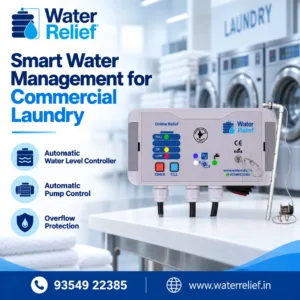
Smart water management for commercial laundry helps control water tanks and pumps automatically in facilities where water demand remains high throughout the day. The system... Continue reading
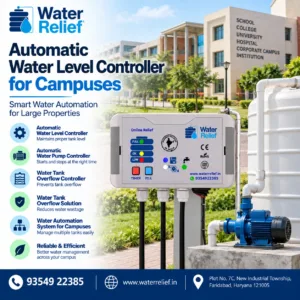
An Automatic water level controller for campuses helps manage multiple water tanks and pumps across large properties without repeated manual checking. It monitors tank levels,... Continue reading
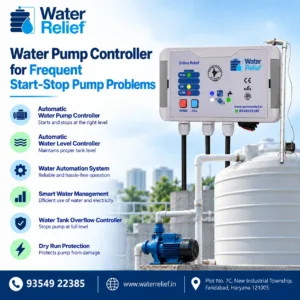
A Water Pump Controller for Frequent Start-Stop Pump Problems helps manage pump operation more efficiently when a motor keeps switching on and off repeatedly. Frequent... Continue reading
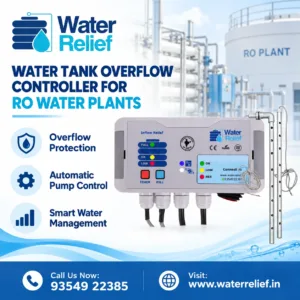
A Water tank overflow controller for RO water plants helps stop unnecessary water loss by monitoring tank levels and controlling pump operation automatically. It detects... Continue reading
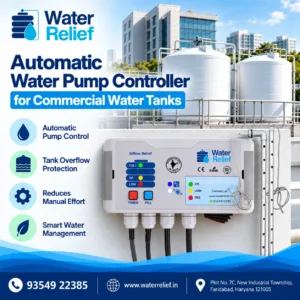
An Automatic Water Pump Controller for Commercial Water Tanks helps manage large water tanks without repeated manual switching. It monitors the tank level, starts the... Continue reading

Add comment