
No products in the cart.
Return To Shop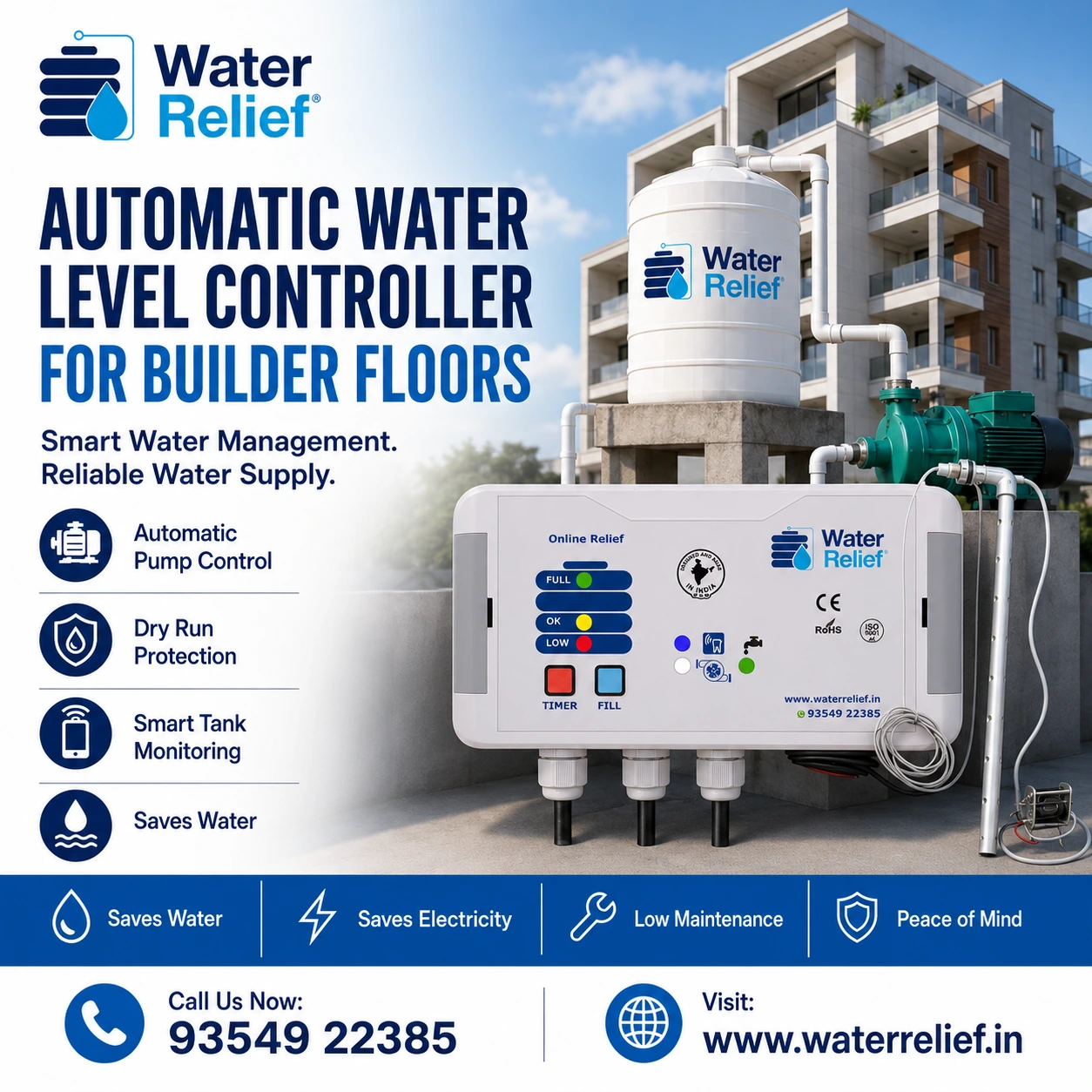
An Automatic Water Level Controller for Builder Floors helps manage water tanks and pumps without regular manual checking. It automatically starts the pump when the overhead tank becomes low. Moreover, it stops the pump once the tank reaches the required level.
Builder floors often have separate families living on different levels. Therefore, water demand can change throughout the day. One floor may use more water, while another may require less. As a result, the overhead tank may become empty suddenly or overflow when the pump is left running.
A reliable automatic water level controller solves these problems. It maintains the water level, reduces water wastage and helps provide a more dependable water supply to every floor.
Why Builder Floors Need Automatic Water Management
Builder-floor properties usually have two, three or four residential levels. Some buildings use one common overhead tank, while others have separate tanks for different floors.
Managing these tanks manually can become difficult. Residents may depend on guards, tenants, owners or maintenance workers to operate the water pump.
Common water-management problems in builder floors include:
- Rooftop tank overflow
- Water shortage on upper floors
- Pump running without water
- Residents forgetting to switch off the motor
- High electricity consumption
- Unequal water supply between floors
- Frequent disputes over pump operation
- Multiple tanks requiring regular monitoring
- Pump damage due to dry running
A properly installed water automation system can reduce these problems and improve daily water management.
What Is an Automatic Water Level Controller?
An automatic water level controller is an electronic system that monitors water levels inside underground and overhead tanks.
Sensors are installed at selected low and full levels. These sensors communicate with the controller panel.
When the overhead tank becomes low, the system checks whether sufficient water is available in the underground tank. If water is available, the controller starts the pump.
Once the overhead tank becomes full, the controller stops the motor automatically.
The basic working process is:
Overhead tank low → Water source checked → Pump starts → Tank fills → Full level detected → Pump stops
Therefore, residents do not need to operate the pump manually.
How an Automatic Water Pump Controller Works
An Automatic Water Pump Controller manages the pump according to the water level in both the source and destination tanks.
When the Overhead Tank Becomes Low
The low-level sensor sends a signal to the controller. After that, the system checks the underground tank or source tank.
When Water Is Available
If sufficient water is available, the controller starts the pump automatically.
During Tank Filling
The pump transfers water to the rooftop tank. Meanwhile, the controller continues monitoring the level.
When the Tank Becomes Full
The full-level sensor sends a stop signal. Consequently, the pump switches off immediately.
When the Source Tank Is Empty
If the underground tank has insufficient water, the controller prevents the pump from running. This feature is known as dry run protection.
Benefits of an Automatic Water Level Controller for Builder Floors
Prevents Rooftop Tank Overflow
Overflow is a common issue in multi-floor residential buildings. Someone may start the pump and forget to switch it off.
The controller automatically stops the pump when the tank becomes full. Therefore, it works as an effective water tank overflow solution.
It helps prevent:
- Water wastage
- Damp exterior walls
- Roof damage
- Slippery terraces
- Higher water bills
- Drainage overflow
- Paint and plaster damage
Ensures Better Water Availability
Residents living on upper floors often face water shortages when the overhead tank becomes empty.
An automatic controller starts filling the tank as soon as the water reaches the low level. As a result, the building receives a more consistent water supply.
Reduces Manual Pump Operation
Manual pump control creates confusion in builder-floor properties. One resident may believe another person has already switched on the pump.
Automation removes this dependency. Therefore, no resident needs to monitor the motor continuously.
Protects the Pump
A water pump may become damaged if it runs when the underground tank is empty.
A controller with dry run protection detects the absence of water and stops the pump. Consequently, it helps reduce overheating and motor failure.
Saves Water
A tank that overflows for several minutes can waste a significant amount of water.
An automatic cut-off system stops the pump at the correct level. Therefore, the property can reduce unnecessary water loss.
Saves Electricity
A manually operated pump may continue running even after the tank becomes full.
In contrast, an automatic controller switches off the motor immediately. As a result, electricity is used only when water transfer is required.
Reduces Resident Disputes
Water pump operation can become a common source of disagreement in builder floors.
Automation creates a fixed and dependable system. Therefore, residents do not need to argue over who should start or stop the pump.
Improves Pump Life
Unnecessary running, dry operation and frequent manual switching can reduce motor life.
An automated controller improves pump operation and helps reduce avoidable wear.
Water Automation System for Multiple Builder Floors
Some builder-floor buildings use one common tank for all floors. Others use separate tanks for each floor.
Therefore, the water automation system should be selected according to the actual building layout.
Possible configurations include:
- One underground tank and one overhead tank
- One underground tank and multiple overhead tanks
- One common pump for all floors
- Separate pumps for different floors
- Borewell and municipal water supply
- Tanker water storage
- Separate tanks for owners and tenants
- One rooftop tank with divided water lines
A site inspection helps determine the correct controller arrangement.
Automatic Water Level Controller for Multiple Tanks
A standard controller may be suitable for one underground tank and one overhead tank.
However, builder floors with multiple tanks may require a customised system.
A multi-tank controller can help manage:
- Separate tanks for different floors
- Multiple overhead tanks
- One source tank with several destination tanks
- Multiple pumps
- Different filling priorities
- Independent water-level monitoring
Therefore, the controller should be selected according to the number of tanks and pumps.
Water Tank Overflow Solution for Builder Floors
A dependable water tank overflow solution prevents water from flowing continuously from the rooftop tank.
Overflow can cause more than water wastage. It may also damage walls, ceilings, external paint and terrace flooring.
The controller stops the motor as soon as the full-level sensor detects water. Therefore, the tank does not continue filling beyond the selected level.
This solution is especially useful when:
- The pump switch is located on the ground floor
- The tank is installed on a high terrace
- Residents cannot see the tank directly
- Pump responsibility changes between tenants
- Water supply comes at irregular times
- The building has multiple families
Dry Run Protection for Water Pumps
Dry running occurs when the pump operates without sufficient water.
This may happen when:
- The underground tank becomes empty
- Municipal water is unavailable
- The borewell water level becomes low
- A pipeline is blocked
- The source valve is closed
Without protection, the pump may overheat and become damaged.
A controller with dry run protection stops the motor when the source tank does not have enough water. Therefore, it helps protect the pump and reduce repair costs.
Smart Water Systems for Modern Builder Floors
Modern Smart Water Systems offer more than simple pump switching.
Depending on the selected model, the system may provide:
- Automatic pump start
- Automatic pump stop
- Tank full indication
- Tank low indication
- Source water monitoring
- Dry-run protection
- Overflow prevention
- Manual override
- Timer-based pump control
- Multiple tank management
- Pump-running status
These features help residents manage water more efficiently.
Automatic Pump Control for Municipal Water Supply
Many builder floors depend on municipal water that arrives during fixed or irregular hours.
In such cases, residents may miss the supply if nobody is available to operate the pump or valve.
An automatic water controller can support incoming water management according to the property setup.
It may help:
- Detect water availability
- Fill the underground tank
- Prevent underground tank overflow
- Reduce dependency on residents
- Improve water storage during supply hours
Therefore, both incoming and outgoing water can be managed through a suitable system.
Automatic Pump Control for Borewell Water
Some builder floors use borewell or submersible pumps.
A suitable controller should be selected after checking:
- Pump horsepower
- Single-phase or three-phase supply
- Existing starter panel
- Borewell depth
- Water availability
- Tank capacity
- Pump operating time
- Required safety features
The controller can stop the borewell pump when the tank becomes full. Moreover, it can provide suitable protection based on the pump arrangement.
Manual Pump Operation vs Automatic Water Control
| Manual Pump Operation | Automatic Water Control |
|---|---|
| Requires regular checking | Works automatically |
| Higher overflow risk | Stops at the full level |
| Depends on residents | Reduces resident dependency |
| Pump may run dry | Can provide dry-run protection |
| Higher electricity wastage | Pump runs only when required |
| Water shortage may be noticed late | Starts filling at the low level |
| Difficult with multiple tanks | Can support customised tank control |
Therefore, automatic control is more practical for shared residential properties.
Features to Check Before Choosing a Controller
Pump Compatibility
The controller should match the pump horsepower, phase, voltage and starter type.
Number of Tanks
The system should support the actual number of underground and overhead tanks.
Number of Floors
The building height and water demand should be considered before choosing the pump and controller.
Dry Run Safety
The system should stop the pump when the underground tank becomes empty.
Overflow Protection
The controller should provide reliable automatic cut-off when the rooftop tank becomes full.
Manual Override
A manual mode is useful during servicing, testing or emergency situations.
Durable Sensors
The sensors should be suitable for long-term use inside water tanks.
Clear Indicators
The controller should clearly display pump and tank conditions.
Installation Requirements
Before installation, the complete building water system should be inspected.
The technician should check:
- Number of builder floors
- Underground tank capacity
- Overhead tank capacity
- Number of overhead tanks
- Pump horsepower
- Pump phase
- Existing starter panel
- Distance between tanks
- Building height
- Pipeline arrangement
- Water source
- Average daily water use
- Municipal water timings
- Separate floor requirements
Correct planning helps ensure reliable performance and better pump protection.
Why Choose Water Relief?
Water Relief provides automatic water-management solutions for homes, builder floors, villas, societies and commercial properties.
A suitable Water Relief solution can help:
- Automate water pump operation
- Prevent rooftop tank overflow
- Protect the pump from dry running
- Manage underground and overhead tanks
- Reduce resident dependency
- Save water and electricity
- Improve water availability
- Support multiple tanks and pumps
- Simplify building water management
The system can be selected according to the building size, tank arrangement, water source and pump specifications.
Conclusion
An Automatic Water Level Controller for Builder Floors offers a reliable solution for managing shared water tanks and pumps.
It starts the motor when the overhead tank becomes low and stops it once the tank becomes full. Therefore, it reduces overflow, water wastage and manual work.
Moreover, an Automatic Water Pump Controller with dry run protection helps protect the motor when the underground tank becomes empty.
By installing modern Smart Water Systems, builder-floor residents can achieve better water availability, lower electricity use and more efficient water management.
FAQs
1. What is an Automatic Water Level Controller for Builder Floors?
It is a system that monitors water levels and automatically starts or stops the pump according to the tank condition.
2. Can one controller manage multiple builder floors?
Yes. A customised controller can manage one or multiple tanks depending on the building’s water arrangement.
3. How does the system prevent tank overflow?
The full-level sensor detects when the tank reaches the selected level. After that, the controller switches off the pump automatically.
4. Can the controller protect the pump from dry running?
Yes. A suitable system can stop the pump when the underground tank or water source becomes empty.
5. Is it suitable for three-floor or four-floor buildings?
Yes. However, the pump and controller should be selected according to the building height, water demand and tank capacity.
6. Can separate tanks for different floors be automated?
Yes. A customised multi-tank controller can manage separate tanks and pumps for different floors.
About author

Related posts
Smart water management for commercial laundry helps control water tanks and pumps automatically in facilities where water demand remains high throughout the day. The system... Continue reading
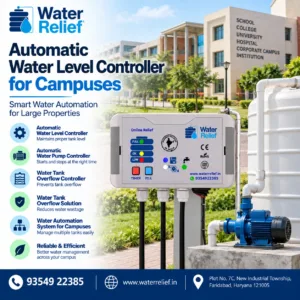
An Automatic water level controller for campuses helps manage multiple water tanks and pumps across large properties without repeated manual checking. It monitors tank levels,... Continue reading
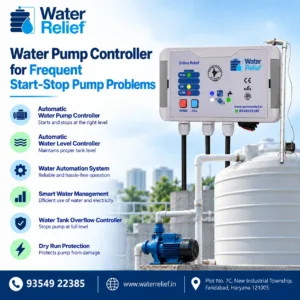
A Water Pump Controller for Frequent Start-Stop Pump Problems helps manage pump operation more efficiently when a motor keeps switching on and off repeatedly. Frequent... Continue reading
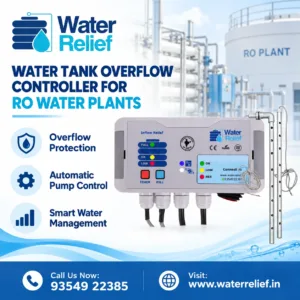
A Water tank overflow controller for RO water plants helps stop unnecessary water loss by monitoring tank levels and controlling pump operation automatically. It detects... Continue reading
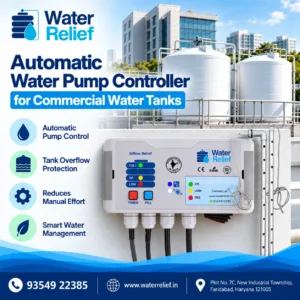
An Automatic Water Pump Controller for Commercial Water Tanks helps manage large water tanks without repeated manual switching. It monitors the tank level, starts the... Continue reading

Add comment