
No products in the cart.
Return To Shop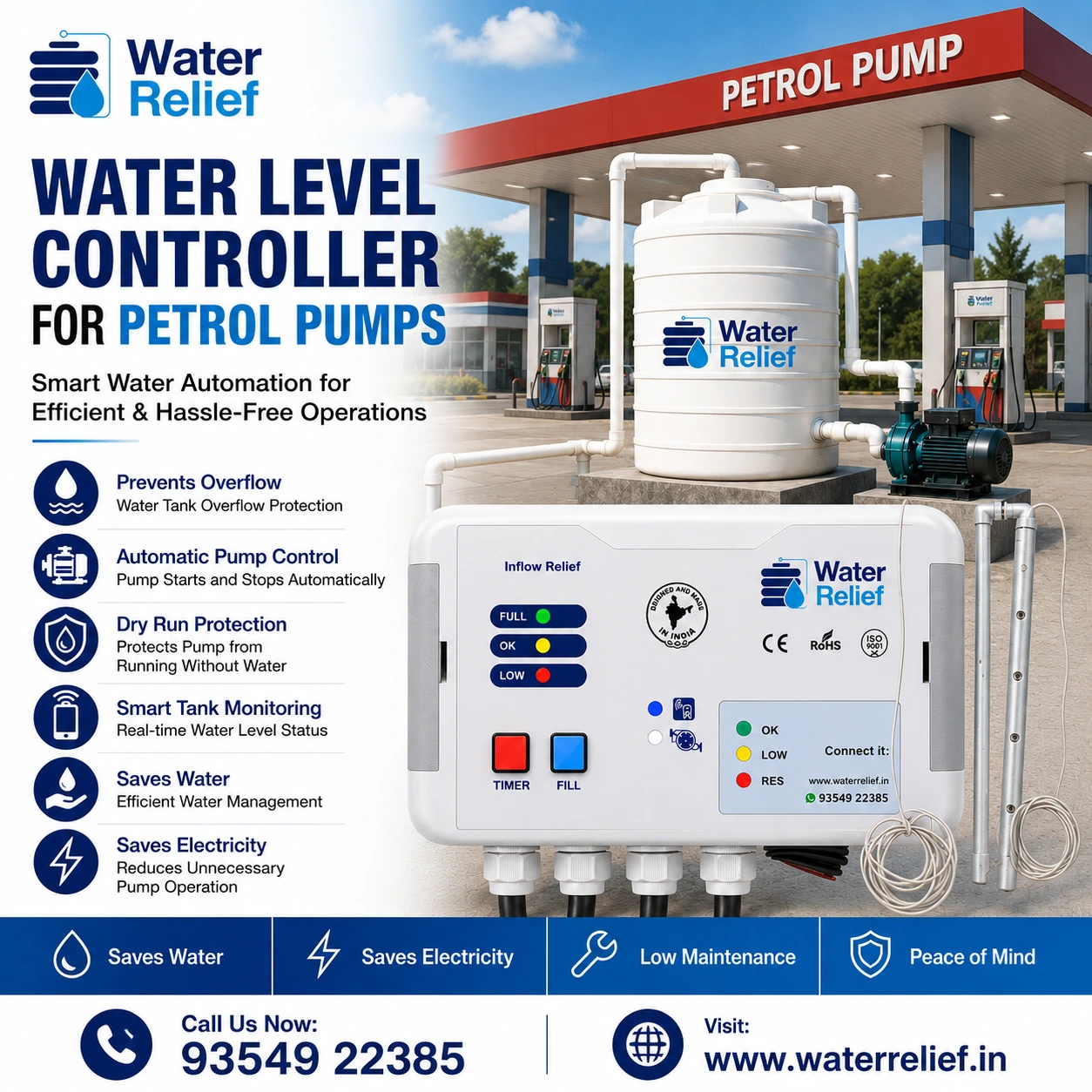
A reliable Water Level Controller for Petrol Pumps helps manage daily water requirements without manual pump operation. Petrol pumps need a continuous water supply for washrooms, staff areas, vehicle-cleaning sections, landscaping and general premises maintenance. However, traditional water management often causes tank overflow, pump dry running, water shortage and unnecessary electricity consumption.
With Petrol Pump Water Automation, the water pump automatically starts when the tank level becomes low and stops when the tank is full. As a result, petrol pump owners can reduce water wastage, protect the pump and maintain a dependable water supply throughout the day.
Why Do Petrol Pumps Need Water Automation?
Petrol pumps operate for long hours. Some stations remain open 24 hours a day. Therefore, depending on staff members to check water tanks and operate pumps manually is not always practical.
Several problems can occur with manual water management:
- The pump may remain switched on after the tank becomes full.
- Water may overflow from the overhead tank.
- The pump may run without water.
- Underground tanks may become empty.
- Washrooms may face water shortages.
- Staff may forget to switch the pump on or off.
- Electricity and water bills may increase.
A reliable Petrol Pump Water Management System can prevent these problems by controlling the pump according to the actual water level.
What Is a Water Level Controller for Petrol Pumps?
A Water Level Controller for Petrol Pumps is an automated system that monitors the water level inside underground and overhead tanks. It sends commands to the pump based on preset water levels.
When the overhead tank reaches a low level, the controller starts the water pump. Once the tank becomes full, it automatically switches the pump off.
The system can also prevent the pump from starting when the underground tank does not have enough water. Therefore, it protects the motor from dry running and possible damage.
How Does Petrol Pump Water Automation Work?
A typical Petrol Pump Water Automation system uses water-level sensors, a control panel and an automatic pump controller.
The process is simple:
- Sensors continuously monitor the overhead tank.
- When the water reaches the low-level sensor, the controller checks the underground tank.
- If sufficient water is available, the pump starts automatically.
- The tank continues filling without manual intervention.
- When the water reaches the full-level sensor, the pump stops.
- If the underground tank becomes empty, the pump remains protected from dry running.
This automated process provides a regular water supply while reducing human error.
Role of an Automatic Water Level Controller
An Automatic Water Level Controller removes the need to manually monitor water tanks. It continuously checks the water level and operates the pump only when required.
The controller is useful for petrol pumps because staff members are usually occupied with customers, fuel dispensing, billing and other operational responsibilities.
With an automatic controller, employees do not have to climb rooftops or repeatedly check whether the overhead tank is full.
Major Functions of the Controller
An automatic controller can provide:
- Automatic pump start
- Automatic pump stop
- Low water level detection
- Full tank detection
- Overflow prevention
- Dry-run protection
- Pump overload protection, depending on the model
- Water level indication
- Manual and automatic operating modes
These features help maintain an efficient and safe water supply system.
Benefits of an Automatic Water Pump Controller
An Automatic Water Pump Controller manages the pump according to the water demand. It prevents unnecessary motor operation and helps improve the life of the pump.
1. Prevents Water Overflow
Overflowing water tanks are a common problem at commercial premises. Water may continue flowing for several minutes before someone notices it.
An automatic controller stops the pump immediately after the tank becomes full. Therefore, it provides dependable Water Tank Overflow Protection.
2. Protects the Pump from Dry Running
Dry running happens when a pump operates without sufficient water. It may cause overheating, seal damage or motor failure.
The controller checks the water availability in the source tank before starting the pump. If the tank is empty, the pump does not operate.
3. Reduces Manual Work
Staff members do not need to switch the pump on or off manually. Consequently, they can focus on petrol pump operations and customer service.
4. Saves Electricity
The pump operates only when water is required. It does not continue running after the tank becomes full. Therefore, unnecessary electricity consumption is reduced.
5. Maintains Continuous Water Supply
Automatic control helps ensure that the overhead tank does not remain empty. This is especially important for washrooms and other customer facilities.
Smart Water Management for Petrol Pumps
Smart Water Management involves using automation to monitor water usage, tank levels and pump operation more effectively.
Instead of reacting after a water shortage or overflow occurs, petrol pump owners can use an automated system to prevent the problem in advance.
A smart system can help manage:
- Underground water storage tanks
- Overhead water tanks
- Staff washrooms
- Public washrooms
- Vehicle-cleaning areas
- Office and pantry areas
- Landscaping water requirements
- Utility water supply
However, emergency fire-water systems should always be designed and maintained according to applicable safety regulations and approved technical standards.
Smart Water Tank Monitoring
Smart Water Tank Monitoring allows petrol pump operators to understand the current water level without manually checking the tank.
Depending on the selected system, the control panel may display different tank conditions, such as:
- Tank empty
- Low water level
- Medium water level
- Tank full
- Pump running
- Source tank empty
- Dry-run condition
- Fault or overload indication
This visibility helps staff identify water-related issues quickly.
Water Tank Overflow Protection
Water overflow can damage walls, ceilings, electrical areas and surrounding surfaces. It can also create slippery conditions and increase maintenance requirements.
A reliable Water Tank Overflow Protection system stops the pump at the correct time. It prevents water from continuously flowing out of the tank.
The system is particularly useful when the tank is located on the roof or in an area that staff cannot easily monitor.
Problems Caused by Tank Overflow
Regular water overflow may lead to:
- Water wastage
- Dampness on walls
- Roof damage
- Slippery surfaces
- Increased electricity bills
- Unnecessary pump usage
- Complaints from nearby properties
- Higher maintenance costs
Automation prevents these problems before they become serious.
Water Saving Automation System
A Water Saving Automation System helps petrol pumps use water more responsibly. It does not create additional water, but it reduces avoidable wastage caused by overflow and inefficient pump operation.
The system can support water conservation by:
- Stopping the pump when the tank is full
- Preventing repeated manual pump operation
- Reducing unnoticed overflow
- Maintaining the required water level
- Protecting stored water during limited supply
- Preventing pump operation when the source tank is empty
Therefore, the system can support both operational efficiency and responsible water use.
Suitable Pumps for Petrol Pump Water Automation
A water level controller can be configured for different types of water pumps, depending on the site requirements.
It may support:
- Single-phase pumps
- Three-phase pumps
- Monoblock pumps
- Submersible pumps
- Jet pumps
- Booster pumps
- Multiple pump systems
The correct controller should be selected according to the pump horsepower, power supply, number of tanks and operating conditions.
Water Automation for Multiple Tanks
Some petrol pumps have more than one overhead tank or underground water source. In such cases, a standard single-tank controller may not be sufficient.
A customised Petrol Pump Water Management System can control:
- One underground tank and one overhead tank
- One underground tank and multiple overhead tanks
- Multiple pumps
- Separate washroom and utility tanks
- Alternate pump operation
- Main and standby pump systems
A proper site assessment helps determine the most suitable automation arrangement.
Features to Look for in a Water Level Controller
Before choosing a controller, petrol pump owners should consider the following features:
Automatic and Manual Mode
The system should offer automatic operation along with a manual override for maintenance or emergencies.
Dry-Run Protection
The controller should prevent the pump from running when the underground tank or water source is empty.
Overflow Protection
The pump should stop automatically when the overhead tank reaches the full level.
Pump Compatibility
The system must be compatible with the pump type, horsepower and electrical phase.
Durable Sensors
Sensors should be suitable for long-term use inside water tanks.
Clear Indications
The control panel should display tank levels, pump status and fault conditions clearly.
Professional Installation
Correct wiring, sensor placement and pump configuration are important for dependable operation.
Installation Process
The installation of a water automation system generally includes:
- Inspection of the underground and overhead tanks
- Checking the pump type and horsepower
- Identifying the electrical supply
- Installing water-level sensors
- Mounting the controller panel
- Connecting the pump starter or motor
- Testing automatic start and stop functions
- Testing dry-run protection
- Checking manual operating mode
- Explaining system operation to the petrol pump staff
Installation should be performed by trained technicians to ensure safe and reliable performance.
Maintenance of the Water Management System
A well-installed water controller requires limited maintenance. However, periodic checking can improve long-term performance.
Petrol pump operators should:
- Inspect sensors at regular intervals.
- Keep the control panel dry and clean.
- Check electrical connections.
- Monitor unusual pump noise.
- Test automatic and manual modes.
- Remove dirt or deposits from tank sensors.
- Contact a technician if the pump does not start or stop correctly.
Regular maintenance helps prevent unexpected water supply problems.
Why Choose Water Relief for Petrol Pump Water Automation?
Water Relief provides water automation solutions for residential, commercial and institutional properties.
Our solutions can be configured according to:
- Number of water tanks
- Pump horsepower
- Single-phase or three-phase supply
- Underground and overhead tank arrangement
- Multiple pump requirements
- Dry-run protection needs
- Automatic pump start and stop requirements
A professionally installed Water Level Controller for Petrol Pumps can provide better water control, reduced wastage and greater operational convenience.
Frequently Asked Questions
Can a water level controller work with a three-phase pump?
Yes. A suitable automatic controller can be configured for single-phase and three-phase pumps. The model should be selected according to the motor horsepower and electrical starter.
Can the controller prevent the pump from dry running?
Yes. When connected to the underground tank sensors, the controller can stop or prevent pump operation if sufficient water is not available.
Can one controller manage multiple overhead tanks?
Yes. A customised system can manage multiple tanks. However, the final configuration depends on the tank arrangement, pipelines, valves and number of pumps.
Does the system completely stop water tank overflow?
The controller stops the pump when the water reaches the full-level sensor. Correct sensor installation and regular maintenance are important for dependable overflow prevention.
Can the pump also be operated manually?
Yes. Many controllers provide both automatic and manual operating modes.
Is petrol pump water automation suitable for 24-hour operations?
Yes. Automatic water control is particularly useful for petrol pumps operating for long hours because it reduces the need for continuous staff monitoring.
Does the water controller reduce electricity consumption?
It can reduce unnecessary electricity usage by stopping the pump immediately after the tank becomes full and preventing avoidable motor operation.
Can the system monitor underground and overhead tanks together?
Yes. Sensors can be installed in both tanks to monitor water availability and control the pump safely.
Conclusion
A Water Level Controller for Petrol Pumps provides an effective solution for managing water tanks and pumps automatically. It helps prevent overflow, dry running, water shortages and unnecessary electricity consumption.
With Petrol Pump Water Automation, petrol pump owners can maintain a dependable water supply without relying on continuous manual monitoring. An Automatic Water Level Controller, combined with Smart Water Tank Monitoring, provides better control over daily water requirements.
Installing a reliable Water Saving Automation System is a practical step towards efficient water use, pump protection and smoother petrol pump operations.
About author

Related posts
Smart water management for commercial laundry helps control water tanks and pumps automatically in facilities where water demand remains high throughout the day. The system... Continue reading
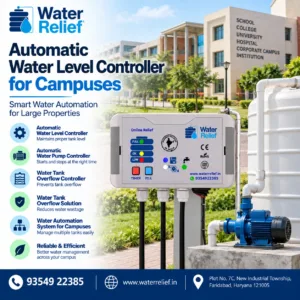
An Automatic water level controller for campuses helps manage multiple water tanks and pumps across large properties without repeated manual checking. It monitors tank levels,... Continue reading
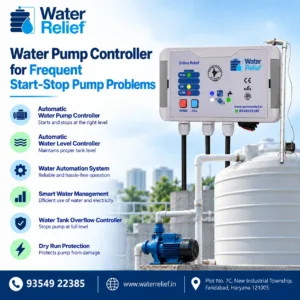
A Water Pump Controller for Frequent Start-Stop Pump Problems helps manage pump operation more efficiently when a motor keeps switching on and off repeatedly. Frequent... Continue reading
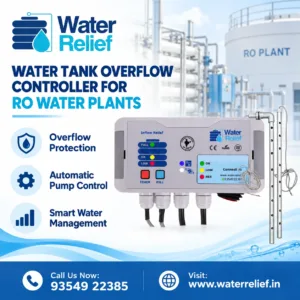
A Water tank overflow controller for RO water plants helps stop unnecessary water loss by monitoring tank levels and controlling pump operation automatically. It detects... Continue reading
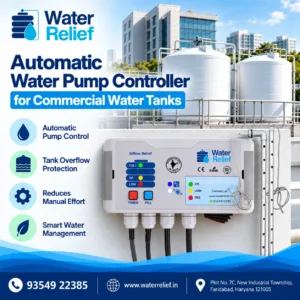
An Automatic Water Pump Controller for Commercial Water Tanks helps manage large water tanks without repeated manual switching. It monitors the tank level, starts the... Continue reading

Add comment