
No products in the cart.
Return To Shop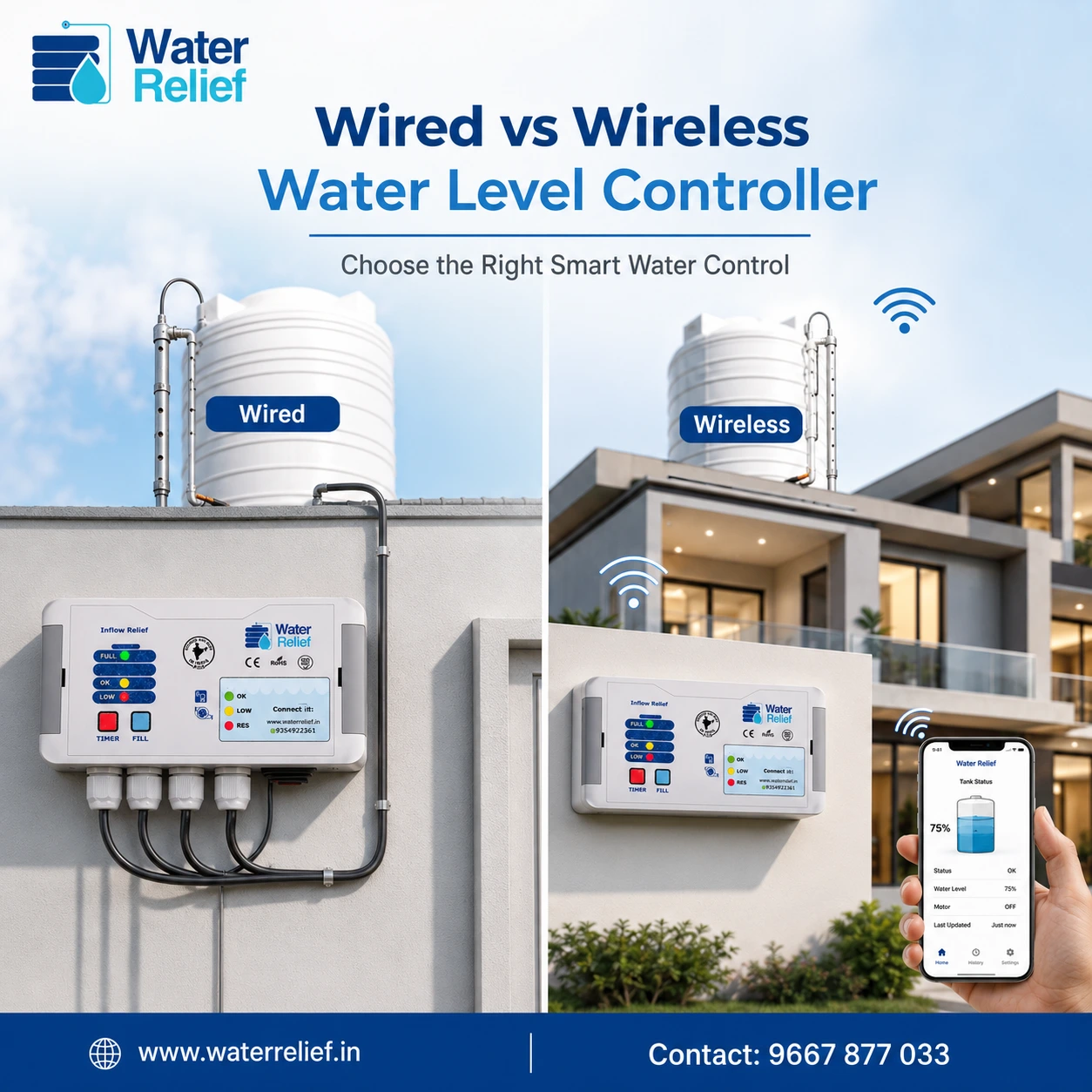
Wired vs Wireless Water Level Controller is an important topic for homes, apartments, societies and commercial buildings. Every property needs proper water control. If the pump is not managed well, the tank may overflow. The pump may also run dry. This can waste water, electricity and money.
Water Relief helps users manage water with smart pump automation. A water level controller can start and stop the pump based on tank level. This reduces manual work. It also protects the pump and prevents overflow.
However, many people get confused between wired and wireless systems. Both options have their own benefits. A Wired Water Level Controller is simple and stable. A Wireless Water Level Controller is modern and easier to install in many places. So, the right choice depends on your tank location, building structure, pump setup and usage.
In this blog, we will compare both options in simple language. This will help you choose the best water controller for your home or building.
What Is a Water Level Controller?
A water level controller is a device that manages the water pump automatically. It checks the water level in the tank. Then it starts or stops the pump as needed.
When the tank level is low, the pump can start. When the tank becomes full, the pump can stop. This helps prevent water wastage and pump damage.
A good controller can help with:
- Automatic pump start and stop
- Tank level monitoring
- Motor protection
- Overflow prevention
- Dry run safety
- Lower manual work
- Better water management
Water Relief offers smart water control solutions for homes, societies and commercial spaces.
Why Water Pump Automation Is Needed
Manual pump control is common in many homes. Someone switches on the motor. Then someone has to remember to switch it off.
This sounds easy. But it often fails.
People may forget the pump. They may be busy, sleeping or outside the home. As a result, the tank may overflow. Sometimes the pump may also run without enough water.
A Water Pump Automation System solves this problem. It controls the pump automatically. It helps save water and protects the motor.
Main benefits include:
- Less manual work
- Better water control
- Lower water wastage
- Pump safety
- Better electricity saving
- Peace of mind
Water Relief helps make daily water management simple and reliable.
What Is a Wired Water Level Controller?
A Wired Water Level Controller uses wires to connect the controller with tank sensors and the pump. Sensors are placed inside the tank. These sensors send water level signals through wires.
This system is reliable when wiring is done properly. It is often used in homes, apartments, societies and buildings where wiring access is easy.
A wired controller is useful when:
- The tank and pump are not too far
- Wiring can be installed safely
- The building is under construction
- The route for wires is already available
- Long-term stable connection is needed
Water Relief wired systems can help control pumps efficiently. They also help prevent overflow and reduce manual operation.
Benefits of Wired Water Level Controller
A Wired Water Level Controller is a trusted option for many properties. It is simple, stable and practical.
Key benefits include:
- Stable signal through wire connection
- Good for fixed installations
- Suitable for homes and societies
- Simple working system
- Reliable pump control
- Less signal disturbance
- Good for long-term use
A wired system can work well when the wiring is protected from damage. Proper installation is important. The wire should be safe, insulated and away from direct water exposure.
Limitations of Wired Water Level Controller
A wired system is useful. However, it may not be ideal for every property.
Some limitations include:
- Wiring may be difficult in finished buildings
- Long wire routes can increase installation effort
- Wires may get damaged over time
- Maintenance may be needed if wires become loose
- Installation may take more time
If the tank is far from the pump, wiring may become complicated. In such cases, a wireless option may be easier.
What Is a Wireless Water Level Controller?
A Wireless Water Level Controller works without long sensor wiring between the tank and controller. It uses wireless communication to send tank level signals.
This makes installation easier in many homes and buildings. It is helpful where running wires is difficult or not possible.
A wireless controller is useful when:
- The tank is far from the pump
- Wiring is difficult
- The building is already finished
- You want a cleaner setup
- You want faster installation
- You want modern water automation
Water Relief offers smart water control solutions that make pump operation easier and more convenient.
Benefits of Wireless Water Level Controller
A Wireless Water Level Controller is a modern solution. It is especially useful for homes and buildings where wiring is not easy.
Main benefits include:
- Less wiring work
- Cleaner installation
- Faster setup
- Useful for finished buildings
- Good for long-distance tank setups
- Less wall drilling
- Better convenience
A wireless system can reduce installation hassle. It also keeps the setup neat. This is useful for villas, apartments, builder floors and commercial buildings.
Limitations of Wireless Water Level Controller
A wireless system is convenient. However, it also needs proper setup.
Some points to consider include:
- Signal strength should be good
- Device placement matters
- Power supply should be stable
- Quality of controller matters
- Building structure may affect signal
- Regular checking may be needed
If the wireless signal is weak, performance can be affected. That is why choosing a reliable brand like Water Relief is important.
What Is a WiFi Water Level Controller?
A WiFi Water Level Controller is a smart version of a water controller. It can connect with WiFi-based technology. This helps users manage and monitor water levels more smartly.
It is useful for modern homes and smart buildings. It can support better tank monitoring and water pump automation.
A WiFi system is useful for:
- Smart homes
- Villas
- Apartments
- Rental properties
- Offices
- Societies
- Commercial buildings
- People who want remote-style monitoring
A WiFi Water Level Controller can make water management more convenient. It also supports better control and awareness.
Wired vs Wireless Water Level Controller: Main Difference
The main difference between wired and wireless systems is how they send tank level signals.
A wired system uses physical wires. A wireless system uses wireless communication.
Simple comparison:
- Wired system needs sensor wiring
- Wireless system reduces long wiring
- Wired system is stable with proper installation
- Wireless system is easier in finished buildings
- Wired system may need more installation effort
- Wireless system offers cleaner setup
- Wired system is good for fixed setups
- Wireless system is good for flexible setups
So, both systems are useful. The best choice depends on your property.
Which Option Is Better for Homes?
For homes, both wired and wireless systems can work well. The right choice depends on the house structure.
Choose a wired system if:
- Your home is under construction
- Wiring route is easy
- Tank and pump are close
- You want a fixed setup
- You prefer a simple system
Choose a wireless system if:
- Your home is already finished
- Wiring is difficult
- You want less drilling
- Tank is far from pump
- You want a modern setup
Water Relief can help users choose a suitable option based on their home layout.
Which Option Is Better for Apartments and Societies?
Apartments and societies usually have larger water systems. They may have underground tanks, overhead tanks, booster pumps and submersible pumps.
For societies, system selection depends on distance and structure.
A wired controller may be useful when:
- Wiring routes are already available
- The pump room is close to tank lines
- Maintenance team wants a fixed setup
A wireless controller may be better when:
- Tanks are far from the controller
- Wiring is difficult
- The building is already completed
- A cleaner installation is needed
In societies, Smart Water Tank Monitoring is very useful. It helps maintenance teams manage water better and reduce complaints.
Role of Automatic Water Level Controller
An Automatic Water Level Controller is useful in both wired and wireless systems. It helps control the pump without manual effort.
It starts the pump when water is low. It stops the pump when the tank is full. This improves water control and reduces daily stress.
Benefits include:
- Less manual pump operation
- Better water saving
- Pump protection
- Lower electricity waste
- Overflow prevention
- Better tank level control
Water Relief automatic controllers help make water management easier for homes and buildings.
Smart Water Tank Monitoring for Better Control
Smart Water Tank Monitoring helps users know the tank level more clearly. Without monitoring, people often guess the water level. This can lead to overflow or water shortage.
Smart monitoring helps reduce guesswork. It supports better pump timing and better water planning.
It helps with:
- Knowing tank level
- Avoiding overflow
- Reducing pump misuse
- Better maintenance
- Water saving
- Better daily control
Water Relief supports smart tank monitoring for modern water needs.
Dry Run Protection for Pump Safety
Dry Run Protection is very important for pump safety. Dry running happens when a pump runs without enough water.
This can heat the motor and damage the pump. It can also reduce pump life.
A good water controller can help reduce this risk. It can stop or control the pump when water is not available in the source tank.
Benefits of Dry Run Protection include:
- Better pump safety
- Less motor damage
- Lower repair cost
- Longer pump life
- More reliable water supply
Water Relief helps protect pumps with smart water control features.
Water Tank Overflow Protection
Water Tank Overflow Protection is one of the biggest reasons to install a controller. Overflow wastes clean water. It can also create leakage, dampness and slippery areas.
In homes, overflow may damage walls or terrace areas. In societies, it may create complaints and maintenance issues.
A water controller helps stop the pump when the tank is full. This reduces wastage and keeps the system under control.
Benefits include:
- Saves clean water
- Prevents tank overflow
- Reduces leakage risk
- Saves electricity
- Reduces pump running time
- Lowers maintenance stress
Water Relief provides reliable water control for overflow protection.
Water Relief for Wired and Wireless Water Control
Water Relief helps users manage water with smart and practical solutions. Whether you choose wired or wireless, the goal is the same. You need better pump control, tank monitoring and water saving.
Water Relief systems can help with:
- Pump automation
- Tank level control
- Overflow prevention
- Dry run safety
- Smart monitoring
- Water saving
- Pump protection
- Less manual work
This makes Water Relief useful for homes, apartments, societies and commercial spaces.
Which Controller Should You Choose?
The best controller depends on your property.
Choose wired if:
- You want a stable fixed setup
- Wiring is easy
- Your building is under construction
- Tank and pump are close
- You prefer a simple system
Choose wireless if:
- Wiring is difficult
- Building is already finished
- Tank is far from pump
- You want cleaner installation
- You want a modern setup
Choose WiFi if:
- You want smart monitoring
- You want more convenience
- You prefer modern home automation
- You want better awareness of tank levels
A proper inspection can help you decide better. Water Relief can support homes and buildings with suitable water automation solutions.
Final Thoughts
Wired vs Wireless Water Level Controller is not about which one is always better. It is about which one suits your property better.
A Wired Water Level Controller is stable and simple. A Wireless Water Level Controller is flexible and easier to install in many cases. A WiFi Water Level Controller adds smart monitoring and modern convenience.
Water Relief helps users manage water with smart automation. It supports Automatic Water Level Controller solutions, Smart Water Tank Monitoring, Water Pump Automation System, Dry Run Protection and Water Tank Overflow Protection.
If you want to save water, protect your pump and reduce manual work, a water level controller is a smart investment.
FAQs
1. What is the difference between wired and wireless water level controller?
A wired controller uses physical wires to connect tank sensors and the controller. A wireless controller sends signals without long wiring.
2. Which is better: wired or wireless water level controller?
Both are good. A wired system is stable when wiring is easy. A wireless system is better when wiring is difficult or the building is already finished.
3. What is a WiFi Water Level Controller?
A WiFi Water Level Controller is a smart water controller that supports WiFi-based monitoring and better water management.
4. Can Water Relief help prevent tank overflow?
Yes, Water Relief helps with Water Tank Overflow Protection by stopping the pump when the tank becomes full.
5. What is Dry Run Protection?
Dry Run Protection helps protect the pump when there is not enough water in the source tank. It reduces motor damage risk.

About author

Related posts
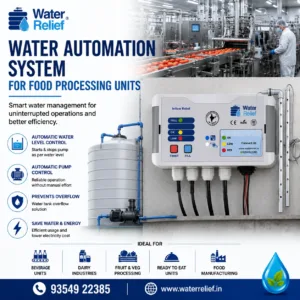
A Water automation system for food processing units helps manage storage tanks and pumps without constant manual checking. It monitors water levels, starts the pump... Continue reading
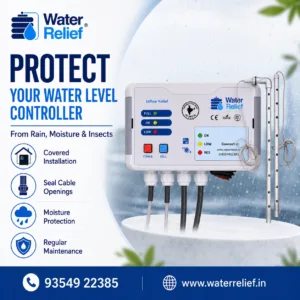
To protect water level controller from rain moisture and insects, the controller should be installed in a dry, covered and properly ventilated location. Direct rain,... Continue reading
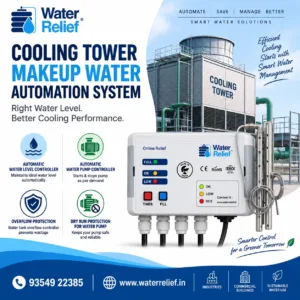
A Cooling tower makeup water automation system helps maintain the required water level in cooling tower tanks without constant manual checking. It monitors the water... Continue reading
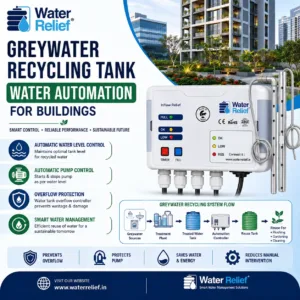
Greywater recycling tank water automation for buildings helps manage recycled water storage and pump operation without constant manual checking. It monitors tank levels, starts the... Continue reading
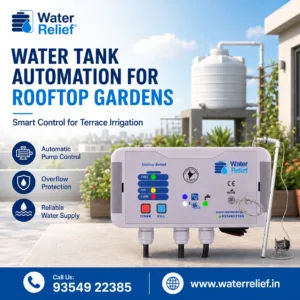
Water tank automation for rooftop gardens helps maintain a reliable water supply for plants without constant manual checking. It monitors the tank level, starts the... Continue reading

Add comment