
No products in the cart.
Return To Shop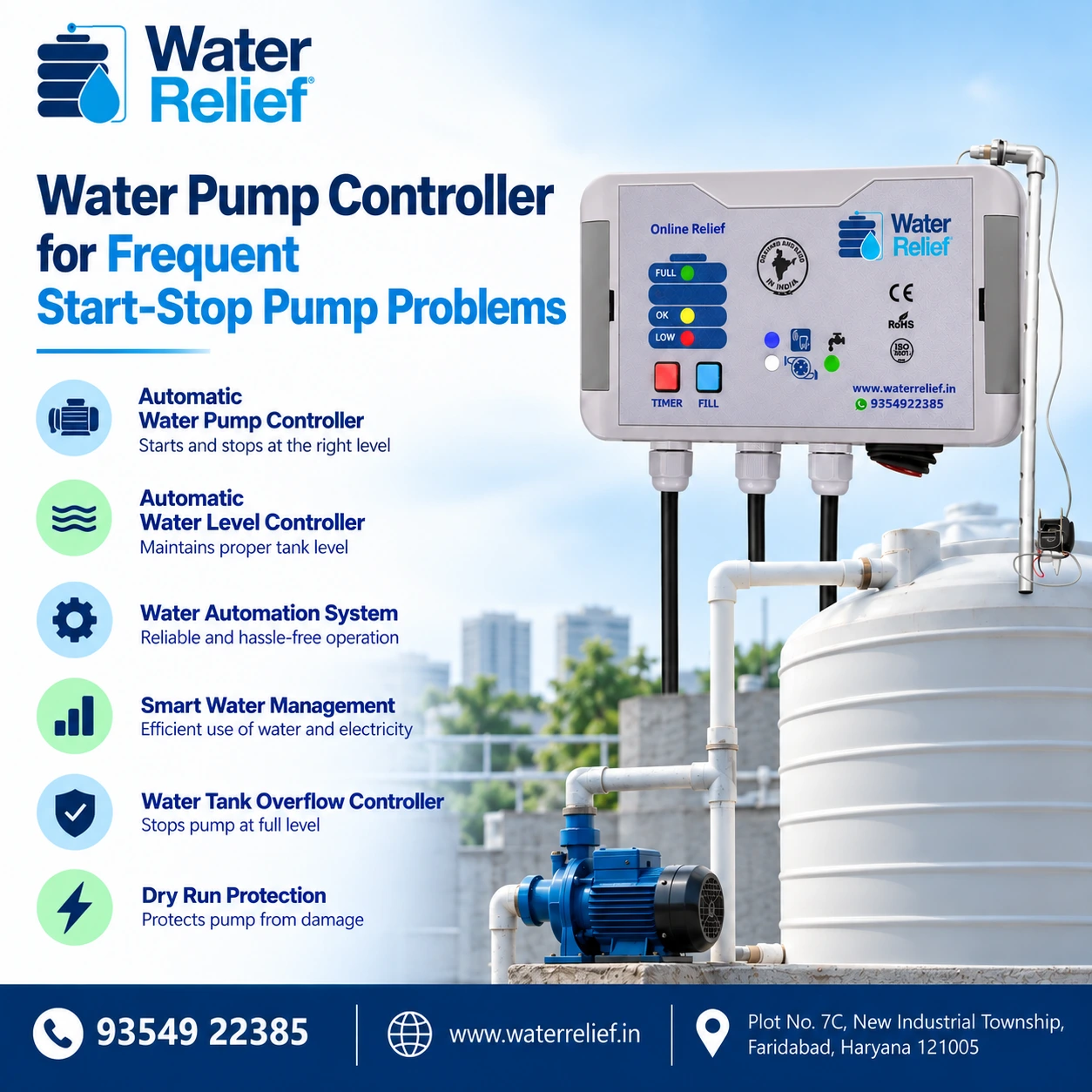
A Water Pump Controller for Frequent Start-Stop Pump Problems helps manage pump operation more efficiently when a motor keeps switching on and off repeatedly. Frequent cycling can happen because of changing tank levels, unstable sensor signals, small water-demand changes, or incorrect control settings.
A suitable Automatic water pump controller can help reduce unnecessary switching by controlling the pump according to actual tank conditions. When combined with an Automatic water level controller, the system can maintain a more stable water level and reduce repeated manual operation.
A properly planned Water automation system can also improve pump reliability, reduce overflow risk, and support better Smart water management.
What Are Frequent Start-Stop Pump Problems?
Frequent start-stop cycling means the pump turns on and off too often within a short period.
This can happen in homes, commercial buildings, factories, institutions, and other properties using automatic tank filling.
Common signs include:
- Pump starting every few minutes
- Pump stopping before the tank is properly filled
- Repeated clicking from the controller
- Unstable tank-level indication
- Motor switching on and off rapidly
- Higher electricity use
- Pump overheating
- Excessive wear on electrical components
Therefore, the cause should be identified before the problem becomes more serious.
Why Does a Water Pump Start and Stop Frequently?
There can be several reasons.
Incorrect Sensor Position
If the low and full sensors are placed too close together, a small change in water level can trigger the pump repeatedly.
Therefore, sensor placement should provide a practical operating range.
Loose or Damaged Sensor Wiring
Unstable sensor signals can make the controller think that the tank level is changing continuously.
As a result, the pump may switch on and off unnecessarily.
Small Tank Capacity
A small tank may fill and empty quickly.
In such cases, frequent pump cycling may happen naturally because the water level changes faster.
Water Leakage
A leaking pipe or outlet can cause the tank level to drop repeatedly.
The controller may then restart the pump more often.
Incorrect Controller Settings
Some systems may need proper configuration according to the tank size, pump capacity, and water demand.
Incorrect settings can lead to unnecessary switching.
Unstable Source Water
If source water is available only intermittently, the pump may repeatedly attempt to start.
This is where Dry run protection can become useful.
Role of an Automatic Water Pump Controller
An Automatic water pump controller manages the motor according to tank-level signals.
It can support:
- Automatic pump start
- Automatic pump stop
- Full-level cut-off
- Source-water monitoring
- Manual override
- Pump status indication
A properly selected controller helps ensure that the pump runs only when water is actually required.
Therefore, unnecessary start-stop cycles can be reduced.
Role of an Automatic Water Level Controller
An Automatic water level controller continuously monitors the water level inside the tank.
It can detect:
- Low level
- Normal level
- Full level
- Source-water condition
The controller then sends the correct signal to the pump.
If the sensors are correctly positioned, the pump can run for a reasonable filling cycle instead of switching repeatedly.
How Water Automation Helps Reduce Frequent Pump Cycling
A Water automation system combines level sensors, pump control, and tank monitoring into one coordinated setup.
The system can:
- Start the pump at the selected low level
- Keep it running during the filling cycle
- Stop it at the selected full level
- Avoid unnecessary restart commands
- Monitor source-water availability
- Provide status indications
As a result, pump operation becomes more stable.
Benefits of a Water Pump Controller for Frequent Start-Stop Problems
Reduces Unnecessary Pump Cycling
Frequent switching can increase wear on the motor and starter components.
A correctly configured controller helps create a more stable operating cycle.
Reduces Manual Monitoring
Users do not need to switch the pump on and off repeatedly.
The system responds automatically to tank levels.
Supports Better Motor Life
Frequent starting creates electrical and mechanical stress.
Reducing unnecessary cycling can help support longer motor and pump life.
Saves Electricity
A pump that switches repeatedly may use more electricity than a properly controlled system.
More stable operation can reduce avoidable power use.
Prevents Tank Overflow
A Water tank overflow controller can stop the pump once the tank reaches the selected full level.
This helps prevent water wastage and unnecessary pump running.
Supports Smart Water Management
Smart water management means controlling the pump according to actual water demand.
The system avoids unnecessary switching while maintaining the required tank level.
Dry Run Protection for Frequent Start-Stop Problems
Dry run protection helps stop the pump when enough source water is not available.
Without this protection, the pump may repeatedly try to start even when the source tank, borewell, or water line is dry.
This may cause:
- Pump overheating
- Motor damage
- Seal damage
- Frequent restarting
- Higher maintenance costs
Therefore, dry run protection is an important feature in areas with irregular water supply.
Water Tank Overflow Controller and Pump Cycling
A Water tank overflow controller helps stop the motor at the correct full level.
If the full-level sensor does not work properly, the pump may continue running or may restart unnecessarily.
Therefore, sensor condition and wiring should be checked regularly.
Smart Water Management for Residential Buildings
In homes and apartments, frequent pump cycling may happen because of:
- Small overhead tanks
- High water consumption
- Leakage
- Incorrect sensor placement
- Unstable source water
A properly configured automation system can help maintain a more stable filling cycle.
Smart Water Management for Commercial Buildings
Commercial buildings may have multiple tanks and higher daily water demand.
Frequent cycling can occur when several tanks are connected to the same pump.
A customised control system can help manage tank priorities and reduce unnecessary switching.
Smart Water Management for Industrial Applications
Factories and industrial sites may use pumps for process tanks, utility tanks, and transfer systems.
In such applications, repeated pump cycling can affect daily operations.
A suitable controller should be selected according to:
- Tank capacity
- Pump horsepower
- Flow rate
- Electrical phase
- Water demand
- Number of tanks
Correct system design is important.
Common Reasons to Inspect the System
The controller should be inspected if you notice:
- Pump starting too frequently
- Pump stopping too early
- Incorrect level indication
- Repeated relay clicking
- Motor overheating
- Tank not filling properly
- Pump restarting immediately after stopping
- Water source running low
These signs may indicate sensor, wiring, controller, or system-design issues.
Features to Check Before Installation
Sensor Placement
Low and full sensors should be positioned with enough distance between them.
Tank Capacity
The controller should suit the actual tank size.
Pump Capacity
The controller must match the pump horsepower and electrical load.
Source-Water Monitoring
This is important where water supply is irregular.
Dry Run Protection
Dry run protection can stop the motor when the source water becomes too low.
Full-Level Cut-Off
The pump should stop automatically when the destination tank becomes full.
Manual Override
Manual mode is useful during maintenance and testing.
Installation Requirements
Before installation, a technician should inspect the complete water system.
Important details include:
- Tank capacity
- Number of tanks
- Pump horsepower
- Pump phase
- Water source
- Pipe layout
- Flow rate
- Existing starter panel
- Sensor positions
- Daily water demand
Therefore, proper planning is important before selecting the controller.
Why Choose Water Relief?
Water Relief provides automatic tank and pump-control solutions for residential, commercial, institutional, and suitable industrial applications.
A properly selected system can help:
- Reduce unnecessary pump cycling
- Automate pump start and stop
- Prevent tank overflow
- Provide dry run protection
- Reduce manual checking
- Improve pump operation
- Support multiple tanks
- Improve overall water management
The controller should be selected according to the tank size, pump specifications, water source, and daily demand.
Conclusion
A Water Pump Controller for Frequent Start-Stop Pump Problems helps reduce unnecessary pump cycling and improve overall system stability.
An Automatic water pump controller manages motor operation, while an Automatic water level controller monitors tank conditions.
With the right Water automation system, Water tank overflow controller, and Dry run protection, users can reduce repeated pump switching and support better Smart water management.
FAQs
1. Why does my water pump keep starting and stopping?
Common causes include incorrect sensor placement, loose wiring, small tank capacity, water leakage, unstable source water, or incorrect controller settings.
2. Can an automatic water pump controller reduce frequent cycling?
Yes. A properly configured controller can start and stop the pump at selected tank levels, reducing unnecessary switching.
3. Is dry run protection useful for this problem?
Yes. It can stop the pump when the source water becomes too low, preventing repeated dry starts.
4. Can a faulty water-level sensor cause frequent start-stop operation?
Yes. Unstable or damaged sensors can send incorrect signals to the controller.
5. Does tank size affect pump cycling?
Yes. Smaller tanks may fill and empty faster, which can increase the number of pump cycles.
6. Is professional inspection recommended?
Yes. A technician should check the sensors, wiring, pump, tank, source-water condition, and controller settings.
About author

Related posts
Smart water management for commercial laundry helps control water tanks and pumps automatically in facilities where water demand remains high throughout the day. The system... Continue reading
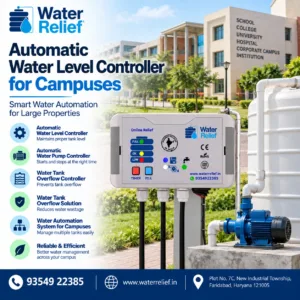
An Automatic water level controller for campuses helps manage multiple water tanks and pumps across large properties without repeated manual checking. It monitors tank levels,... Continue reading
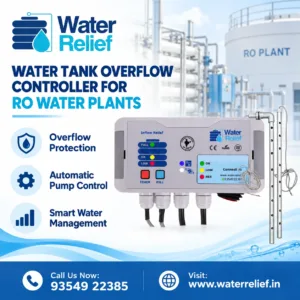
A Water tank overflow controller for RO water plants helps stop unnecessary water loss by monitoring tank levels and controlling pump operation automatically. It detects... Continue reading
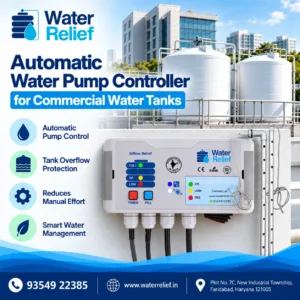
An Automatic Water Pump Controller for Commercial Water Tanks helps manage large water tanks without repeated manual switching. It monitors the tank level, starts the... Continue reading
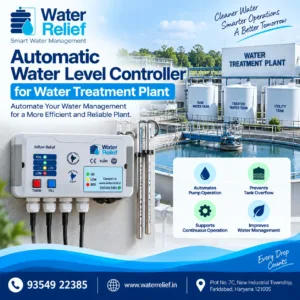
An Automatic water level controller for water treatment plant helps manage storage tanks and pumps without repeated manual checking. It monitors water levels, starts the... Continue reading

Add comment