
No products in the cart.
Return To Shop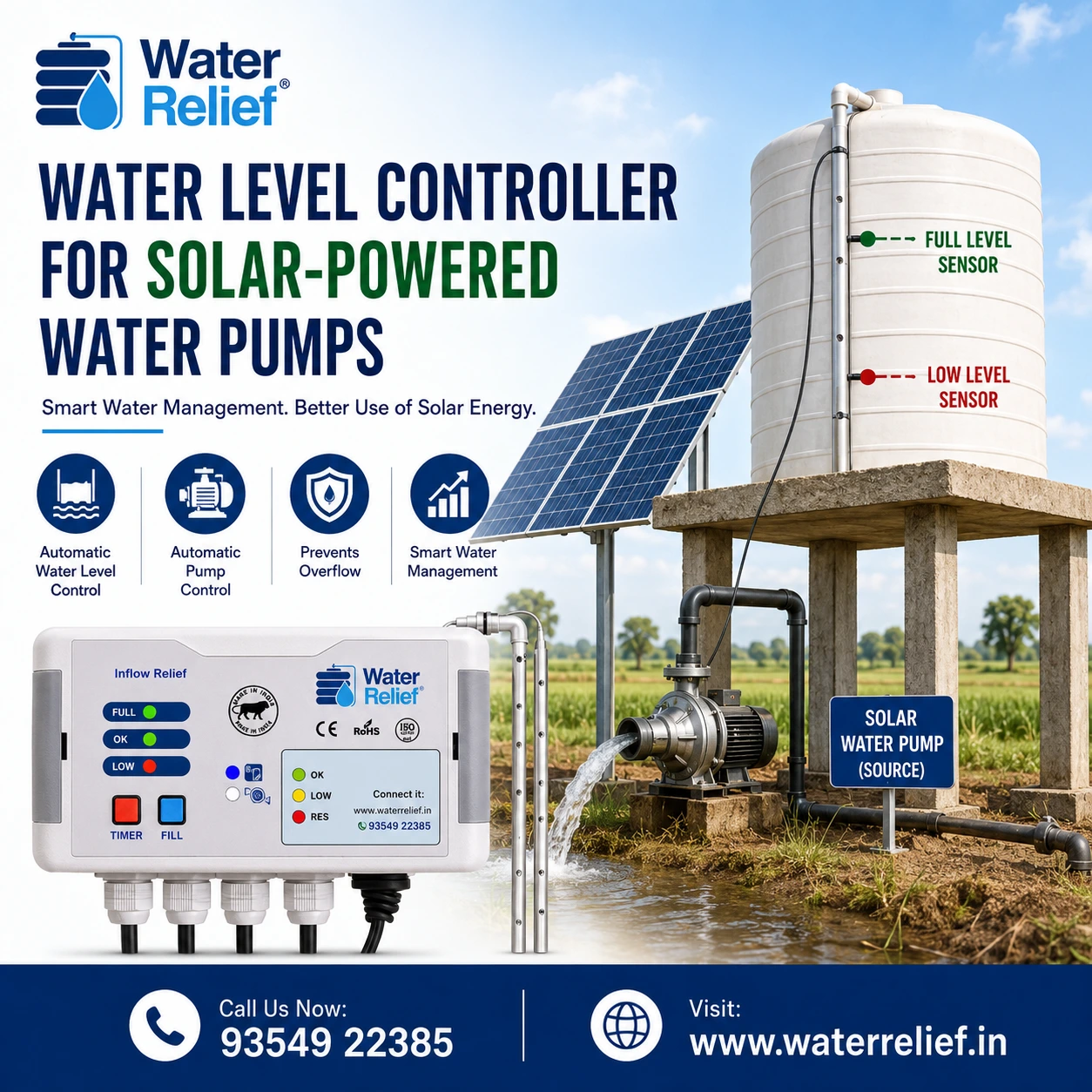
A Water level controller for solar-powered water pumps helps manage tank filling without constant manual checking. It monitors the water level, starts the pump when water is needed and stops it once the tank becomes full.
Solar-powered pumps are often used on farms, homes, rural properties and remote sites where grid electricity may be limited. Because these pumps depend on available solar energy, efficient pump operation becomes important.
A suitable Water automation system helps reduce unnecessary pumping, water overflow and manual work. As a result, solar energy and stored water can both be used more efficiently.
Why Solar-Powered Water Pumps Need Automatic Control
Solar pumps may operate during the day when enough sunlight is available. However, the water tank may already be full or may not need continuous filling.
Without automation, the pump may:
- Continue filling a full tank
- Waste water through overflow
- Run when there is no need for water
- Depend on manual switching
- Use available solar energy inefficiently
- Require frequent tank checking
Therefore, an Automatic water level controller can make the complete system easier to manage.
What Is Solar Water Pump Automation?
Solar water pump automation means controlling the pump according to real water demand instead of switching it manually.
Water-level sensors are installed in the storage tank. These sensors tell the controller when the water level is low or full.
When the level becomes low, the controller allows the pump to operate. Once the tank reaches the selected full level, the pump stops automatically.
The basic process is:
Tank low → Water required → Pump starts → Tank fills → Full level reached → Pump stops
This helps prevent unnecessary pump operation.
Role of an Automatic Water Level Controller
An Automatic water level controller monitors the tank level continuously.
It can detect:
- Low water level
- Normal water level
- Full tank condition
Based on these signals, the controller manages the pump.
As a result, the user does not need to climb to the tank or check the water level again and again.
Role of an Automatic Water Pump Controller
An Automatic water pump controller connects the tank sensors with the solar pump system.
It can manage:
- Automatic pump start
- Automatic pump stop
- Full-tank cut-off
- Pump-running indication
- Manual override
- Tank-level monitoring
The controller should be selected according to the solar pump type, voltage, motor capacity and control panel.
Benefits of a Water Level Controller for Solar-Powered Water Pumps
Prevents Tank Overflow
Tank overflow is one of the most common problems in manual water-pumping systems.
When the tank becomes full, the controller stops the pump automatically.
Therefore, water is not wasted unnecessarily.
Reduces Manual Work
Solar pumps are often installed in fields or remote locations.
Checking the tank manually can take time. Automatic control removes the need to visit the tank repeatedly.
Improves Solar Energy Use
Solar power availability can vary during the day.
By running the pump only when water is needed, the system makes better use of available solar energy.
Protects Water Resources
Water should not be pumped unnecessarily.
Automatic cut-off helps reduce overflow and supports responsible water use.
Supports Reliable Water Storage
The controller starts the pump when the tank becomes low.
Therefore, the storage tank can remain ready for irrigation, household use or other daily needs.
Reduces Pump Run Time
The pump stops as soon as the required tank level is reached.
As a result, unnecessary motor operation is reduced.
Smart Water Management with Solar Pumps
Smart water management means controlling both water and energy more efficiently.
With solar pumping, this is especially useful because the system depends on sunlight.
A smart setup may include:
- Solar panels
- Solar pump controller
- Water-level sensors
- Storage tank
- Automatic pump controller
- Manual override
Together, these parts help create a more reliable water supply system.
Solar Water Pump Automation for Farms
Solar pumps are widely used for farming applications.
They may supply water to:
- Irrigation tanks
- Drip irrigation systems
- Cattle water tanks
- Farm storage tanks
- Sprinkler systems
- Greenhouse tanks
Automatic tank filling helps ensure that water is stored when required.
At the same time, the pump stops after the tank becomes full.
Solar Water Pump Automation for Homes
Homes in rural or semi-rural areas may use solar pumps with borewells or underground tanks.
An automatic controller can transfer water to an overhead tank without manual switching.
When the overhead tank becomes low, the pump starts. Once it becomes full, the motor stops.
Therefore, household water management becomes easier.
Solar Water Pump Automation for Remote Locations
Remote locations may not have regular access to grid power.
Solar pumping provides a practical water solution in such places.
However, manual monitoring can be difficult. Automatic control helps the system work with less human attention.
This is useful for:
- Farmhouses
- Remote farms
- Rural schools
- Small institutions
- Construction camps
- Agricultural sites
Water Automation System for Multiple Tanks
Some solar pumping setups use more than one tank.
For example:
- Borewell source
- Main storage tank
- Overhead tank
- Irrigation tank
- Reserve tank
A customised Water automation system can manage these tanks according to their water levels.
As a result, water can move through the system in a more controlled way.
Automatic Pump Control for Borewell Solar Pumps
Solar borewell pumps are often used to fill large storage tanks.
The controller should consider:
- Borewell depth
- Pump capacity
- Solar panel output
- Tank size
- Water demand
- Pump controller type
Once the tank reaches the full level, the controller stops the pump.
Therefore, the system does not continue pumping water unnecessarily.
Automatic Pump Control for Overhead Tanks
An overhead tank can store water for later use.
A solar pump can fill this tank during daylight hours.
With an automatic controller, the pump starts when the tank becomes low and stops at the full level.
This helps maintain stored water without constant supervision.
Features to Check Before Installation
Pump Compatibility
The controller should be compatible with the solar pump and its control panel.
Tank Capacity
Sensor positions should match the tank size and required water level.
Pump Voltage
The controller should support the electrical setup used by the pump.
Automatic Cut-Off
The pump should stop automatically when the tank becomes full.
Manual Override
Manual control is useful during maintenance or testing.
Clear Indicators
Useful indicators may include:
- Tank low
- Tank full
- Pump running
- Power available
- Manual mode
- Automatic mode
Installation Requirements
Before installation, the complete solar water system should be checked.
Important details include:
- Solar pump type
- Pump horsepower
- Pump voltage
- Solar panel capacity
- Water source
- Borewell depth
- Tank capacity
- Number of tanks
- Pipe layout
- Distance between pump and tank
- Sensor locations
- Existing solar pump controller
Therefore, professional installation is recommended.
Why Choose Water Relief?
Water Relief provides automatic tank and pump-control solutions for different water-management applications.
A suitable system can help:
- Automate solar-powered tank filling
- Start and stop pumps automatically
- Prevent water overflow
- Reduce manual monitoring
- Improve water storage
- Support multiple tanks
- Save water
- Improve overall smart water management
The controller should be selected according to the solar pump setup, tank arrangement and water requirement.
Conclusion
A Water level controller for solar-powered water pumps helps automate tank filling and reduce unnecessary pump operation.
An Automatic water level controller monitors tank levels, while an Automatic water pump controller manages the motor according to actual water demand.
With proper Solar water pump automation, users can reduce water overflow, make better use of solar energy and improve overall Smart water management.
FAQs
1. What is a water level controller for solar-powered water pumps?
It is a system that monitors tank levels and automatically controls a solar water pump.
2. Can the controller stop the solar pump when the tank is full?
Yes. A full-level sensor signals the controller to stop the pump automatically.
3. Can the system start the pump when the tank becomes low?
Yes. The controller can start the pump when the tank reaches the selected low-water level.
4. Is solar water pump automation suitable for farms?
Yes. It is useful for irrigation tanks, cattle water tanks, farm storage tanks and other agricultural uses.
5. Can one system manage multiple tanks?
Yes. A customised water automation system can manage multiple tanks according to the setup.
6. Is professional installation recommended?
Yes. A technician should check the solar pump, controller, voltage, tank size and sensor positions before installation.
About author

Related posts
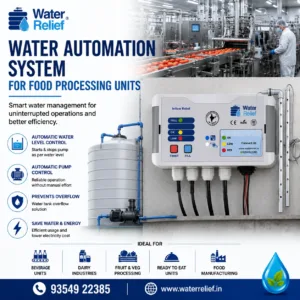
A Water automation system for food processing units helps manage storage tanks and pumps without constant manual checking. It monitors water levels, starts the pump... Continue reading
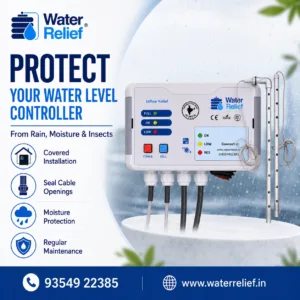
To protect water level controller from rain moisture and insects, the controller should be installed in a dry, covered and properly ventilated location. Direct rain,... Continue reading
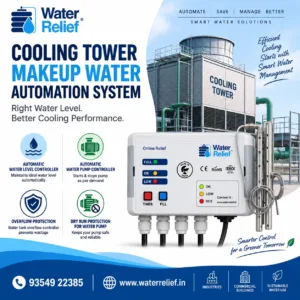
A Cooling tower makeup water automation system helps maintain the required water level in cooling tower tanks without constant manual checking. It monitors the water... Continue reading
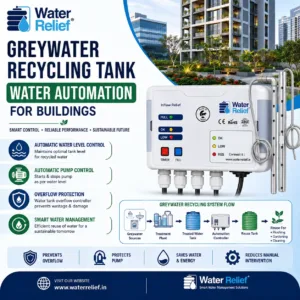
Greywater recycling tank water automation for buildings helps manage recycled water storage and pump operation without constant manual checking. It monitors tank levels, starts the... Continue reading
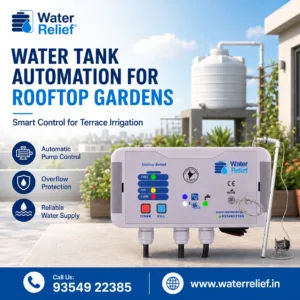
Water tank automation for rooftop gardens helps maintain a reliable water supply for plants without constant manual checking. It monitors the tank level, starts the... Continue reading

Add comment