
No products in the cart.
Return To Shop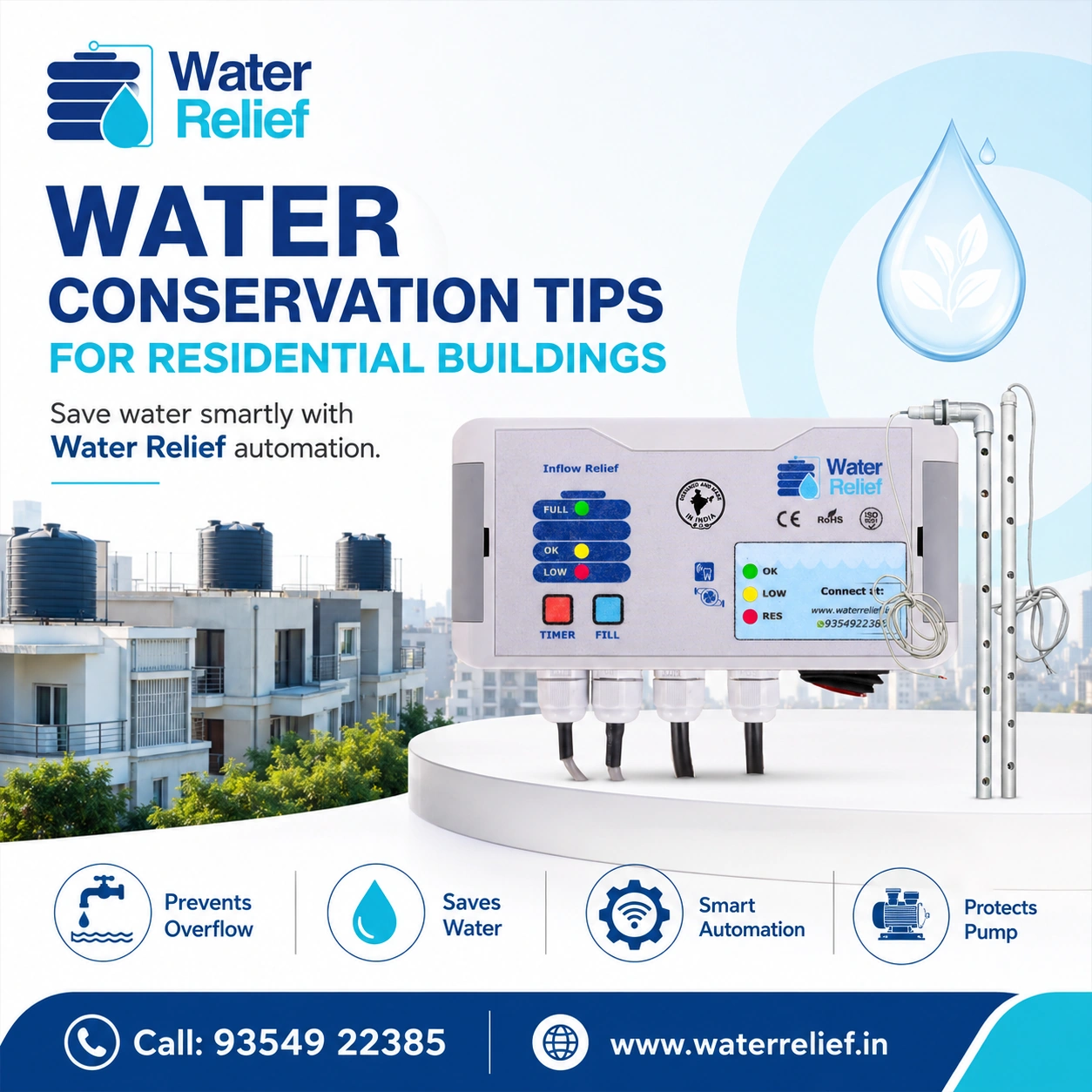
Water conservation tips for residential buildings are becoming very important today because apartments, societies, and multi-floor homes use a large amount of water every day. From overhead tanks to underground tanks and borewell pumps, water management becomes difficult when everything is handled manually. A small mistake, such as forgetting to switch off the motor, can lead to water overflow, electricity wastage, pump damage, and unnecessary maintenance costs.
In many residential buildings, people still depend on manual checking of water tanks. Someone has to go to the rooftop, check the water level, turn the motor ON or OFF, and repeat the same process every day. This method is not only outdated but also risky. Water Relief helps residential buildings move from manual water monitoring to smart and automatic water control, making daily water usage more efficient and hassle-free.
Why Water Conservation Matters in Residential Buildings
Residential buildings consume water for drinking, bathing, cleaning, gardening, washing vehicles, and daily household use. When water is wasted regularly, it increases the pressure on water supply systems and also raises electricity bills because pumps run more than required.
In many apartments, the biggest reason for water wastage is tank overflow. Even if the overflow happens for just 10 to 15 minutes every day, it can waste hundreds of litres of water in a month. This is why modern residential buildings should focus on planned water usage, better monitoring, and automation.
A good water-saving plan is not only about using less water. It is also about stopping hidden wastage, preventing pump misuse, and using smart technology like automatic water management systems to control water flow properly.
Common Water Wastage Problems in Residential Buildings
Many water-saving problems start because of poor monitoring. Most buildings face similar issues, such as:
Water tank overflow due to manual motor control
Pump running without water in the source tank
Residents using water without awareness
Leakage in pipelines or taps
No proper water level monitoring
Motor switching ON and OFF at the wrong time
High electricity usage due to extra pump running time
Among all these, Tank Overflow Issues are one of the most common problems. In many buildings, the motor keeps running even after the overhead tank is full. This leads to direct water wastage and also increases the risk of seepage, dampness, and structural damage near the tank area.
Install an Automatic Water Level Controller
One of the best water conservation tips for residential buildings is to install an automatic water level controller. It automatically starts the motor when the tank water level is low and stops the motor when the tank is full.
Water Relief provides smart water automation solutions that help buildings avoid manual checking. With an Automatic Water System, the motor works only when required. This prevents overflow, saves water, saves electricity, and reduces human dependency.
Instead of asking someone to check the tank multiple times a day, the system manages the process automatically. This is especially useful for apartment buildings, rental properties, independent floors, and societies where water demand changes throughout the day.
Use Smart Water Management for Better Control
Traditional water management depends on guesswork. People usually switch on the motor based on time, not the actual water level. This can either lead to overflow or shortage.
With Smart Water Management, the building gets better control over water storage and pump operation. The system can monitor water level conditions and operate the motor accordingly. This helps maintain a proper balance between water availability and water saving.
Water Relief focuses on practical automation for Indian homes and buildings. The system is designed to reduce daily hassle and provide better control over water usage without complicated operation.
Prevent Tank Overflow Automatically
Tank overflow is one of the easiest problems to solve with automation. Many people think overflow is normal, but it is actually a sign of poor water management. Overflow wastes clean water, increases electricity usage, and can damage the rooftop area.
To stop overflow, residential buildings should avoid manual motor control and use automation. A Water Relief controller detects the tank level and stops the motor when the tank is full. This simple change can save a large amount of water over time.
If your building faces regular Tank Overflow Issues, it is a clear sign that manual monitoring is no longer enough. Automation is a better long-term solution.
Protect the Pump from Dry Run
Another major problem in residential buildings is dry run. Dry run happens when the motor keeps running even when there is no water available in the source tank, borewell, or pipeline. This can cause overheating and pump damage.
A good Submersible Pump Controller helps protect the pump by controlling its operation based on water availability and tank requirements. This is very useful for buildings using borewell pumps or underground water sources.
Water Relief automation helps reduce the chances of unnecessary pump operation. When the pump is protected, maintenance costs go down and the pump life increases.
Fix Leaks in Taps and Pipelines
Small leaks may look harmless, but they waste a lot of water over time. A dripping tap, leaking flush tank, or damaged pipe can waste hundreds of litres of water every month. Residential buildings should schedule regular plumbing inspections to detect leakage early.
Common areas to check include:
Rooftop tank pipelines
Bathroom taps
Kitchen taps
Flush tanks
Garden water lines
Pump room connections
Underground tank outlets
Fixing leakage is one of the simplest and most cost-effective water conservation steps.
Use Water-Efficient Fixtures
Residential buildings can save water by using water-efficient taps, showerheads, flush systems, and valves. Aerators can be installed on taps to reduce water flow without affecting usability. Dual-flush systems can also reduce unnecessary water usage in bathrooms.
These small upgrades are helpful for apartments and societies where many residents use water daily. When every flat saves even a small amount of water, the total savings become significant.
Educate Residents About Water Saving
Technology helps a lot, but resident awareness is also important. Building owners, RWAs, and facility managers should encourage residents to avoid unnecessary water wastage.
Residents can follow simple habits like:
Turn off taps while brushing
Avoid washing vehicles with running water
Report leakage quickly
Use buckets instead of running showers when possible
Avoid overwatering plants
Use washing machines with full loads
Water conservation becomes easier when everyone in the building follows basic water-saving habits.
Monitor Water Usage Regularly
Residential buildings should track water usage to understand where wastage is happening. If the monthly water usage is increasing without any clear reason, there may be overflow, leakage, or pump misuse.
Regular monitoring helps building owners take quick action. When combined with automatic water management systems, monitoring becomes more effective because the system reduces common errors like overfilling and unnecessary motor operation.
Choose a Silent and Reliable Controller
For residential buildings, the water automation system should be reliable, easy to use, and suitable for daily operation. A Silent Water Controller is useful because it works smoothly without creating unnecessary disturbance.
Water Relief provides practical automation solutions that are designed for residential needs. Whether it is a home, apartment, building, or society, the goal is simple: save water, protect the motor, and reduce daily manual effort.
Reduce Electricity Bills with Automation
Water wastage and electricity wastage often happen together. When the motor runs longer than required, it consumes extra electricity. In buildings where the motor is switched on manually, this problem is very common.
An automatic water level controller stops the motor at the right time. This reduces pump running time and helps lower electricity bills. Over time, the savings from reduced water and electricity wastage can be significant.
Why Water Relief Is a Smart Choice for Residential Buildings
Water Relief helps residential buildings upgrade from manual tank checking to smart automation. The system is useful for preventing overflow, reducing pump damage, saving water, and improving daily convenience.
With Water Relief, residential buildings can get benefits like:
Automatic motor ON/OFF
Protection from overflow
Reduced manual checking
Better pump safety
Water and electricity saving
Suitable for homes, apartments, and buildings
Easy daily operation
For any building facing water wastage, overflow, or pump management problems, an Automatic Water System is a smart investment.
Conclusion
Water conservation tips for residential buildings are not only about reducing usage. They are also about managing water properly, preventing overflow, protecting pumps, and removing manual mistakes. In today’s time, depending only on manual water tank checking is outdated and inefficient.
Water Relief offers a smart and practical way to manage water automatically. By using Smart Water Management, residential buildings can save water, reduce electricity costs, prevent Tank Overflow Issues, and protect pumps with better control.
If your building still depends on daily manual motor checking, now is the right time to switch to Water Relief and make water management automatic, reliable, and stress-free.
FAQs
1. What is the best way to save water in residential buildings?
The best way is to prevent tank overflow, fix leakage, use water-efficient fixtures, and install an automatic water level controller.
2. How does Water Relief help in water conservation?
Water Relief automatically controls the motor based on water level, helping prevent overflow, save water, and protect the pump.
3. Can an automatic water controller reduce electricity bills?
Yes. It stops the motor when the tank is full, reducing unnecessary pump running time and saving electricity.
4. Is Water Relief useful for apartments and societies?
Yes. Water Relief is suitable for homes, residential buildings, apartments, and societies where regular water tank monitoring is required.
5. What are Tank Overflow Issues?
Tank overflow issues happen when the motor keeps running after the tank is full, causing water wastage and possible damage around the tank area.
About author

Related posts
An Automatic Water Level Controller for data centres helps manage water storage tanks and pump operation without repeated manual checking. It monitors tank levels, starts... Continue reading
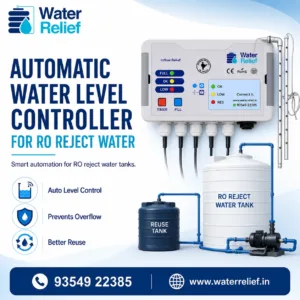
An Automatic water level controller for RO reject water helps monitor reject-water tanks and control pumps without repeated manual checking. It detects tank levels, starts... Continue reading
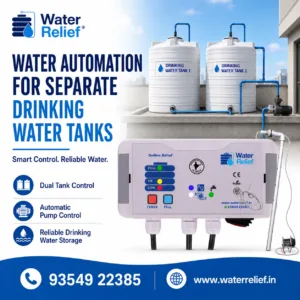
Water automation for separate drinking water tanks helps manage multiple potable-water storage tanks without constant manual checking. The system monitors tank levels, starts the pump... Continue reading
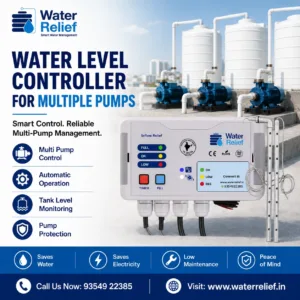
A Water Level Controller for Multiple Pumps is a smart solution for buildings, societies, factories, hotels, schools, hospitals and commercial spaces where more than one... Continue reading
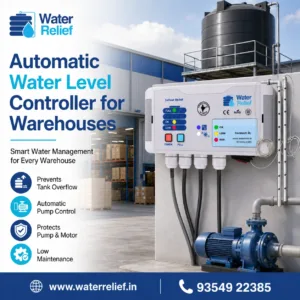
Automatic Water Level Controller for Warehouses is a smart solution for commercial spaces that need regular water supply. Warehouses use water for cleaning, staff washrooms,... Continue reading

Add comment