
No products in the cart.
Return To Shop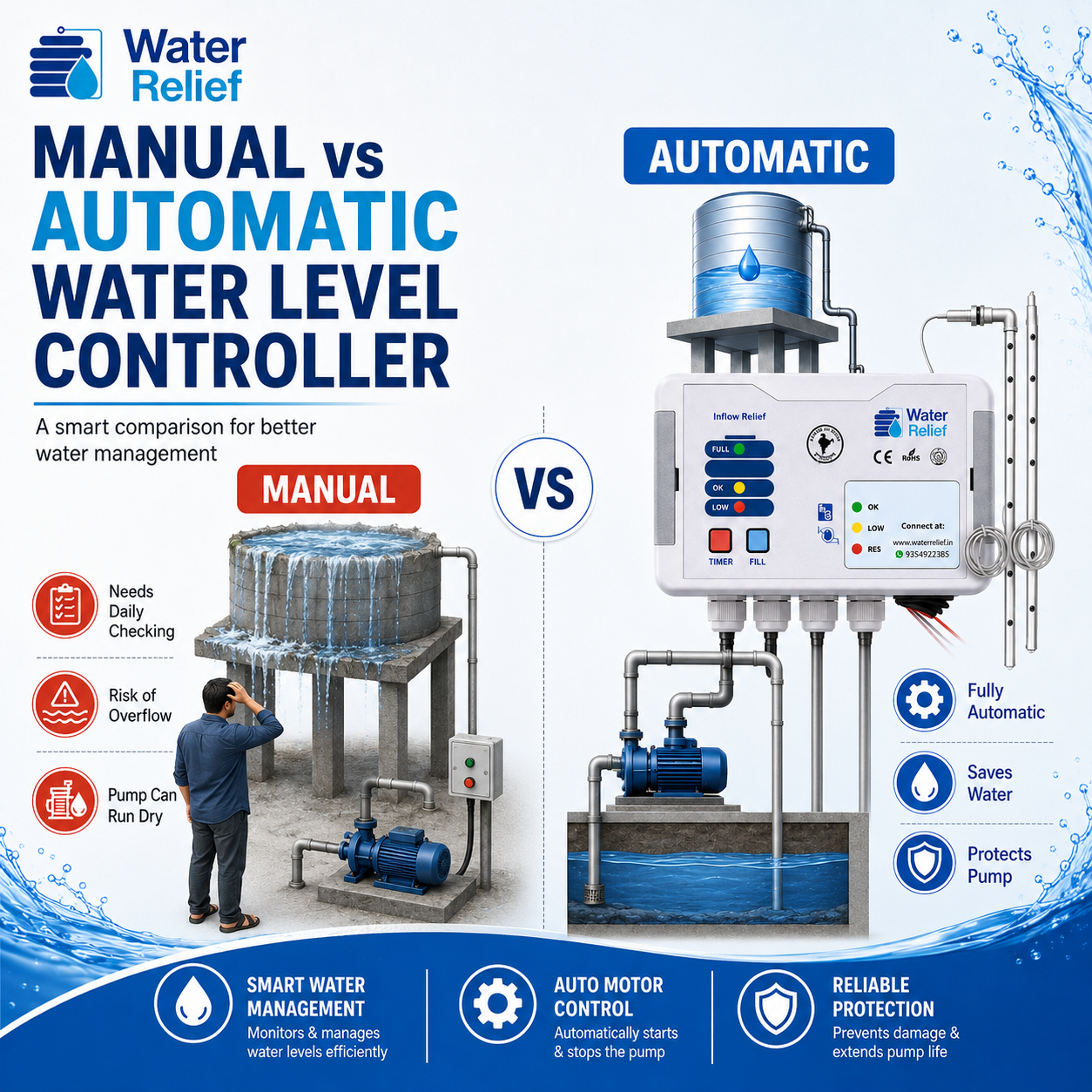
Managing water in homes, apartments, commercial buildings, schools, hotels, factories, and societies is one of the most important daily tasks. In many places, people still depend on manual water motor operation. Someone has to check the underground tank, switch on the motor, monitor the overhead tank, and switch off the motor before overflow happens. This process looks simple, but in reality, it creates many problems like water wastage, pump damage, electricity wastage, and daily stress.
This is where an automatic water level controller becomes useful. It manages water levels automatically and protects the pump from dry running, overflow, and unnecessary operation. In this blog, we will compare manual water level management with an automatic water level controller so you can understand which option is better for long-term convenience and safety.
What Is Manual Water Level Management?
Manual water level management means the water pump is operated by a person. When the water level in the underground tank or water source is available, someone turns on the pump. After that, the person has to keep checking whether the overhead tank is full or not. Once the tank is full, the pump must be switched off manually.
This method depends completely on human attention. If the person forgets to switch off the motor, the tank starts overflowing. If the motor is switched on when there is no water in the source tank, the pump may run dry and get damaged.
Manual operation may work in small setups where someone is always available, but it becomes difficult in busy homes, apartments, offices, and commercial buildings.
What Is an Automatic Water Level Controller?
An automatic water level controller is a smart device that monitors the water level in tanks and controls the pump automatically. It switches the motor on when water is required and switches it off when the tank is full. Advanced systems can also stop the pump when the underground tank is empty, helping prevent dry run damage.
Water Relief provides reliable water automation solutions designed to make water management easier, safer, and more efficient. With an automatic water level controller, you do not need to check the tank again and again. The system handles everything automatically.
Manual vs Automatic Water Level Controller Comparison
1. Daily Effort
In manual water management, a person has to check the water level regularly. This can be irritating, especially early in the morning, late at night, or during busy office hours. If the pump is installed far from the main area, checking the motor becomes even more difficult.
An automatic water level controller removes this daily effort. The device checks the tank level and operates the pump automatically. You do not need to depend on staff, family members, guards, or maintenance workers every day.
For busy homes and commercial buildings, automatic control is a much better option.
2. Water Wastage
One of the biggest problems with manual pump operation is water overflow. Many people forget to switch off the motor on time. As a result, water starts overflowing from the overhead tank. This wastes clean water and also creates leakage, seepage, and damage to walls or roofs.
An automatic water level controller stops the pump as soon as the overhead tank becomes full. This helps prevent overflow and saves water every day. In areas where water supply is limited, this is extremely important.
Water Relief systems are designed to reduce unnecessary water wastage and make water usage more responsible.
3. Pump Protection
Manual operation can be risky for the pump. If the motor runs when there is no water in the underground tank or source line, the pump may run dry. Dry run is one of the common reasons for pump overheating, winding damage, and reduced motor life.
An automatic water level controller with dry run protection stops the pump when the water source is low or empty. This helps protect the motor from damage and reduces repair expenses.
For buildings that depend on daily pump usage, pump protection is a major benefit of automation.
4. Electricity Consumption
In manual systems, the pump may run longer than required because someone forgets to switch it off. Extra running time means extra electricity consumption. Over a period of time, this can increase electricity bills.
Automatic water level controllers run the pump only when needed. Once the tank is full, the system stops the pump automatically. This helps avoid unnecessary motor operation and supports better energy efficiency.
While the savings may vary depending on usage, automation can reduce wasteful pump running time.
5. Dependence on People
Manual water management depends on people. In homes, someone from the family has to remember the motor. In societies, guards or maintenance staff may be responsible. In commercial buildings, office staff may need to monitor water levels.
The problem is simple: people can forget, get busy, or make mistakes.
Automatic water level controllers reduce this dependency. The system works continuously and consistently. Whether you are at home, outside, sleeping, or busy, the water management system keeps working.
This makes it especially useful for apartments, rental properties, offices, hotels, schools, hospitals, and factories.
6. Convenience
Manual operation is not convenient. You may have to wake up early to fill the tank, wait near the switchboard, or keep checking whether water has reached the overhead tank. During power cuts or irregular water supply, this becomes even more frustrating.
Automatic operation is much more convenient. The system automatically starts and stops the motor based on the water level. You get peace of mind because the tank is managed without daily checking.
Water Relief helps users shift from daily manual checking to smart water automation.
7. Risk of Overflow Damage
Water overflow is not only about wastage. It can also damage your property. Overflow from overhead tanks can cause roof dampness, wall seepage, paint damage, fungal growth, and water leakage issues. In commercial spaces, this can create maintenance problems and safety risks.
Manual operation increases the chances of overflow because it depends on human timing.
Automatic water level controllers reduce this risk by switching off the motor at the right time. This helps protect the building and reduces long-term maintenance problems.
8. Long-Term Cost
Manual water management may look free because no device is installed. But it can create hidden costs such as water wastage, electricity wastage, pump repair, motor rewinding, roof leakage, and staff dependency.
An automatic water level controller is a one-time investment that can save money in the long run. It protects the pump, saves water, reduces unnecessary motor operation, and improves convenience.
For homes and commercial buildings, the long-term value of automation is much higher than manual operation.
9. Suitability for Homes
For homes, manual operation can become a daily headache. People often forget to turn off the motor, especially during busy mornings or late-night water supply timings.
An automatic water level controller is ideal for homes because it makes water filling easy and stress-free. It is especially useful for independent houses, villas, builder floors, and homes with underground and overhead tanks.
Water Relief provides solutions that can be used for different home water management needs.
10. Suitability for Societies and Commercial Buildings
In apartments, societies, schools, hotels, offices, hospitals, and factories, water usage is higher. Manual water management becomes difficult because multiple tanks, pumps, and water sources may be involved.
In such places, automation is not just a convenience. It becomes a necessity.
Automatic water level controllers help maintenance teams manage water more efficiently. They reduce staff dependency, prevent overflow complaints, and protect expensive pumping systems.
Which Is Better: Manual or Automatic?
If you want a simple answer, automatic water level control is better than manual operation in most situations. Manual operation may work only when water usage is very low and someone is always available to monitor the tank.
However, for modern homes and buildings, automatic systems are more practical. They save time, reduce wastage, protect pumps, and improve overall water management.
Manual systems depend on memory. Automatic systems depend on technology.
Why Choose Water Relief?
Water Relief offers smart water management solutions designed to make pump and tank operation easier. The goal is to reduce manual effort, prevent water wastage, and protect pumps from damage.
With Waetr Relief, you can automate your water system and avoid daily problems like tank overflow, dry run damage, and unnecessary motor running. Whether you need a solution for your home, apartment, school, office, or commercial building, Water Relief can help you move towards a smarter and more reliable water management system.
Conclusion
Manual water level management may look simple, but it creates many problems in daily life. It requires regular checking, depends on people, wastes water, increases electricity usage, and can damage the pump if not handled properly.
An automatic water level controller solves these problems by managing the pump and tank automatically. It helps prevent overflow, protects the motor from dry run, saves time, and improves convenience.
If you are still operating your water pump manually, this is the right time to upgrade. A smart automatic water level controller from Water Relief can make your water management safer, easier, and more efficient.
FAQs
1. What is the main difference between manual and automatic water level control?
Manual control requires a person to switch the pump on and off, while an automatic water level controller manages the pump automatically based on tank water levels.
2. Does an automatic water level controller stop tank overflow?
Yes, it can stop the pump automatically when the overhead tank becomes full, helping prevent water overflow.
3. Can an automatic water level controller protect the pump?
Yes, advanced systems can protect the pump from dry run by stopping it when the water source is low or empty.
4. Is automatic water level control suitable for homes?
Yes, it is suitable for homes, villas, builder floors, apartments, and other residential properties.
5. Is automatic water level control useful for commercial buildings?
Yes, it is very useful for offices, societies, schools, hotels, hospitals, factories, and other buildings where water usage is high.
6. Does automatic water level control save electricity?
It can help reduce unnecessary motor running time, which may support better electricity usage.
7. Is Water Relief suitable for water pump automation?
Yes, Water Relief provides smart water automation solutions for better pump control, overflow prevention, and dry run protection.
About author

Related posts
A Water automation system for food processing units helps manage storage tanks and pumps without constant manual checking. It monitors water levels, starts the pump... Continue reading
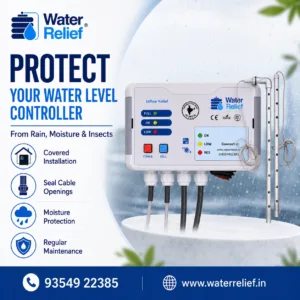
To protect water level controller from rain moisture and insects, the controller should be installed in a dry, covered and properly ventilated location. Direct rain,... Continue reading
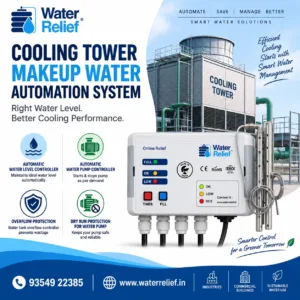
A Cooling tower makeup water automation system helps maintain the required water level in cooling tower tanks without constant manual checking. It monitors the water... Continue reading
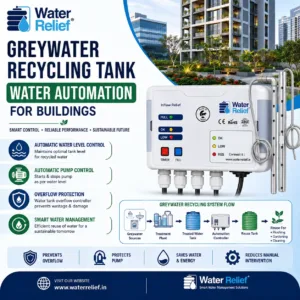
Greywater recycling tank water automation for buildings helps manage recycled water storage and pump operation without constant manual checking. It monitors tank levels, starts the... Continue reading
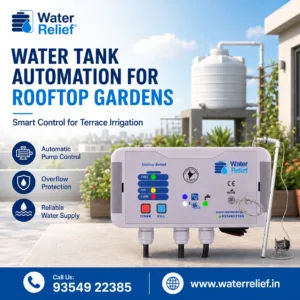
Water tank automation for rooftop gardens helps maintain a reliable water supply for plants without constant manual checking. It monitors the tank level, starts the... Continue reading

Add comment