
No products in the cart.
Return To Shop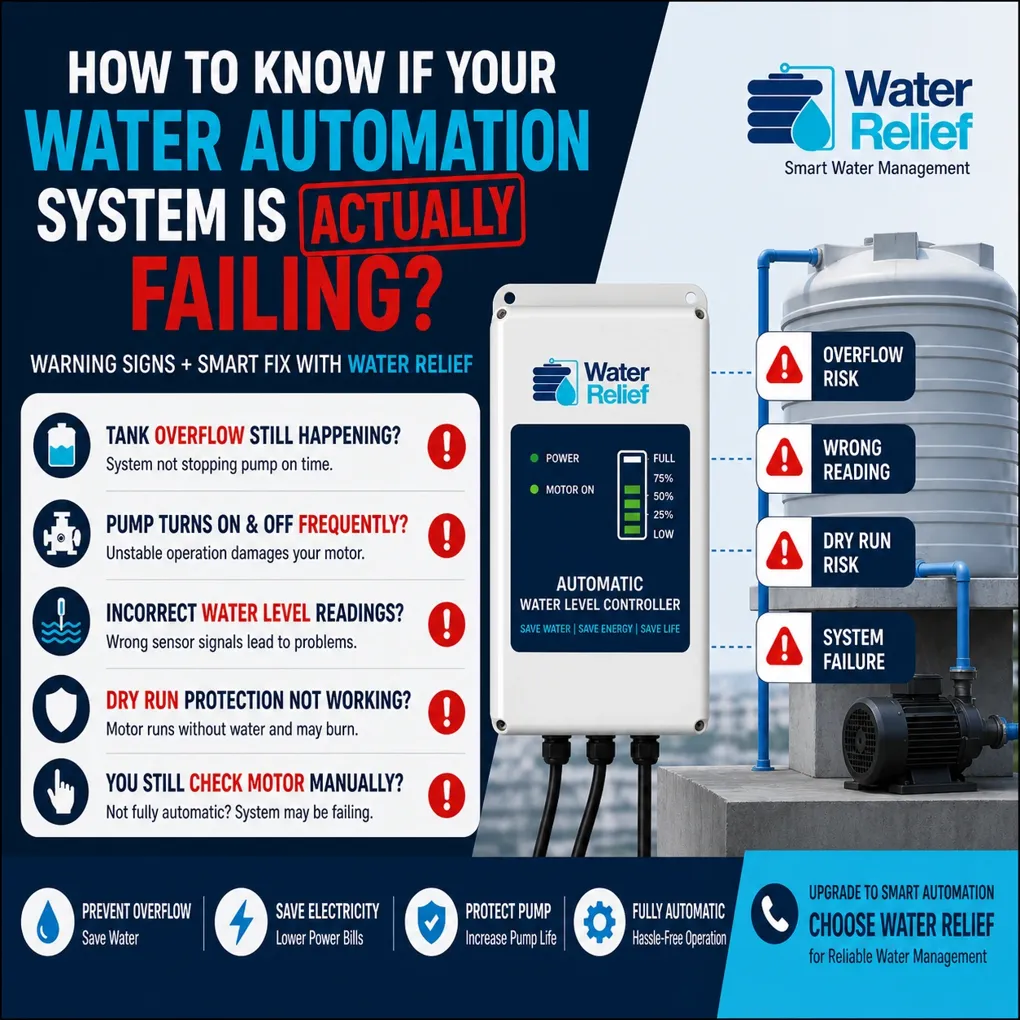
Installing a water automation system is supposed to make your life easier. It should automatically control your pump, prevent overflow, protect your motor, and ensure smooth water management. But what if your system is not working properly anymore?
Many homeowners continue using faulty systems without realizing it until serious problems occur. Understanding how to know if your water automation system is actually failing can help you avoid water wastage, high electricity bills, and pump damage.
A reliable system like Water Relief is designed to prevent such failures and ensure long-term performance.
Why Water Automation Systems Fail Over Time
Water automation systems operate continuously and are exposed to water, moisture, and electrical load. Over time, low-quality systems or improper installations can lead to failure.
Common reasons include:
- poor sensor quality
- corrosion due to water exposure
- loose wiring
- voltage fluctuations
- lack of maintenance
This is why it is important to regularly check system performance.
1. Water Tank Overflow Is Still Happening
One of the clearest signs of failure is when your tank still overflows.
What This Means
If your automation system is working properly, it should stop the pump before overflow happens. If overflow continues, it indicates:
- faulty sensors
- delayed response
- controller failure
Why It’s Dangerous
Overflow leads to:
- water wastage
- wall damage
- increased electricity usage
Water Relief helps prevent this by ensuring accurate level detection and timely pump control.
2. Pump Keeps Turning ON and OFF Frequently
Frequent pump switching is another major warning sign.
Possible Causes
- unstable sensor signals
- incorrect wiring
- poor automation logic
Impact
This can cause:
- motor wear and tear
- reduced pump life
- higher maintenance costs
A stable system like Water Relief ensures smooth and controlled pump operation.
3. Incorrect Water Level Detection
If your system shows wrong water levels, it is a serious issue.
Signs to Watch
- tank appears full but system shows empty
- pump does not start even when tank is empty
- pump runs even when tank is full
Reason
- sensor corrosion
- poor-quality probes
- dirt or scaling
Water Relief uses reliable sensing to maintain accuracy.
4. Dry Run Protection Not Working
Dry run is when the pump runs without water.
Signs of Dry Run Failure
- motor running with no water flow
- unusual motor noise
- overheating
Risks
Dry run can damage:
- pump motor
- internal components
- wiring
A proper system like Water Relief helps reduce this risk with better control logic.
5. System Stops Working Randomly
If your water automation system works sometimes and fails randomly, it indicates instability.
Possible Causes
- loose wiring
- voltage fluctuations
- faulty controller
Result
- inconsistent water supply
- unreliable performance
A durable system like Water Relief ensures consistent operation.
6. Water Pressure Becomes Unstable
Another sign of failure is fluctuating water pressure.
Symptoms
- weak flow on upper floors
- sudden pressure drops
- irregular water supply
Reason
Poor automation control leads to incorrect pump operation.
7. Increased Electricity Bills
If your electricity bill is increasing without any change in usage, your automation system may be inefficient.
Why It Happens
- pump running longer than needed
- repeated ON/OFF cycles
- delayed shutdown
Solution
A smart system like Water Relief optimizes pump usage to reduce electricity consumption.
8. Unusual Motor Noise
If your pump starts making strange noises, it may be due to improper automation.
Possible Issues
- dry run
- pressure imbalance
- motor strain
Impact
Ignoring this can lead to pump failure.
9. You Still Need to Check the Motor Manually
If you are still checking your water motor every day, your system is not fully automatic.
What This Means
Your automation system is either:
- unreliable
- inaccurate
- partially working
A proper system like Water Relief removes the need for manual checking.
Why Most Systems Fail
Most systems fail because they are treated as simple products instead of complete systems.
Common reasons include:
- cheap components
- poor installation
- lack of smart control logic
- no maintenance
How Water Relief Prevents System Failure
Water Relief is designed to provide complete water automation, not just basic pump control.
Key Features
- automatic pump ON/OFF
- accurate water level sensing
- overflow prevention
- improved pump safety
- efficient water usage
Benefits
- reliable performance
- reduced water wastage
- lower electricity bills
- longer pump life
- minimal maintenance
What You Should Do If Your System Is Failing
If you notice the signs mentioned above:
Step 1: Check Sensor Condition
Clean or replace damaged sensors.
Step 2: Inspect Wiring
Ensure connections are secure.
Step 3: Test Pump Operation
Check ON/OFF conditions.
Step 4: Evaluate System Quality
If issues continue, upgrade to a reliable system like Water Relief.
Tips to Keep Your System Working Properly
- clean sensors regularly
- check wiring connections
- monitor performance
- ensure stable voltage
- use a trusted system like Water Relief
About author

Related posts
A Water automation system for food processing units helps manage storage tanks and pumps without constant manual checking. It monitors water levels, starts the pump... Continue reading
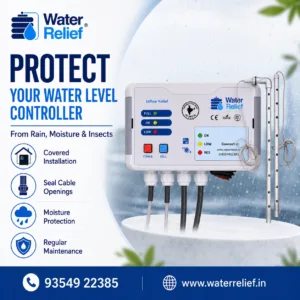
To protect water level controller from rain moisture and insects, the controller should be installed in a dry, covered and properly ventilated location. Direct rain,... Continue reading
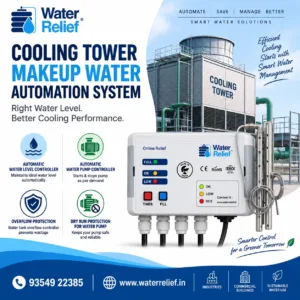
A Cooling tower makeup water automation system helps maintain the required water level in cooling tower tanks without constant manual checking. It monitors the water... Continue reading
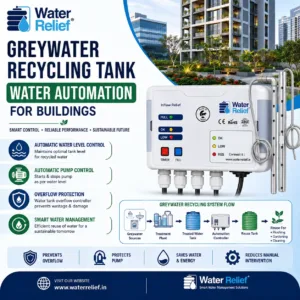
Greywater recycling tank water automation for buildings helps manage recycled water storage and pump operation without constant manual checking. It monitors tank levels, starts the... Continue reading
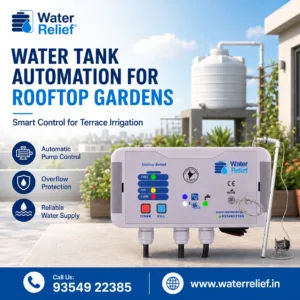
Water tank automation for rooftop gardens helps maintain a reliable water supply for plants without constant manual checking. It monitors the tank level, starts the... Continue reading

Add comment