
No products in the cart.
Return To Shop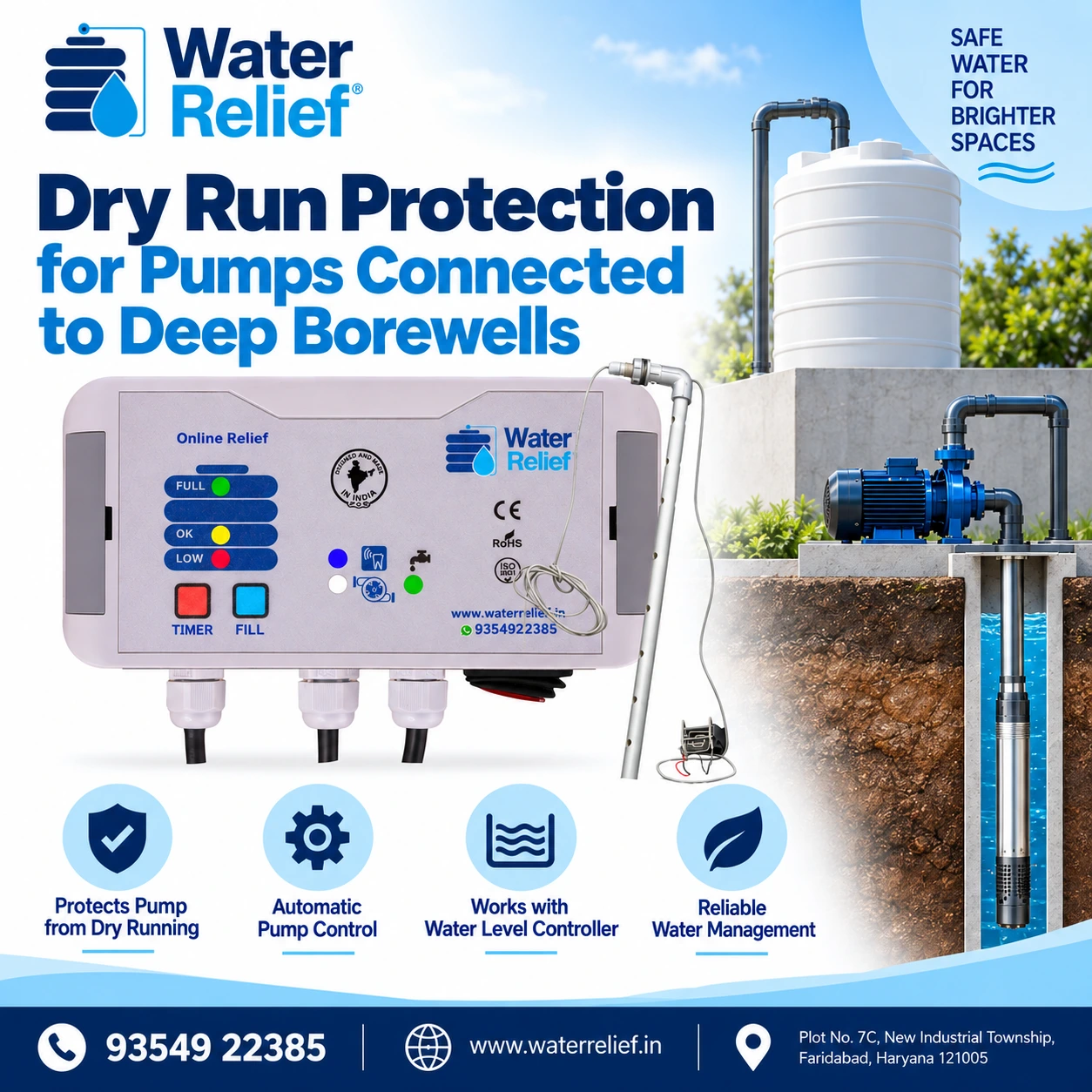
Dry Run Protection for Pumps Connected to Deep Borewells helps protect the pump when enough water is not available in the borewell. If a pump continues running without sufficient water, it may overheat, lose cooling, and suffer mechanical or electrical damage.
Deep borewell pumps are often used in homes, apartments, farms, institutions, commercial buildings, and industrial sites. Since groundwater level can change with season, usage, or borewell condition, the pump may sometimes run with inadequate water.
A properly planned Water automation system can combine borewell pump protection, tank-level control, and automatic pump operation for more reliable daily water management.
What Is Dry Run in a Borewell Pump?
Dry run happens when a pump operates without enough water flowing through it.
This may occur because of:
- Low groundwater level
- Seasonal fall in the water table
- Borewell recovery becoming slow
- Blocked or damaged pipe
- Air entering the suction or delivery line
- Pump running longer than available water supply
- Sudden reduction in borewell yield
When this happens, the motor may continue running even though water is not reaching the tank properly.
Therefore, protection is important.
Why Deep Borewell Pumps Need Dry Run Protection
A deep borewell pump may be installed far below ground level.
Because of this, users cannot easily see whether enough water is available around the pump.
Without protection, the motor may keep running even when the borewell becomes temporarily dry.
Possible problems include:
- Motor overheating
- Seal damage
- Pump wear
- Higher electricity use
- Reduced pump life
- Frequent repair requirements
- Complete motor failure
Dry run protection helps stop the pump before the problem becomes serious.
How Dry Run Protection Works
The exact method can depend on the pump and control system.
A controller may monitor operating conditions and stop the pump when it detects that water is not available as expected.
In an automated setup, the process may work like this:
Pump starts → Water availability checked → Low or no water detected → Pump stops
The system may then allow the borewell time to recover before the pump is used again, depending on the configuration.
Role of an Automatic Water Pump Controller
An Automatic water pump controller helps manage the pump without repeated manual switching.
It can support:
- Automatic pump start
- Automatic pump stop
- Dry run protection
- Tank-level control
- Pump-running indication
- Manual override
- Fault indication
The controller should always be selected according to the pump horsepower, phase, voltage, and starter type.
Role of an Automatic Water Level Controller
An Automatic water level controller monitors the destination water tank.
When the tank becomes low, it can request the pump to start.
Once the tank reaches the selected full level, the pump stops automatically.
Therefore, the system can manage both tank demand and pump safety.
Water Pump Controller for Deep Borewells
A suitable Water pump controller should consider the actual borewell and pump setup.
Important factors include:
- Borewell depth
- Pump horsepower
- Pump phase
- Water yield
- Tank capacity
- Pipe length
- Electrical load
- Starter type
- Distance between borewell and tank
Correct controller selection helps improve system reliability.
Benefits of Dry Run Protection for Deep Borewell Pumps
Helps Protect the Motor
The most important benefit is pump safety.
Stopping the pump during low-water conditions can reduce the risk of overheating and mechanical damage.
Reduces Unnecessary Electricity Use
A pump running without delivering enough water still consumes electricity.
Dry run protection can stop the motor when useful pumping is not happening.
Supports Longer Pump Life
Frequent dry running can increase wear.
Reducing this condition can help support longer service life.
Reduces Manual Monitoring
Users do not need to stand near the pump and check whether water is flowing continuously.
The controller helps manage the system automatically.
Improves Water Management
When dry run protection is combined with tank automation, the pump can operate only when water is needed and available.
This supports better Smart water management.
Water Automation System for Borewell Pumps
A Water automation system can combine several functions in one setup.
It may include:
- Borewell pump
- Source monitoring
- Overhead tank
- Automatic controller
- Tank-level sensors
- Pump starter
- Dry run protection
- Full-level cut-off
This creates a more organised water management system.
Smart Water Systems for Borewell Applications
Smart Water Systems can help coordinate borewell pumps and storage tanks according to actual demand.
A smart setup may support:
- Automatic tank filling
- Pump protection
- Dry run protection
- Full tank cut-off
- Pump status indication
- Manual mode
- Multiple tank control
Therefore, borewell water can be managed with less manual effort.
Water Tank Overflow Controller and Borewell Pump Automation
A Water tank overflow controller helps stop the pump when the destination tank becomes full.
This is especially important because a borewell pump may continue running for a long time if nobody checks the tank.
Automatic full-level cut-off can help reduce:
- Water wastage
- Overflow on rooftops
- Extra pump run time
- Higher electricity use
Dry Run Protection During Low Groundwater Conditions
Groundwater levels may fall during summer or periods of heavy usage.
In such situations, the borewell may not recover as quickly as the pump removes water.
Dry run protection can stop the pump when the supply becomes insufficient.
This helps avoid continuous operation under poor water conditions.
Dry Run Protection for Residential Borewells
Homes and apartment buildings often use borewell pumps for overhead tank filling.
An automated system can:
- Start the pump when the tank is low
- Stop the pump if the borewell runs dry
- Stop the pump when the tank becomes full
As a result, daily water management becomes easier.
Dry Run Protection for Commercial Buildings
Commercial properties may use higher-capacity borewell pumps.
These systems may operate for longer periods.
Therefore, pump protection becomes even more important.
A properly selected controller can help protect the pump while maintaining reliable tank levels.
Dry Run Protection for Farms and Institutions
Farms, schools, colleges, factories, and institutions may also depend on deep borewells.
Since water demand can be high, the pump may operate for extended periods.
Automation can help reduce the risk of dry running while maintaining better control over water storage.
Signs That a Borewell Pump May Be Running Dry
Arrange an inspection if you notice:
- Pump running but no water reaching the tank
- Water flow reducing suddenly
- Pump restarting frequently
- Motor overheating
- Unusual noise
- Repeated tripping
- Pump running longer than normal
- Water supply stopping after a short period
These signs may indicate low borewell yield, wiring issues, controller faults, or pump problems.
Features to Check Before Installation
Pump Capacity
The controller must match the pump horsepower and electrical load.
Pump Phase
Check whether the pump uses single-phase or three-phase power.
Borewell Depth
The depth and water availability should be considered during system planning.
Tank-Level Control
The system should start and stop the pump according to actual tank demand.
Dry Run Protection
This should stop the pump when water availability becomes too low.
Full-Level Cut-Off
The pump should stop automatically when the tank becomes full.
Manual Override
Manual mode is useful during testing and maintenance.
Installation Requirements
Before installation, a technician should inspect the complete borewell system.
Important details include:
- Borewell depth
- Water yield
- Pump horsepower
- Pump phase
- Tank capacity
- Pipe length
- Existing starter panel
- Daily water requirement
- Sensor positions
- Electrical supply
Therefore, proper planning is important before choosing the controller.
Why Choose Water Relief?
Water Relief provides automatic tank and pump-control solutions for residential, commercial, institutional, and suitable industrial applications.
A properly selected system can help:
- Protect pumps from dry running
- Automate tank filling
- Start and stop pumps automatically
- Prevent tank overflow
- Reduce manual checking
- Reduce unnecessary pump operation
- Support better pump safety
- Improve overall water management
The controller should be selected according to the borewell depth, pump specifications, water availability, and tank requirements.
Conclusion
Dry Run Protection for Pumps Connected to Deep Borewells helps reduce the risk of pump damage when groundwater becomes low or unavailable.
An Automatic water pump controller manages pump operation, while an Automatic water level controller monitors tank demand.
With the right Water automation system, Smart Water Systems, and Water tank overflow controller, borewell pumping can become safer, more automatic, and easier to manage.
FAQs
1. What is dry run protection for a deep borewell pump?
It is a safety function that stops the pump when sufficient water is not available, helping reduce the risk of motor and pump damage.
2. Can an automatic controller restart the pump after the borewell recovers?
Depending on the controller configuration, some systems can be set to allow the pump to operate again after suitable recovery conditions are met.
3. Can dry run protection work with an automatic water level controller?
Yes. The system can monitor both the borewell condition and destination tank level.
4. Can the controller also stop the pump when the tank is full?
Yes. A full-level sensor and water tank overflow controller can stop the pump automatically.
5. Is dry run protection useful during summer?
Yes. It is especially useful when groundwater levels fall or borewell recovery becomes slower.
6. Is professional installation recommended?
Yes. A technician should inspect the borewell, pump, electrical panel, tank, and water availability before installation.
About author

Related posts
Automatic Water Level Controller for Textile Processing Utility Tanks helps manage water storage and pump operation in textile units where utility tanks support washing, dyeing,... Continue reading
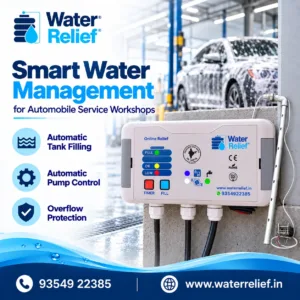
Smart Water Management for Automobile Service Workshops helps automate water tanks and pump operation in car service centres, garages, detailing units, washing bays, and vehicle... Continue reading
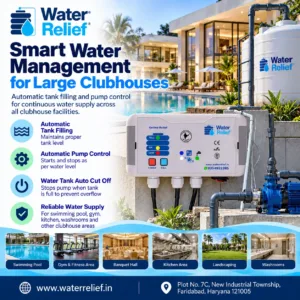
Smart Water Management for Large Clubhouses helps automate water tanks and pump operation across high-use shared facilities. Large clubhouses may include swimming pools, washrooms, kitchens,... Continue reading
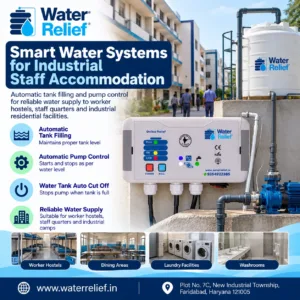
Smart Water Systems for Industrial Staff Accommodation help automate water tanks and pump operation in staff housing facilities near factories, warehouses, plants, construction sites, and... Continue reading
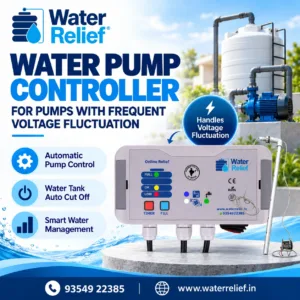
Water Pump Controller for Pumps with Frequent Voltage Fluctuation helps manage pump operation in areas where electrical voltage may rise or fall frequently. Sudden voltage... Continue reading

Add comment