
No products in the cart.
Return To Shop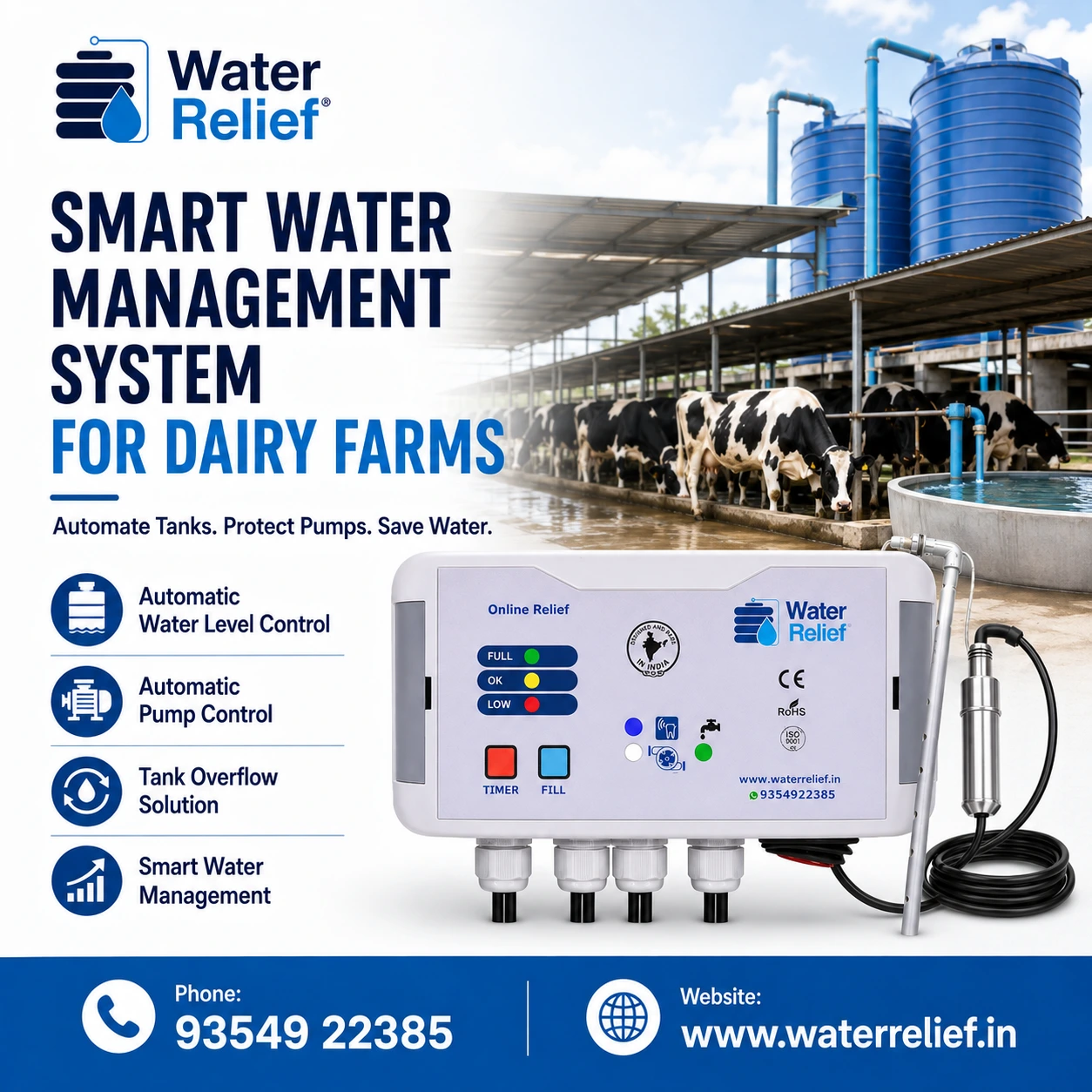
A Smart water management system for dairy farms helps automate water storage, tank filling and pump operation across the farm. It monitors water levels and automatically starts or stops pumps according to actual demand, reducing the need for constant manual checking.
Dairy farms require a reliable water supply throughout the day. Water is needed for cattle drinking, shed cleaning, milking areas, equipment washing, cooling, staff use and general sanitation. If tanks become empty or overflow regularly, farm operations can be affected.
A properly designed Water automation system helps maintain adequate water levels, reduce wastage and improve the daily management of pumps and storage tanks.
Why Dairy Farms Need Smart Water Management
Water consumption on a dairy farm can change significantly throughout the day.
During feeding and milking hours, demand may be high. Cleaning and washing activities can also consume large quantities of water within a short time.
Common water-management problems on dairy farms include:
- Drinking-water tanks becoming empty
- Overhead tanks overflowing
- Pumps running longer than required
- Staff forgetting to switch pumps off
- Water shortage during cleaning
- Pump damage due to an empty source tank
- Uneven water availability across cattle sheds
- Frequent manual tank checking
- Higher electricity consumption
- Water wastage around storage areas
Smart water management helps reduce these issues through automatic monitoring and pump control.
What Is a Smart Water Management System for Dairy Farms?
A smart water-management system connects water-level sensors, storage tanks and pumps through an automatic controller.
The system continuously checks the level inside the tanks. Depending on the installation, it can control water movement between:
- Borewell and storage tank
- Underground tank and overhead tank
- Main tank and cattle drinking tank
- Main storage tank and cleaning tank
- Multiple farm tanks
- Municipal supply and farm storage
When the destination tank becomes low, the system starts the pump. Once the tank reaches the selected full level, the pump stops automatically.
Therefore, the complete filling process becomes more reliable.
How an Automatic Water Level Controller Works
An Automatic water level controller uses sensors installed at selected levels inside the source and destination tanks.
A typical process works like this:
Destination tank low → Source tank checked → Water available → Pump starts → Tank fills → Full level reached → Pump stops
If insufficient water is available in the source tank, the controller can prevent the pump from operating.
This helps protect the water system while maintaining the required storage level.
Role of an Automatic Water Pump Controller
An Automatic water pump controller manages the motor according to signals received from the tank sensors.
It can provide functions such as:
- Automatic pump start
- Automatic pump stop
- Full-tank cut-off
- Low-water detection
- Source-tank monitoring
- Pump-running indication
- Manual override
- Multiple tank support
The controller should be selected according to the pump horsepower, electrical phase, voltage and starter arrangement.
Where Water Is Used on a Dairy Farm
Water demand on dairy farms is not limited to animal drinking.
A complete system may need to supply water for:
Cattle Drinking
Animals need regular access to clean drinking water. Therefore, drinking troughs or storage tanks should remain adequately supplied.
Milking Areas
Water is commonly required for washing milking equipment, floors and surrounding areas.
Shed Cleaning
Cattle sheds require regular cleaning to maintain hygiene.
Equipment Washing
Buckets, pipes, tanks and other farm equipment may need frequent washing.
Cooling and Sprinkling
Some dairy farms use water for sprinklers, misting or cooling systems during hot weather.
Staff and Utility Areas
Water may also be required for washrooms, kitchens and staff facilities.
Because demand comes from several areas, automatic control can simplify water distribution considerably.
Benefits of a Smart Water Management System for Dairy Farms
Maintains Reliable Water Availability
A dairy farm cannot afford frequent water shortages.
The controller starts the pump when the tank becomes low. Therefore, water storage can be replenished before the tank becomes completely empty.
Prevents Tank Overflow
Manual pump operation can easily cause overflow.
A full-level sensor stops the motor when the tank reaches the selected maximum level.
This creates an effective Water tank overflow solution and helps reduce:
- Water wastage
- Muddy areas around tanks
- Slippery surfaces
- Unnecessary pump operation
- Higher electricity costs
- Extra drainage load
Reduces Manual Work
Without automation, workers may need to check water tanks repeatedly.
An automatic controller performs this task continuously, allowing staff to focus on animal care, feeding, cleaning and milking.
Saves Electricity
A pump should operate only when water transfer is necessary.
Automatic control stops the pump immediately after the required tank level is reached. Therefore, unnecessary motor operation is reduced.
Protects the Pump
Running a pump without sufficient source water can cause overheating and damage.
A suitable water automation system can monitor the source tank and prevent unsafe pump operation.
Improves Farm Hygiene
Reliable water availability helps support regular cleaning of sheds, milking areas and equipment.
Therefore, better water management can make routine hygiene easier to maintain.
Reduces Water Wastage
Water is an important operating resource on dairy farms.
Automatic tank control ensures that pumps do not continue filling tanks after they are full. This supports more responsible daily water use.
Water Automation System for Multiple Farm Tanks
Many dairy farms use several tanks instead of one central storage tank.
For example:
- Borewell storage tank
- Main underground tank
- Overhead tank
- Cattle drinking-water tank
- Cleaning-water tank
- Staff-use tank
- Reserve tank
A customised Water automation system can monitor these tanks and manage pumps according to their individual water levels.
This is especially useful for larger farms where tanks are located far apart.
Smart Water Management for Borewell Supply
Many dairy farms depend on borewell water.
In this arrangement, the controller should consider:
- Borewell pump capacity
- Water availability
- Storage-tank level
- Pump starter
- Pump run time
- Destination tank capacity
The system can stop the borewell pump automatically when the storage tank becomes full.
It can also prevent unnecessary operation when water is unavailable.
Automatic Water Pump Controller for Overhead Tanks
Overhead tanks are commonly used to distribute water through gravity.
An Automatic water pump controller can transfer water from the underground or borewell storage tank to the overhead tank automatically.
The pump starts when the overhead tank becomes low and stops at the full level.
This helps maintain water pressure and availability across the farm.
Water Tank Overflow Solution for Dairy Farms
Tank overflow can create several practical problems in dairy environments.
Excess water may mix with mud, animal waste or feed material around the tank area. This can make farm surroundings messy and increase cleaning work.
A reliable Water tank overflow solution prevents these problems by stopping the pump automatically at the selected water level.
It is especially useful when:
- Tanks are located away from the main shed
- Staff cannot see the tank directly
- Pumps operate at night
- Borewell filling takes a long time
- Several workers share pump responsibility
Manual Water Management vs Automatic Control
| Manual Water Management | Automatic Water Management |
|---|---|
| Requires repeated tank checking | Monitors levels automatically |
| Higher risk of overflow | Stops pump when tank is full |
| Depends on farm staff | Reduces manual dependency |
| Water shortages may be noticed late | Starts filling at low level |
| Pump may run unnecessarily | Pump runs only when required |
| Difficult with multiple tanks | Can support multi-tank systems |
| Higher chance of human error | Uses fixed automatic control |
Suitable Dairy Farm Applications
A smart controller can be used in:
Small Dairy Farms
Automation can reduce manual pump switching and keep the main water tank filled.
Medium Dairy Farms
Multiple tanks for cattle, cleaning and general use can be managed more efficiently.
Large Commercial Dairy Farms
Large operations can benefit from multiple pump and multi-tank control.
Cattle Sheds
Water tanks supplying drinking troughs and wash areas can be automated.
Milk Collection and Processing Areas
Where permitted and suitable, utility water tanks can be managed automatically for cleaning and support operations.
Features to Check Before Installation
Number of Tanks
The system should support the total number of source and destination tanks.
Pump Capacity
The controller must match the pump horsepower and electrical load.
Pump Phase
Check whether the system uses single-phase or three-phase pumps.
Low-Level Protection
The source tank should be monitored to prevent the pump from operating without sufficient water.
Full-Level Cut-Off
The destination tank should stop filling automatically at the selected maximum level.
Manual Override
Workers should be able to operate the pump manually during maintenance or emergencies.
Clear Indicators
Useful indicators may include:
- Tank low
- Tank full
- Pump running
- Source water low
- Power available
- Manual/automatic mode
Installation Requirements
Before installing the system, the farm water network should be inspected.
Important details include:
- Number of cattle
- Daily water requirement
- Number of tanks
- Tank capacities
- Water source
- Borewell availability
- Pump horsepower
- Pump phase
- Existing starter panel
- Distance between tanks
- Pipe arrangement
- Building and tank height
- Cleaning-water demand
- Drinking-water demand
- Sensor locations
Correct planning ensures that the automation system matches the actual farm requirements.
Why Choose Water Relief?
Water Relief provides automatic water-management solutions for residential, commercial and institutional properties, as well as suitable agricultural water-storage applications.
A properly selected system can help:
- Automate tank filling
- Start and stop pumps automatically
- Prevent tank overflow
- Monitor source and destination tanks
- Reduce manual checking
- Save water and electricity
- Support multiple tanks
- Improve overall water availability
The controller should be selected according to the farm’s tank arrangement, pump specifications and water requirements.
Conclusion
A Smart water management system for dairy farms helps maintain reliable tank levels while reducing manual pump operation and unnecessary water wastage.
An Automatic water level controller can monitor the farm’s water tanks and operate the pump according to actual demand. At the same time, an Automatic water pump controller ensures that the motor stops when the tank becomes full.
With the right Water automation system, dairy farms can improve water availability for cattle, cleaning and daily operations while creating a more efficient approach to Smart water management.
FAQs
1. What is a smart water management system for dairy farms?
It is an automatic system that monitors water tank levels and controls pumps according to the farm’s water requirements.
2. Can an automatic controller prevent water tank overflow?
Yes. A full-level sensor can stop the pump when the tank reaches the selected maximum water level.
3. Can the system manage multiple tanks on a dairy farm?
Yes. A customised system can manage several tanks used for drinking water, cleaning, overhead storage and other farm requirements.
4. Can the controller work with a borewell pump?
Yes. The controller can be selected according to the borewell pump horsepower, electrical phase and starter type.
5. Does water automation reduce electricity use?
Yes. The pump operates only when a tank requires water and stops automatically when the required level is reached.
6. Is professional installation recommended?
Yes. A technician should inspect the tanks, water source, pump capacity and electrical system before configuring the controller.
About author

Related posts
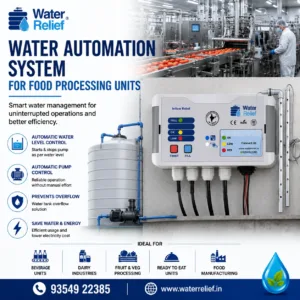
A Water automation system for food processing units helps manage storage tanks and pumps without constant manual checking. It monitors water levels, starts the pump... Continue reading
To protect water level controller from rain moisture and insects, the controller should be installed in a dry, covered and properly ventilated location. Direct rain,... Continue reading
A Cooling tower makeup water automation system helps maintain the required water level in cooling tower tanks without constant manual checking. It monitors the water... Continue reading
Greywater recycling tank water automation for buildings helps manage recycled water storage and pump operation without constant manual checking. It monitors tank levels, starts the... Continue reading
Water tank automation for rooftop gardens helps maintain a reliable water supply for plants without constant manual checking. It monitors the tank level, starts the... Continue reading

Add comment