
No products in the cart.
Return To Shop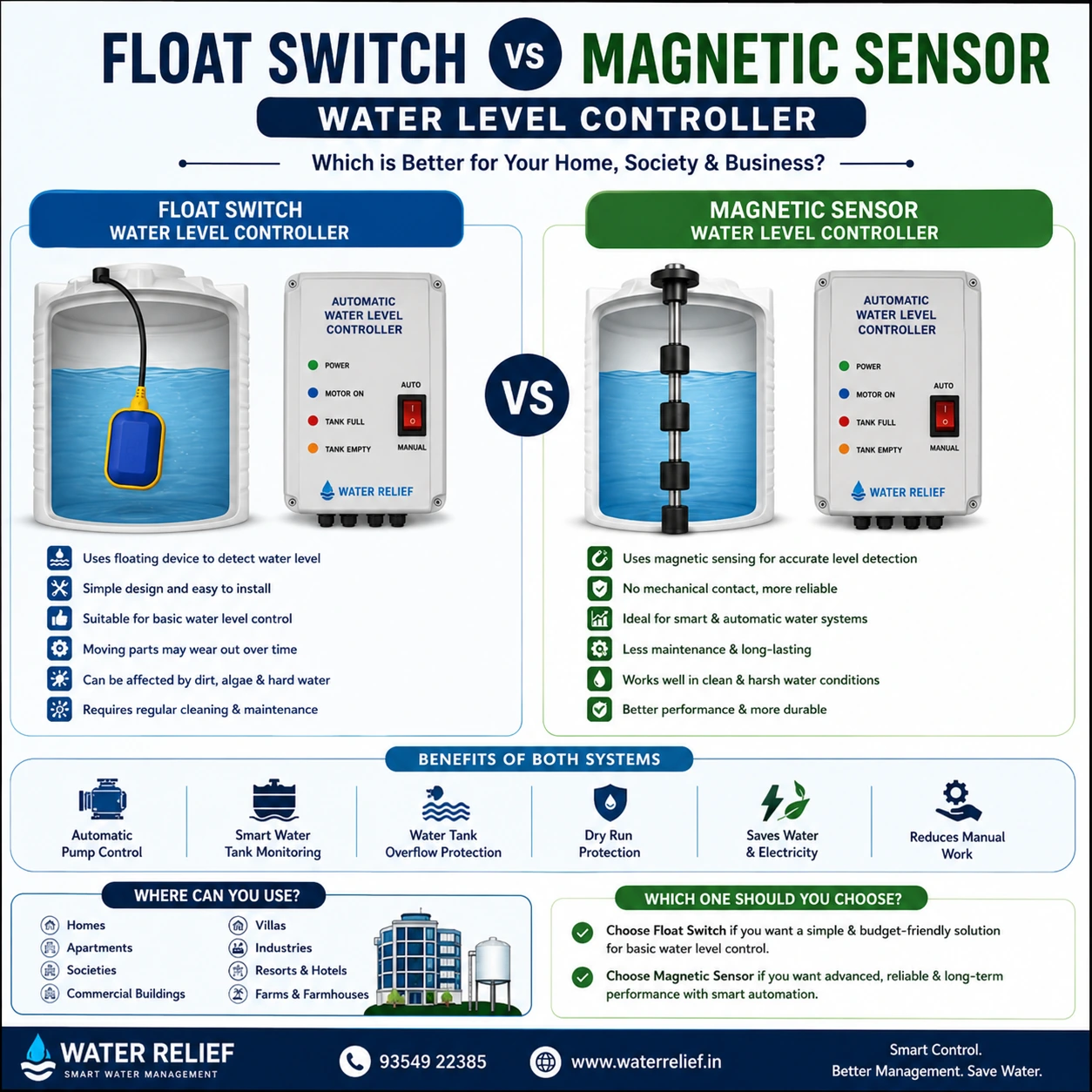
Float Switch vs Magnetic Sensor is an important comparison for anyone planning to install a water level controller. Homes, societies, apartments, offices and commercial buildings need proper tank monitoring. If the sensor is not suitable, the pump may not work correctly. It may also cause overflow, dry running or wrong level detection.
Water Relief helps users choose smart and reliable water control solutions. A good sensor-based controller can start and stop the pump automatically. It can also help prevent tank overflow and reduce manual work.
However, many people get confused between a float switch and a magnetic sensor. Both sensors are used for water level control. But their working style, durability and use cases are different.
In this blog, we will compare Float Switch vs Magnetic Sensor in simple language. This will help you choose the right water controller for your home or building.
What Is a Water Level Sensor?
A Water Level Sensor is used to detect the water level inside a tank. It helps the controller understand whether the tank is empty, low, medium or full.
Once the sensor detects the level, it sends a signal to the controller. Then the controller can start or stop the pump.
A water level sensor is useful for:
- Overhead tanks
- Underground tanks
- Basement tanks
- Society water tanks
- Commercial tanks
- Industrial water systems
- Farmhouse water storage
- Resort and hotel tanks
Water Relief uses smart water control methods to make pump automation simple and reliable.
Why Sensor Selection Matters
The sensor is a key part of any water level controller. If the sensor works properly, the system works smoothly. If the sensor fails, the pump may not start or stop at the right time.
A good sensor helps with:
- Better tank level detection
- Smooth pump operation
- Less water wastage
- Better pump safety
- Reduced manual checking
- Lower maintenance stress
- Better water availability
That is why choosing between Float Switch vs Magnetic Sensor matters. The right choice depends on your tank type, water quality, installation area and usage.
What Is a Float Switch Water Level Controller?
A Float Switch Water Level Controller uses a floating device to detect the water level. The float moves up and down with the water. When the water rises, the float moves upward. When the water goes down, the float moves downward.
This movement sends a signal to the controller. Then the pump can start or stop.
A float switch is commonly used in:
- Homes
- Small tanks
- Overhead tanks
- Underground tanks
- Simple pump control systems
- Basic water automation setups
A float switch is simple and widely used. It can work well in many normal water conditions.
Benefits of Float Switch Water Level Controller
A Float Switch Water Level Controller is popular because it is simple. It is also easy to understand.
Main benefits include:
- Simple working method
- Easy installation
- Commonly available
- Useful for many tank types
- Suitable for basic pump control
- Easy to replace
- Good for simple water systems
For small homes and basic water tank setups, a float switch can be a practical option.
Limitations of Float Switch Water Level Controller
A float switch also has some limitations. Since it has a moving part, it may need more care in some conditions.
Common limitations include:
- Moving parts may get stuck
- Dirt or deposits can affect movement
- It may need more space inside the tank
- It may not be ideal for narrow tanks
- Hard water deposits can affect performance
- It may need regular checking
If the float gets stuck, the pump may not stop on time. This can cause overflow. So, regular maintenance is important.
What Is a Magnetic Sensor Water Level Controller?
A Magnetic Sensor Water Level Controller uses magnetic sensing to detect water levels. It usually works with a magnetic float or magnetic sensing arrangement. The sensor detects the position of the float without direct mechanical switching in the same way as a basic float switch.
This type of sensor is often more stable and cleaner in operation. It can be useful where better accuracy and long-term reliability are needed.
A magnetic sensor is suitable for:
- Homes
- Apartments
- Societies
- Commercial buildings
- Smart tank systems
- Premium water controllers
- Automated pump systems
- Long-term water monitoring setups
Water Relief supports smarter water control options for users who want better pump automation.
Benefits of Magnetic Sensor Water Level Controller
A Magnetic Sensor Water Level Controller is useful because it can offer better performance in many setups. It can also be more suitable for smart water automation.
Main benefits include:
- Better level detection
- Smooth operation
- Less mechanical wear
- Good for smart systems
- Suitable for long-term use
- Helpful for automatic pump control
- Better for neat installation
- Useful in modern water systems
A magnetic sensor can be a good choice for users who want a more advanced water level control setup.
Limitations of Magnetic Sensor Water Level Controller
A magnetic sensor is smart and useful. However, it should be installed properly for best results.
Some points to consider include:
- Installation should be done carefully
- Sensor quality matters
- It may cost more than a basic float switch
- It should match your tank setup
- Poor installation can affect performance
So, choosing a trusted brand and proper installer is important. Water Relief helps users select a suitable system based on their water tank and pump setup.
Float Switch vs Magnetic Sensor: Main Difference
The main difference between Float Switch vs Magnetic Sensor is the working method.
A float switch uses direct float movement to trigger switching. A magnetic sensor uses magnetic detection to sense level changes.
Simple comparison:
- Float switch is basic and simple
- Magnetic sensor is more advanced
- Float switch has more mechanical movement
- Magnetic sensor can offer smoother sensing
- Float switch may need more cleaning
- Magnetic sensor may offer better long-term use
- Float switch is suitable for simple systems
- Magnetic sensor is useful for smart controllers
Both options can work well. However, the right choice depends on your need.
Which Sensor Is Better for Homes?
For homes, both sensors can work. If your tank setup is simple, a float switch may be enough. If you want better automation and smart monitoring, a magnetic sensor may be a better option.
Choose a float switch if:
- Your water system is basic
- You want a simple setup
- Your tank has enough space
- You can check the sensor regularly
- You need a simple pump control option
Choose a magnetic sensor if:
- You want better reliability
- You need smart automation
- Your water system runs daily
- You want smoother level detection
- You prefer a modern controller
Water Relief can help homeowners choose the right sensor-based solution.
Which Sensor Is Better for Societies and Apartments?
Societies and apartments usually need more reliable water control. Water demand is higher. Tanks are larger. Pumps run more often.
In such cases, sensor quality matters more. A Sensor Based Water Controller should work smoothly and reduce manual work.
For societies, magnetic sensors may be useful because they support better automation. However, float switches may still work in simple setups.
A good system should provide:
- Proper pump control
- Overflow prevention
- Tank level monitoring
- Pump protection
- Low maintenance
- Reliable daily performance
Water Relief supports smart water solutions for apartments, societies and residential buildings.
Automatic Water Level Controller and Sensor Use
An Automatic Water Level Controller depends on sensors to work properly. The sensor detects the water level. The controller then operates the pump.
If the tank is low, the controller can start the pump. If the tank is full, it can stop the pump. This reduces manual work and saves water.
An Automatic Water Level Controller helps with:
- Pump automation
- Water saving
- Overflow prevention
- Better tank monitoring
- Less manual checking
- Pump safety
Water Relief uses smart control solutions to make daily water management easy.
Sensor Based Water Controller for Modern Needs
A Sensor Based Water Controller is a smart choice for modern homes and buildings. It works with sensors to manage tank levels and pump operation.
This type of system is useful because it reduces guesswork. You do not need to check the tank again and again.
A Sensor Based Water Controller helps with:
- Accurate tank level detection
- Automatic pump control
- Reduced water wastage
- Better pump safety
- Smooth water supply
- Less manual work
Water Relief helps users shift from manual pump control to sensor-based water automation.
Smart Water Tank Monitoring with Better Sensors
Smart Water Tank Monitoring helps users understand tank levels more clearly. Without proper monitoring, people often guess the water level. This can lead to overflow or water shortage.
Better sensors improve monitoring. They help the controller take action at the right time.
Smart Water Tank Monitoring is useful for:
- Homes
- Villas
- Apartments
- Societies
- Commercial buildings
- Hotels
- Resorts
- Schools
- Offices
Water Relief supports smart monitoring for better water management and pump control.
Water Pump Automation System and Sensor Choice
A Water Pump Automation System needs reliable sensors. The sensor tells the system when to start or stop the pump.
If the sensor is not working well, the pump may run at the wrong time. This can waste water and electricity.
A good automation system should include:
- Reliable sensors
- Automatic pump control
- Overflow protection
- Pump safety
- Easy monitoring
- Safe installation
- Low maintenance
Water Relief helps users manage pump operation more efficiently with smart automation.
Water Tank Overflow Protection
Water Tank Overflow Protection is one of the biggest reasons to install a water controller. Overflow wastes water. It can also damage walls, terrace areas and nearby spaces.
A good sensor helps detect the full level. Then the controller stops the pump.
This helps prevent:
- Water wastage
- Leakage
- Dampness
- Slippery surfaces
- Extra electricity use
- Pump overuse
- Maintenance issues
Water Relief provides water control solutions that help reduce overflow and protect pumps.
Which One Needs More Maintenance?
A float switch may need more checking because it has moving parts. Dirt, algae, hard water deposits or tank sludge can affect its movement.
A magnetic sensor may need less mechanical maintenance. However, it should still be checked from time to time.
Simple maintenance tips:
- Clean sensors regularly
- Check wire connections
- Keep the tank clean
- Avoid loose wiring
- Test pump start and stop points
- Call a technician if the system behaves oddly
Regular checking keeps any water controller working better.
Float Switch vs Magnetic Sensor: Which Should You Choose?
The best choice depends on your property and water system.
Choose float switch if:
- You want a simple solution
- Your tank setup is basic
- Budget is a key concern
- You can maintain it regularly
- Your tank has enough space
Choose magnetic sensor if:
- You want smart automation
- You need better reliability
- You want smooth operation
- You prefer low-maintenance sensing
- Your property has regular water demand
For most modern homes, societies and commercial buildings, a magnetic sensor can be a strong option. However, a good float switch can also work well in basic setups.
Why Choose Water Relief?
Water Relief helps users choose the right water level controller based on their tank and pump setup. The goal is simple: save water, protect pumps and reduce manual work.
Water Relief solutions help with:
- Automatic pump control
- Better tank monitoring
- Overflow protection
- Pump safety
- Smart water management
- Easy operation
- Reliable performance
Whether you need a Float Switch Water Level Controller or a Magnetic Sensor Water Level Controller, Water Relief can help you find the right solution.
Final Thoughts
Float Switch vs Magnetic Sensor is an important comparison before choosing a water level controller. A float switch is simple and useful for basic systems. A magnetic sensor is more advanced and suitable for smart water control.
Both options can help manage tank levels. However, the right sensor depends on your tank type, water quality, usage and maintenance needs.
Water Relief helps users install smart water control systems for homes, apartments, societies and commercial buildings. With the right Automatic Water Level Controller, Water Level Sensor, Sensor Based Water Controller, Smart Water Tank Monitoring, Water Pump Automation System and Water Tank Overflow Protection, daily water management becomes easier and safer.
FAQs
1. What is the main difference between float switch and magnetic sensor?
A float switch works with direct float movement. A magnetic sensor detects water level through magnetic sensing. Both are used for water level control.
2. Which is better: Float Switch vs Magnetic Sensor?
Both are useful. A float switch is simple and budget-friendly. A magnetic sensor is better for smart and reliable automation.
3. What is a Magnetic Sensor Water Level Controller?
A Magnetic Sensor Water Level Controller uses magnetic sensing to detect tank water levels and control the pump.
4. What is a Float Switch Water Level Controller?
A Float Switch Water Level Controller uses a floating device that moves with water level and signals the pump controller.
5. Is an Automatic Water Level Controller useful for homes?
Yes, an Automatic Water Level Controller helps homes prevent overflow, reduce manual work and protect pumps.

About author

Related posts
A Water automation system for food processing units helps manage storage tanks and pumps without constant manual checking. It monitors water levels, starts the pump... Continue reading
To protect water level controller from rain moisture and insects, the controller should be installed in a dry, covered and properly ventilated location. Direct rain,... Continue reading
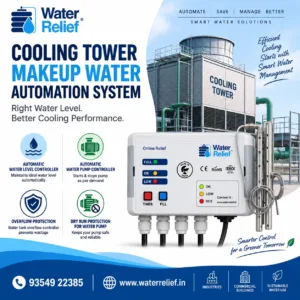
A Cooling tower makeup water automation system helps maintain the required water level in cooling tower tanks without constant manual checking. It monitors the water... Continue reading
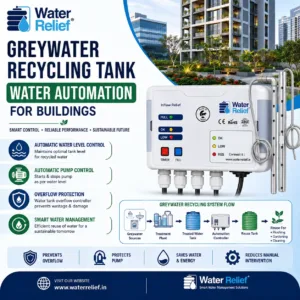
Greywater recycling tank water automation for buildings helps manage recycled water storage and pump operation without constant manual checking. It monitors tank levels, starts the... Continue reading
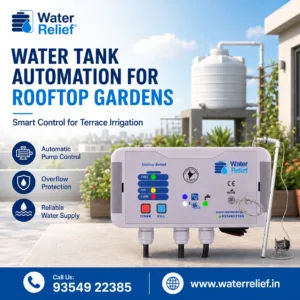
Water tank automation for rooftop gardens helps maintain a reliable water supply for plants without constant manual checking. It monitors the tank level, starts the... Continue reading

Add comment