
No products in the cart.
Return To Shop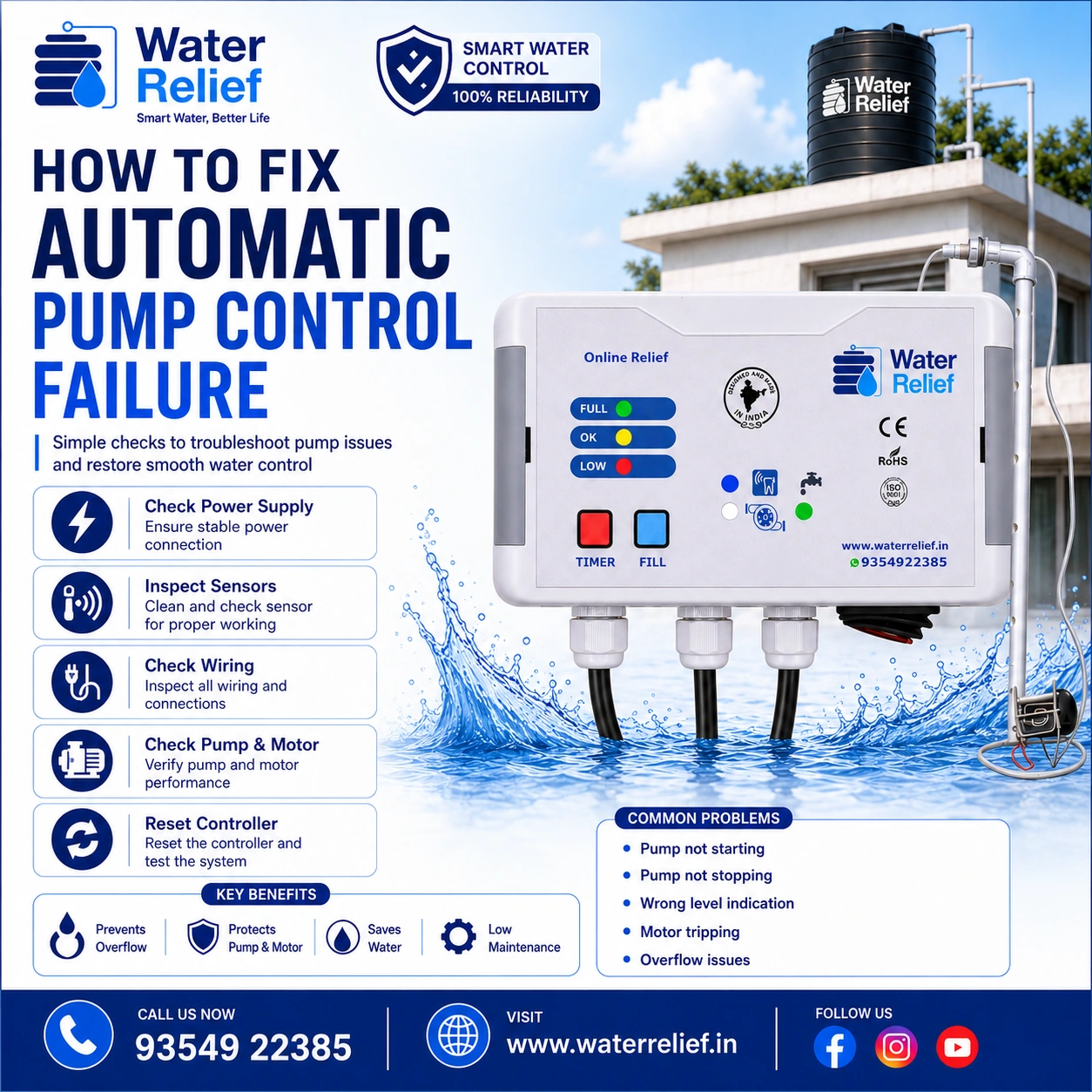
How to fix automatic pump control failure is a common question for homes, apartments, societies and commercial buildings that depend on automatic water systems. When the pump controller stops working properly, it can create water shortage, tank overflow, motor damage and daily stress. Water Relief helps users manage these problems with smart water automation and reliable pump control.
An automatic pump controller should start the motor when water is low. It should also stop the motor when the tank becomes full. However, sometimes the system does not work as expected. The pump may not start. It may not stop. It may run continuously. In some cases, the controller may show wrong water level signals.
Many users search for how to fix automatic pump control failure when their water tank starts overflowing or the pump does not respond automatically. The good news is that most pump control problems can be checked step by step. You need to inspect the power supply, sensors, wiring, controller and motor condition.
Water Relief supports better water management by reducing manual pump operation. It helps prevent overflow, protect pumps and improve daily water control.
What Does Automatic Pump Control Failure Mean?
Automatic pump control failure means your pump controller is not managing the motor correctly. In a working system, the controller checks the water level and operates the pump automatically. When this process fails, the system becomes unreliable.
For example, your tank may be empty, but the pump does not start. Or the tank may be full, but the pump keeps running. Both problems can create serious issues.
If the pump does not start, you may face water shortage. If the pump does not stop, you may face Tank Overflow Issues. If the motor runs without water, it may get damaged.
A reliable Automatic Water System should reduce these problems. It should control the pump at the right time and protect the motor from unnecessary running.
Common Signs of Automatic Pump Control Failure
Before you learn how to fix automatic pump control failure, you should understand the common signs. These signs help you find the problem faster.
The first sign is that the pump does not start automatically when the tank is empty. This may happen due to a sensor problem, power issue or faulty wiring.
The second sign is that the pump does not stop when the tank is full. This can cause water overflow and wastage.
The third sign is frequent motor tripping. If the motor starts and stops again and again, the issue may be related to voltage, overload, relay or motor health.
The fourth sign is wrong indicator lights. The controller may show “full” when the tank is not full. It may also show “low” when the tank has enough water.
The fifth sign is regular manual operation. If you have to switch the pump on and off manually every day, your automatic system is not working properly.
Main Reasons Behind Automatic Pump Control Failure
There are many reasons behind automatic pump control failure. One common reason is a faulty sensor. Sensors check the water level in the tank. If they are dirty, loose or damaged, the controller gets wrong signals.
Another reason is wiring damage. Water tank areas often face moisture, heat and dust. Over time, wires may become weak or loose. This can stop the controller from working properly.
Power supply issues can also affect pump control. Low voltage, high voltage or a tripped MCB can stop the system.
Wrong installation is another major reason. If sensors are placed at the wrong level, the controller cannot detect water correctly.
In some cases, the controller itself may be old or damaged. Low-quality systems may fail more often. That is why reliable automatic water management systems are important for long-term water control.
How to Fix Automatic Pump Control Failure Step by Step
If you want to know how to fix automatic pump control failure, start with simple checks. Do not open electrical parts without safety. Water and electricity can be dangerous together.
First, check whether the controller is getting power. Then check the tank sensors. After that, inspect the wiring and motor connection. You should also check the relay, contactor and pump condition.
If the problem is small, cleaning sensors or tightening wires may help. However, if the system has repeated faults, you should call a trained technician.
Water Relief helps reduce these repeated issues by offering smart water control for homes, societies and buildings. It supports smooth pump operation and better tank monitoring.
Check the Power Supply First
Power supply is the first thing you should check. If there is no power, the controller cannot start the pump. Check the main switch, MCB, plug point and power connection.
Sometimes the problem is not with the pump controller. It may be a tripped MCB or loose socket. If the controller display or indicator light is off, power supply could be the reason.
Also check whether the motor gets power when the controller gives the start command. If the controller is working but the motor does not start, the issue may be with the motor, capacitor, relay or wiring.
Always call an electrician if you see loose wires, sparks or burning smell. Do not take risks with electrical systems.
How to Fix Automatic Pump Control Failure Caused by Sensors
Sensors are very important in any water automation system. They tell the controller whether the tank is empty, half-filled or full. If sensors fail, the complete system can stop working properly.
If you want to know how to fix automatic pump control failure caused by sensors, start by checking the sensor position. The sensors should not be loose, broken or placed at the wrong level.
Hard water can also affect sensors. Over time, salt and mineral deposits may collect on sensor points. This can stop accurate water level detection. Cleaning the sensor may solve the issue.
A good Smart Water Management system depends on accurate water level sensing. If the sensor keeps giving wrong signals even after cleaning, it may need replacement.
How to Fix Automatic Pump Control Failure Due to Wiring
Loose wiring is one of the most common reasons for pump controller problems. The controller is connected to the motor, power supply and tank sensors. If any wire becomes loose, the system may fail.
In many cases, how to fix automatic pump control failure becomes easier when damaged wiring is repaired properly. Check the sensor wire from the tank to the controller. Also check the motor wire and power cable.
Look for cuts, loose joints, exposed copper or burnt marks. These signs show that wiring needs repair.
Do not use temporary tape joints for long-term use. Poor wiring can cause short circuits and safety risks. Always use proper insulation and good-quality wire.
Check the Pump and Motor Condition
Sometimes the automatic controller is fine, but the pump or motor has a problem. If the motor does not start even after getting power, the issue may be inside the pump.
A weak capacitor can stop the motor from starting. A damaged winding can also create problems. If the motor makes a humming sound but does not rotate, get it checked by a technician.
If the motor trips again and again, it may be overloaded. It may also have internal damage.
For borewell and submersible pumps, checking can be more technical. A Submersible Pump Controller can help protect the pump, but it cannot repair a damaged motor. If the pump is faulty, it needs proper servicing.
How to Fix Automatic Pump Control Failure in Submersible Pumps
Submersible pumps need extra care because they work inside water sources or underground setups. If a submersible pump controller fails, the pump may not start or may run without enough water.
To understand how to fix automatic pump control failure in submersible pumps, check the dry run protection first. Dry running can damage the pump quickly. If the pump runs without water, the controller may not be receiving the correct signal.
Also check the cable from the pump to the controller. Long cables can get damaged over time. A weak connection can stop the system from working correctly.
A reliable Submersible Pump Controller helps reduce dry run risk and improves pump safety. Water Relief can support better pump control for homes, societies and buildings that use submersible pumps.
Check the Relay or Contactor
The relay or contactor helps switch the motor on and off. If this part fails, the controller may not operate the pump correctly.
Sometimes the relay gets stuck in the “on” position. In that case, the pump may keep running even when the tank is full. This creates overflow.
Sometimes the relay gets stuck in the “off” position. In that case, the pump may not start at all.
A technician can test the relay or contactor with proper tools. If it is damaged, replacement is usually the best option.
This is another reason why good-quality automatic water management systems are better for long-term use.
Reset the Controller
A simple reset may help if the system has a temporary fault. Switch off the power supply for a few minutes. Then turn it on again and check the controller indicators.
Observe whether the pump starts and stops correctly. Also check whether the tank level signals are accurate.
However, if the same problem returns again, do not keep resetting the system. Repeated failure means there may be a deeper issue. It could be related to sensors, wiring, relay, motor or controller board.
In that case, proper inspection is needed.
How Water Relief Helps Prevent Automatic Pump Control Failure
Water Relief helps reduce the need to repeatedly search for how to fix automatic pump control failure by offering better water automation and reliable pump operation.
The system supports automatic pump control, tank level monitoring and overflow prevention. When the tank level goes low, the pump can start automatically. When the tank becomes full, the pump can stop automatically.
This helps reduce Tank Overflow Issues and unnecessary motor running. It also reduces manual work for homeowners, maintenance teams and facility managers.
Water Relief is useful for homes, apartments, societies, nursing homes, offices and commercial buildings. It helps make daily water management simple and more dependable.
Why Smart Water Management Reduces Pump Control Problems
Smart Water Management is important because water problems affect daily life. A small controller fault can create water shortage. A small overflow can waste hundreds of litres of water. A small wiring issue can damage the motor.
Smart control helps reduce these risks. It allows the pump to run only when needed. It also helps maintain proper tank levels.
For homes, it gives peace of mind. For societies, it reduces complaints. For commercial buildings, it supports smooth operations.
Water Relief helps users move from manual pump control to smart automation. This makes water management safer and easier.
Silent Water Controller for Better Daily Use
A Silent Water Controller is useful for homes, apartments and societies where loud water alarms create disturbance. A normal alarm only alerts users. It does not always stop the pump.
If no one hears the alarm, the tank may still overflow. If the alarm rings at night, it can disturb people.
A silent automatic controller works better. It controls the pump directly and reduces unnecessary noise. It manages water in the background without creating daily stress.
Water Relief supports a smarter and more peaceful water control experience.
Benefits of a Reliable Automatic Water System
A reliable Automatic Water System offers many benefits. It saves water by stopping overflow. It saves electricity because the pump runs only when needed. It protects the motor from unnecessary running. It also reduces manual work.
For a home, this means less tension. For a society, this means fewer complaints. For a commercial space, this means better facility management.
Water Relief makes water control simple. It helps users avoid daily pump checking and improves water system reliability.
Maintenance Tips to Avoid Pump Control Failure
Regular maintenance can prevent many pump controller problems. Check the controller lights from time to time. Clean the sensors if there is hard water deposit. Inspect wires for cuts or loose joints.
Keep the controller away from direct water exposure. Also make sure the pump starts and stops at the correct water level.
Do not ignore small faults. If the system behaves differently, check it early. A small repair can prevent a bigger breakdown.
Using a reliable solution like Water Relief can also help reduce repeated pump control issues.
Final Thoughts on How to Fix Automatic Pump Control Failure
The best answer to how to fix automatic pump control failure is to inspect the system step by step. Start with the power supply. Then check sensors, wiring, motor, relay and controller settings.
Automatic pump control failure can happen due to many reasons. It may be a simple wiring issue, sensor fault or power problem. It may also be a motor or relay issue.
Water Relief helps users manage water more safely with smart automation. It supports better pump control, reduces overflow and makes water management easier.
A good water controller is not just a convenience product. It is a practical investment for saving water, protecting pumps and reducing daily stress.
FAQs
1. What causes automatic pump control failure?
Automatic pump control failure can happen due to sensor faults, loose wiring, power issues, relay failure, wrong installation or motor problems.
2. How to fix automatic pump control failure at home?
To fix automatic pump control failure, check the power supply, sensors, wiring, controller indicators and motor condition. If the issue continues, call a trained technician.
3. Why does my pump not stop when the tank is full?
This may happen due to a faulty full-level sensor, stuck relay, wrong wiring or controller fault. It can cause Tank Overflow Issues if not fixed quickly.
4. Why does my pump not start automatically?
The pump may not start due to no power supply, faulty sensor, damaged wiring, relay failure, capacitor issue or motor problem.
5. Is Water Relief useful for pump automation?
Yes, Water Relief helps automate pump operation, manage tank levels, reduce overflow and support better water management.
About author

Related posts
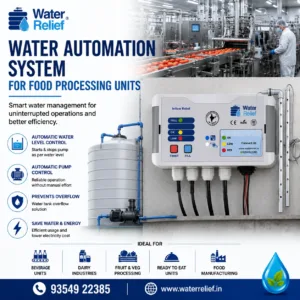
A Water automation system for food processing units helps manage storage tanks and pumps without constant manual checking. It monitors water levels, starts the pump... Continue reading
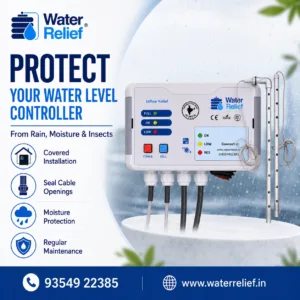
To protect water level controller from rain moisture and insects, the controller should be installed in a dry, covered and properly ventilated location. Direct rain,... Continue reading
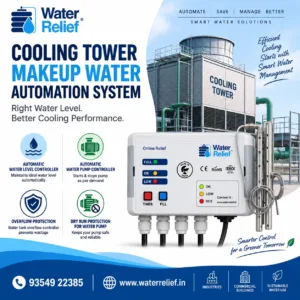
A Cooling tower makeup water automation system helps maintain the required water level in cooling tower tanks without constant manual checking. It monitors the water... Continue reading
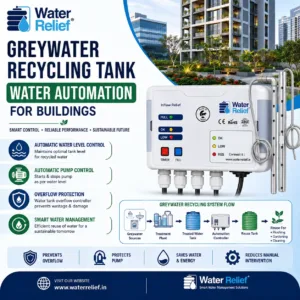
Greywater recycling tank water automation for buildings helps manage recycled water storage and pump operation without constant manual checking. It monitors tank levels, starts the... Continue reading
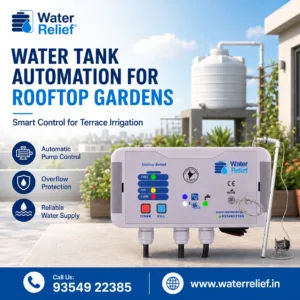
Water tank automation for rooftop gardens helps maintain a reliable water supply for plants without constant manual checking. It monitors the tank level, starts the... Continue reading

Add comment