
No products in the cart.
Return To Shop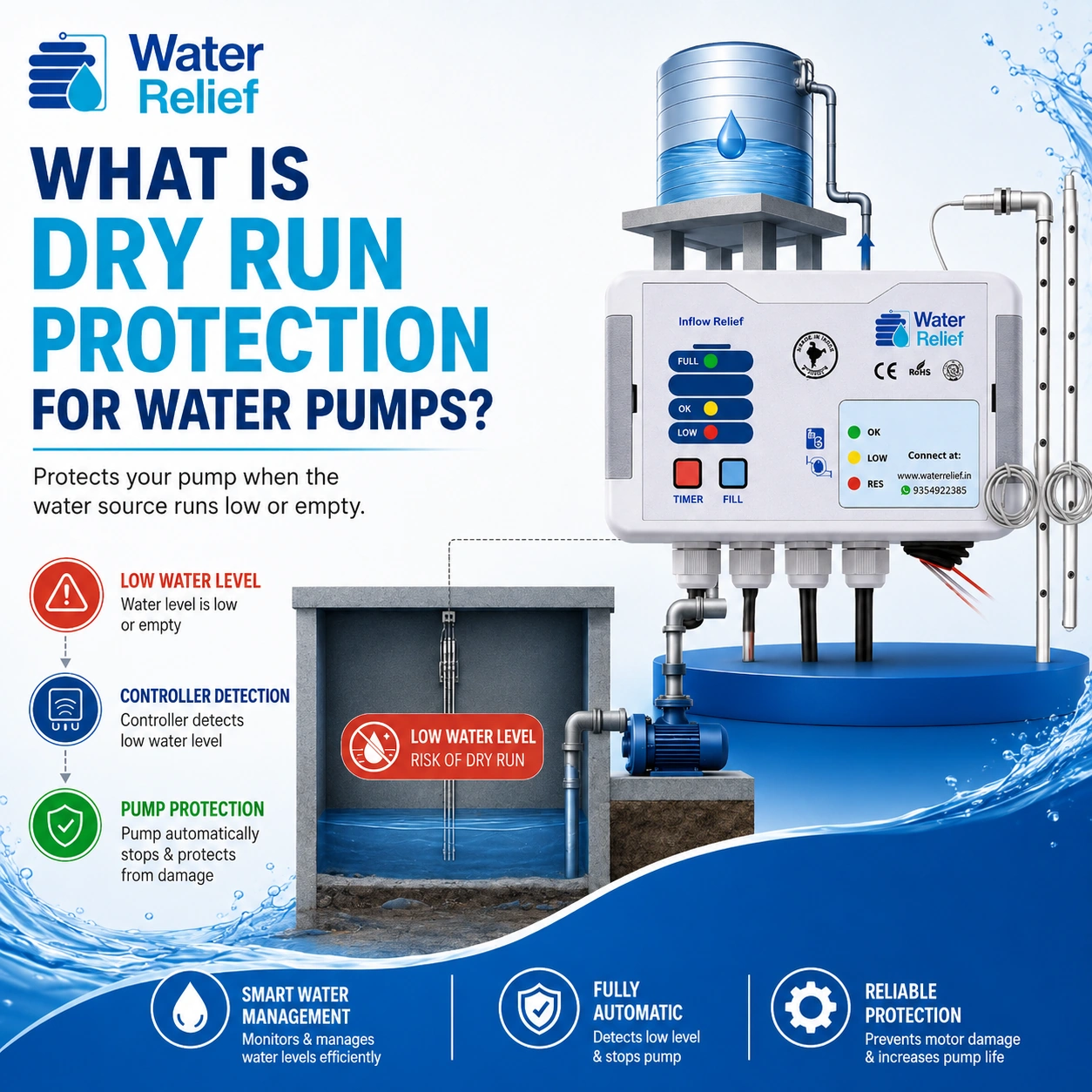
Water pumps are used in homes, apartments, factories, farms, commercial buildings, and water management systems. Their job is simple: move water from one place to another. But when a pump runs without enough water, it can face serious damage. This condition is called dry running, and it is one of the most common reasons behind pump overheating, seal damage, motor stress, and unexpected breakdowns.
Dry run protection for water pumps is a safety system designed to stop the pump automatically when there is no water or insufficient water available for pumping. In simple words, it protects the pump from running empty. According to pump technology references, dry running protection prevents a pump from operating without fluid and can shut the system down when a set safety limit is crossed.
What Does Dry Running Mean in a Water Pump?
Dry running happens when a pump continues to run even though there is little or no water available at the source. This can happen when the underground tank becomes empty, the borewell water level drops, the suction line gets blocked, the inlet valve is closed, or there is an air lock in the pipeline.
A water pump depends on water not only for pumping but also for cooling and lubrication. When water is not present, the internal parts of the pump start working under stress. The shaft seal, bearings, impeller, and motor can heat up quickly. Grundfos notes that dry-running protection is important because bearings and shaft seals may get damaged if booster pumps run dry.
Why is Dry Run Protection Important?
Dry run protection is important because it saves the pump from avoidable damage. Many people only notice the problem after the pump stops working, starts making noise, smells burnt, or delivers no water. By that time, the damage may already be expensive.
A dry run protection system works like an automatic safety guard. It continuously checks whether water is available or whether the pump is working under safe conditions. If it detects that the water supply is insufficient, it switches the pump off before major damage happens.
This protection is especially useful for:
Homes with overhead and underground tanks
Apartments and housing societies
Borewell pump systems
Commercial buildings
Factories and industrial water systems
Farm irrigation pumps
Booster pump systems
Automatic water level controller systems
How Does Dry Run Protection Work?
Dry run protection works by detecting water shortage or unsafe pump running conditions. Different systems use different methods depending on the pump type, water source, and installation setup.
Some systems use a float switch or level sensor to check the water level in a tank. If the water level drops below a safe point, the pump is turned off automatically. Some systems use a pressure switch or pressure transmitter to detect whether water is flowing properly through the suction line. Others use electronic sensors to monitor current, load, or pressure changes.
Grundfos explains that dry-running detection can be done through pressure or level switches, pressure transmitters, and level transmitters. Xylem also explains that when the water level drops below the dry run protector, the controller can stop the pump and delay restart so the water level gets time to recover.
Common Causes of Dry Running in Water Pumps
There are several reasons why a water pump may run dry. Some of the most common causes include:
The underground tank is empty
The borewell water level has dropped
The suction pipe is blocked
The inlet valve is closed
There is leakage in the suction line
The pump has air inside the pipeline
The water source is not refilling fast enough
The float switch or sensor is not working properly
The pump is manually switched on and forgotten
In homes and buildings, one of the most common situations is when the motor is switched on to fill the overhead tank, but the underground tank has low water. Without dry run protection, the pump keeps running even when water is not available, which increases the risk of motor damage.
What Happens If a Pump Runs Dry?
If a pump runs dry for a long time, it can cause multiple problems. The pump may overheat because there is no water to absorb and carry away heat. The mechanical seal can get damaged due to lack of lubrication. The impeller may face wear and friction. In some cases, the motor winding may also get affected.
Dry running can lead to:
Overheating of the motor
Seal failure
Bearing damage
Reduced pump life
High repair cost
Low water pressure
Pump noise and vibration
Complete pump failure
For submersible pumps and borewell pumps, dry running can be even more dangerous because these pumps are often installed in places that are difficult to access. Repairing or replacing them can take time, labour, and money.
Types of Dry Run Protection Systems
There are different types of dry run protection systems available depending on the application.
1. Float Switch Based Protection
A float switch detects the water level in a tank. When the water level goes below the safe level, it sends a signal to stop the pump. This is commonly used in underground tanks and overhead tanks.
2. Level Sensor Based Protection
Level sensors are used to monitor water levels more accurately. They are useful in automatic water level controller systems where the pump should start and stop based on tank levels.
3. Pressure Switch Based Protection
A pressure switch monitors water pressure. If the pressure drops below the required level, the system can identify that water is not available and stop the pump.
4. Electronic Dry Run Protector
An electronic dry run protector monitors the electrical load of the pump. When the pump runs without water, the load pattern changes. The device detects this condition and switches off the motor.
5. Automatic Water Level Controller with Dry Run Protection
This is one of the most practical solutions for homes, apartments, and commercial buildings. It controls the pump automatically and also protects it from dry running. The system starts the pump when water is needed and stops it when the tank is full or when water is not available.
Benefits of Dry Run Protection for Water Pumps
Dry run protection offers many benefits for both residential and commercial users.
Protects the Pump from Damage
The main benefit is pump safety. The system stops the pump before it gets damaged due to lack of water.
Saves Repair and Replacement Cost
Pump repair can be expensive, especially if the motor, seal, or internal parts are damaged. Dry run protection reduces the chances of such breakdowns.
Increases Pump Life
When a pump works under safe conditions, it lasts longer. Dry run protection prevents unnecessary stress and overheating.
Reduces Manual Monitoring
Without automation, someone has to check whether water is available before switching on the pump. Dry run protection reduces this manual dependency.
Improves Water Management
In buildings, societies, and commercial spaces, dry run protection supports better water management by preventing pump misuse and unnecessary running.
Saves Electricity
A pump running without water wastes electricity. Automatic protection stops the motor when it is not doing useful work.
Where Should Dry Run Protection Be Used?
Dry run protection should be used anywhere a water pump may run without proper water supply. It is highly recommended for:
Home water pumps
Borewell pumps
Submersible pumps
Booster pumps
Apartment water systems
Commercial water supply systems
Industrial pumping systems
Farm irrigation systems
Rainwater harvesting systems
Water transfer pumps
For buildings where pumps run daily, dry run protection is not just an extra feature. It is a necessary safety system.
Dry Run Protection vs Normal Pump Switch
A normal pump switch only turns the pump on or off manually. It does not know whether water is available or not. If the pump is switched on without water, it will continue running until someone turns it off.
Dry run protection is smarter. It checks the water condition and automatically shuts the pump off when dry running is detected. This makes it far safer than manual operation.
Is Dry Run Protection Needed for Automatic Water Level Controllers?
Yes, dry run protection is very useful with automatic water level controllers. A water level controller can automatically manage the pump based on tank levels, but dry run protection adds another layer of safety. It ensures that the pump does not run when the source tank or borewell does not have enough water.
For example, if the overhead tank is empty and needs water, the system may try to start the pump. But if the underground tank is also empty, dry run protection will stop the pump and prevent damage.
Conclusion
Dry run protection for water pumps is a simple but very important safety feature. It protects the pump from running without water, prevents overheating, reduces repair costs, and increases pump life. Whether the pump is used in a home, apartment, borewell, commercial building, or industrial system, dry run protection helps maintain safe and reliable operation.
If you are using a water pump regularly, installing dry run protection or choosing an automatic water level controller with dry run protection is a smart decision. It saves time, protects your investment, and gives peace of mind by ensuring your pump works only when water is available.
FAQs
1. What is dry run protection in a water pump?
Dry run protection is a safety feature that stops the water pump automatically when there is no water or insufficient water available for pumping.
2. Can a water pump get damaged by dry running?
Yes, dry running can damage the pump seal, bearings, impeller, and motor because the pump runs without proper cooling and lubrication.
3. How does a dry run protector work?
A dry run protector detects water shortage through sensors, pressure switches, level switches, or electronic monitoring and switches off the pump when unsafe running is detected.
4. Is dry run protection useful for home water pumps?
Yes, it is very useful for home water pumps because it prevents motor damage when the underground tank is empty or water supply is low.
5. Is dry run protection required with an automatic water level controller?
Yes, it is highly recommended. An automatic water level controller with dry run protection can manage tank filling and also protect the pump from running without water.
About author

Related posts
A Water automation system for food processing units helps manage storage tanks and pumps without constant manual checking. It monitors water levels, starts the pump... Continue reading
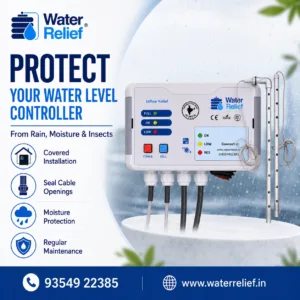
To protect water level controller from rain moisture and insects, the controller should be installed in a dry, covered and properly ventilated location. Direct rain,... Continue reading
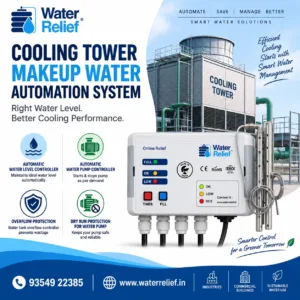
A Cooling tower makeup water automation system helps maintain the required water level in cooling tower tanks without constant manual checking. It monitors the water... Continue reading
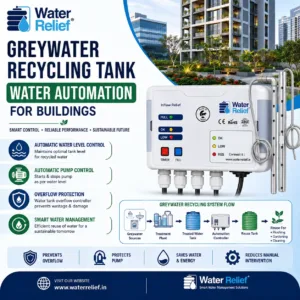
Greywater recycling tank water automation for buildings helps manage recycled water storage and pump operation without constant manual checking. It monitors tank levels, starts the... Continue reading
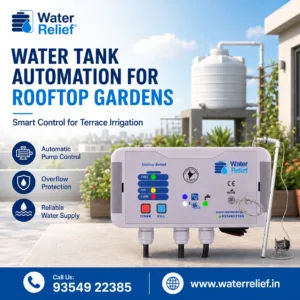
Water tank automation for rooftop gardens helps maintain a reliable water supply for plants without constant manual checking. It monitors the tank level, starts the... Continue reading

Add comment