
No products in the cart.
Return To Shop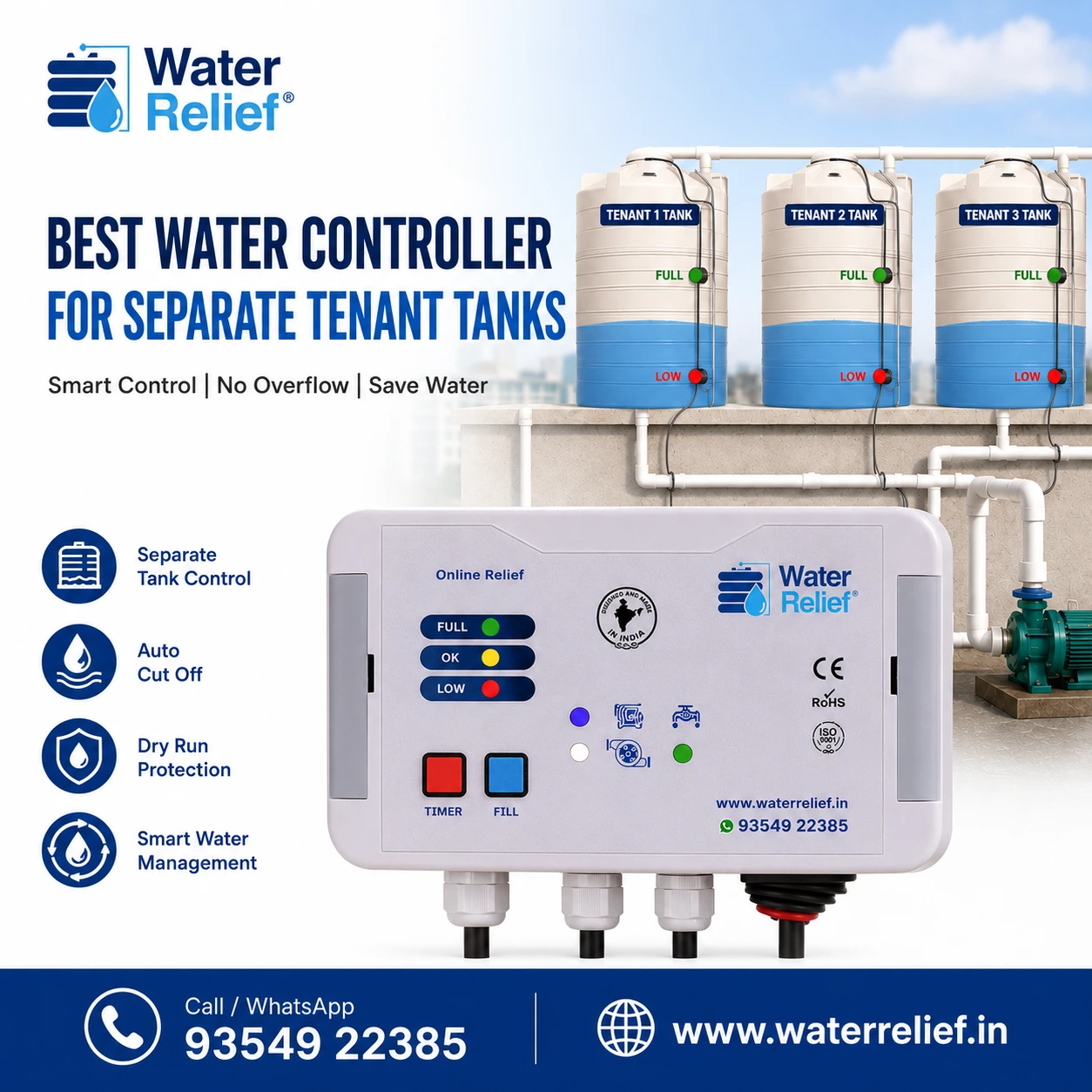
The Best Water Controller for Separate Tenant Tanks helps manage multiple tenant water tanks without daily manual checking. It automatically monitors tank levels, controls the pump and stops water flow when the selected tank becomes full.
Properties with separate tenants often have different water-use patterns. One family may use more water, while another may use less. As a result, one tank may become empty while another remains full. Manual pump operation can also cause overflow, disputes and unnecessary electricity use.
A reliable Tenant Tank Water Controller solves these problems by automating the complete filling process. It can manage separate tanks according to their individual water levels and provide a fairer, more dependable water supply.
Why Separate Tenant Tanks Need Automation
Builder floors, rental homes, independent houses and small apartments often have separate overhead tanks for different tenants.
This arrangement gives each family its own water storage. However, it also creates several management problems.
Common issues include:
- One tenant’s tank overflowing
- Another tenant’s tank remaining empty
- Confusion about who should operate the pump
- Water shortage during peak hours
- Pump running longer than required
- Disputes between tenants
- Frequent manual checking
- Higher electricity consumption
- Pump damage due to dry running
- Unequal water distribution
A properly configured Separate Tenant Tank Automation system reduces these problems and manages water according to the actual level in each tank.
What Is a Tenant Tank Water Controller?
A Tenant Tank Water Controller is an electronic system designed to monitor and fill separate water tanks automatically.
Water-level sensors are installed inside each tenant’s tank. These sensors send low-level and full-level signals to the main controller.
When a tank becomes low, the controller starts the pump and directs water to that tank. Once the tank becomes full, the system activates the water tank auto cut off function.
Depending on the property layout, the controller may use:
- Separate motorised valves
- A common pump
- Separate pumps
- Priority-based filling
- Independent tank sensors
- Manual override controls
Therefore, each tank can be managed according to its own water requirement.
How Separate Tenant Tank Automation Works
The exact working process depends on the number of tanks, pumps and pipelines.
A common process is:
Tenant tank becomes low → Controller detects low level → Source tank checked → Pump starts → Water moves to selected tank → Tank becomes full → Pump or valve stops
If another tenant’s tank is also low, the controller may begin filling that tank next.
This sequence continues until all selected tanks have sufficient water.
Role of an Automatic Water Level Controller
An Automatic Water Level Controller monitors the low and full levels inside each tank.
It helps the system identify:
- Which tenant tank needs water
- Which tank is already full
- Whether the source tank contains enough water
- When the pump should start
- When the pump should stop
- Whether a valve should open or close
Therefore, water is supplied according to the actual tank condition rather than guesswork or fixed timings.
Role of an Automatic Water Pump Controller
An Automatic Water Pump Controller connects the tank sensors with the pump starter.
It can provide:
- Automatic pump start
- Automatic pump stop
- Tank-wise filling
- Full-level cut-off
- Source-tank monitoring
- Dry-run protection
- Pump-running indication
- Manual mode
- Multiple tank support
The controller should always match the pump horsepower, phase, voltage and starter type.
Benefits of the Best Water Controller for Separate Tenant Tanks
Manages Each Tenant Tank Separately
The main benefit is independent tank monitoring.
The controller checks each tank separately. Therefore, one tenant’s water usage does not directly affect the filling status of another tank.
Prevents Water Overflow
A water tank overflow controller stops water flow when a tenant tank becomes full.
This helps prevent:
- Rooftop water wastage
- Damp walls
- Slippery terraces
- Paint damage
- Drainage overload
- Higher water bills
- Complaints from residents
Provides Water Tank Auto Cut Off
The water tank auto cut off feature stops the pump or closes the valve automatically at the full level.
Residents do not need to climb to the terrace or wait near the pump switch.
Reduces Tenant Disputes
Manual pump operation can create arguments.
One tenant may forget to stop the pump. Another may feel that their tank was not filled properly.
Automation creates a fixed system based on water levels. Therefore, it reduces confusion and helps distribute water more fairly.
Reduces Manual Monitoring
A guard, landlord or tenant does not need to inspect every tank repeatedly.
The controller manages the filling cycle automatically.
Saves Water
Automatic cut-off prevents tanks from overflowing after they become full.
As a result, the property can reduce unnecessary water loss.
Saves Electricity
The pump runs only when one or more tanks require water.
Once the filling process is complete, the controller stops the motor. Therefore, electricity is not wasted through unnecessary pump operation.
Protects the Pump
If the underground or source tank becomes empty, the pump may run without water.
A suitable water pump controller can stop the motor and protect it from overheating and damage.
Improves Water Availability
The system detects low water levels early and begins filling automatically.
Therefore, tenants are less likely to face sudden water shortages.
Common Separate Tenant Tank Arrangements
One Underground Tank and Two Tenant Tanks
This is a common builder-floor setup.
One pump transfers water from the underground tank to two separate overhead tanks. The controller fills the tank that requires water.
One Underground Tank and Three Tenant Tanks
Three-storey rental properties may use separate rooftop tanks for each floor.
The automation system can fill the tanks according to priority or individual low-level signals.
One Pump with Separate Motorised Valves
A common pump supplies several tanks. Automatic valves control which tank receives water.
This setup allows better tank-wise filling.
Separate Pumps for Separate Tanks
Some buildings use a separate pump for each tenant tank.
A multi-pump controller can manage each pump according to the relevant tank level.
Owner Tank and Tenant Tank
An independent house may have one tank for the owner and another for the tenant.
The controller can monitor and fill both tanks independently.
Separate Tenant Tank Automation for Builder Floors
Builder floors commonly have separate tenants on each level.
In this arrangement, each floor may have:
- A separate overhead tank
- A separate water pipeline
- Different daily consumption
- Separate rent or maintenance responsibility
Separate Tenant Tank Automation helps manage these differences more efficiently.
The controller can ensure that each tank receives water only when required. Therefore, the pump does not keep filling a tank that is already full.
Smart Water Management for Rental Properties
Modern smart water management is especially useful in rental buildings.
A smart setup may include:
- Individual tank sensors
- Automatic valves
- Pump control
- Tank status indicators
- Dry-run protection
- Manual override
- Priority-based filling
- Source-water monitoring
This creates a complete water-management system for landlords and tenants.
How Tank Priority Can Be Managed
Some properties need a specific filling sequence.
For example:
- Ground-floor tank
- First-floor tank
- Second-floor tank
In other cases, the controller fills whichever tank becomes low first.
Possible priority methods include:
- Fixed floor priority
- First low tank first
- Equal filling sequence
- Time-based priority
- Owner tank priority
- Emergency reserve priority
The best method depends on the property agreement and water supply conditions.
Water Tank Overflow Controller for Tenant Tanks
A water tank overflow controller uses full-level sensors to stop the filling process.
In a multi-tank setup, it may:
- Close the valve of the full tank
- Continue filling another low tank
- Stop the common pump
- Move to the next tank
- Display tank-full status
This helps manage multiple tanks without wasting water.
Water Tank Auto Cut Off for Multiple Tenants
The water tank auto cut off feature is essential in rental properties.
Once a selected tank becomes full, the system automatically stops water flow to that tank.
This feature is useful when:
- Tanks are located on a high terrace
- Tenants have separate pipelines
- The pump room is far from the tanks
- Water supply comes at night
- Residents are frequently away
- A guard manages the water system
Water Pump Controller for Common Pumps
A shared pump must operate carefully because it serves several tanks.
A suitable water pump controller should:
- Start only when a tank needs water
- Stop when all required tanks are full
- Prevent dry running
- Support valve operation
- Show pump status
- Support manual control
- Match the pump starter
This helps improve pump performance and reduce unnecessary switching.
Manual Tank Filling vs Automatic Tenant Tank Control
| Manual Tank Filling | Automatic Tenant Tank Control |
|---|---|
| Requires checking every tank | Monitors tanks automatically |
| Higher overflow risk | Stops filling at full level |
| Causes tenant confusion | Works through fixed control logic |
| One tank may remain empty | Fills tanks according to need |
| Pump may run unnecessarily | Pump runs only when required |
| Depends on landlord or guard | Reduces manual dependency |
| Difficult to manage multiple floors | Supports multiple tenant tanks |
Therefore, automatic control is more practical for shared rental properties.
Features to Check Before Installation
Number of Tenant Tanks
The controller must support the total number of tanks.
Pump Arrangement
The technician should check whether the property uses:
- One common pump
- Multiple pumps
- Automatic valves
- Separate pipelines
Tank Filling Priority
The required sequence should be decided before installation.
Source Tank Protection
The controller should stop the pump if the underground tank becomes empty.
Overflow Protection
Each tenant tank should have a reliable full-level sensor.
Manual Override
Manual mode is useful during maintenance and emergency conditions.
Pump Compatibility
The controller must match the pump horsepower, phase and starter type.
Clear Status Indicators
The system should display:
- Tank 1 low or full
- Tank 2 low or full
- Additional tank status
- Pump running
- Source tank low
- Fault condition
Installation Requirements
Before installing a Tenant Tank Water Controller, a technician should inspect:
- Number of tenants
- Number of overhead tanks
- Underground tank capacity
- Individual tank capacity
- Pump horsepower
- Pump phase
- Existing starter panel
- Pipe routing
- Separate valves
- Building height
- Distance between tanks
- Water source
- Municipal supply timings
- Daily water demand
- Required filling priority
Correct planning is important because every rental property has a different water arrangement.
Why Choose Water Relief?
Water Relief provides water automation solutions for builder floors, rental properties, homes, villas, societies and commercial buildings.
A suitable Water Relief system can help:
- Manage separate tenant tanks
- Automate pump operation
- Prevent tank overflow
- Provide water tank auto cut off
- Reduce tenant disputes
- Protect the pump
- Save water and electricity
- Support multiple tanks and valves
- Improve overall smart water management
The controller can be selected according to the number of tanks, pump arrangement, water source and property requirements.
Visit Water Relief to explore automatic water-control solutions.
Conclusion
The Best Water Controller for Separate Tenant Tanks provides an efficient way to manage water in rental properties and builder floors.
It monitors each tank independently, starts the pump when required and stops water flow when the selected tank becomes full.
A reliable Automatic Water Level Controller also reduces overflow, manual work and tenant disputes. Moreover, an Automatic Water Pump Controller protects the motor and improves electricity efficiency.
With proper Separate Tenant Tank Automation, landlords and residents can achieve better water distribution, lower wastage and more dependable daily water supply.
FAQs
1. What is a Tenant Tank Water Controller?
It is an automatic system that monitors and fills separate water tanks for different tenants.
2. Can one controller manage multiple tenant tanks?
Yes. A customised controller can manage two, three or more tanks depending on the property setup.
3. How does Separate Tenant Tank Automation work?
Sensors detect which tank is low. The controller then starts the pump and directs water to that tank until it becomes full.
4. Can the system stop water overflow?
Yes. A water tank overflow controller stops filling when the full-level sensor detects water.
5. What is water tank auto cut off?
It automatically stops the pump or closes the valve after a tank reaches the selected full level.
6. Can one common pump fill separate tenant tanks?
Yes. One pump can fill multiple tanks through separate pipelines and automatic valves.
About author

Related posts
A Water automation system for food processing units helps manage storage tanks and pumps without constant manual checking. It monitors water levels, starts the pump... Continue reading
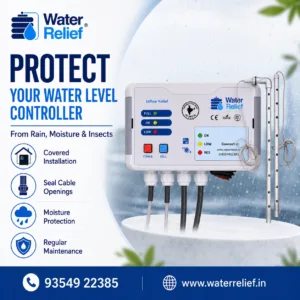
To protect water level controller from rain moisture and insects, the controller should be installed in a dry, covered and properly ventilated location. Direct rain,... Continue reading
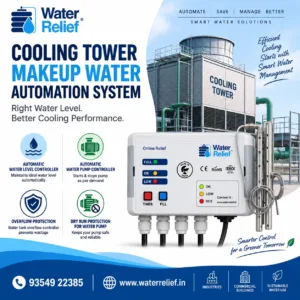
A Cooling tower makeup water automation system helps maintain the required water level in cooling tower tanks without constant manual checking. It monitors the water... Continue reading
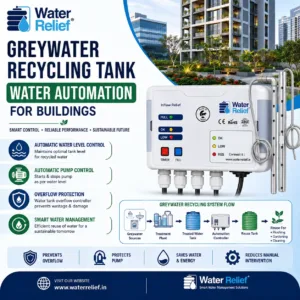
Greywater recycling tank water automation for buildings helps manage recycled water storage and pump operation without constant manual checking. It monitors tank levels, starts the... Continue reading
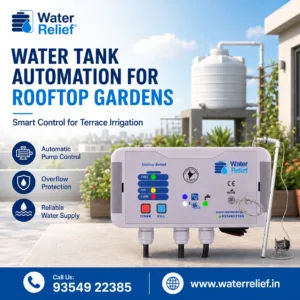
Water tank automation for rooftop gardens helps maintain a reliable water supply for plants without constant manual checking. It monitors the tank level, starts the... Continue reading

Add comment