
No products in the cart.
Return To Shop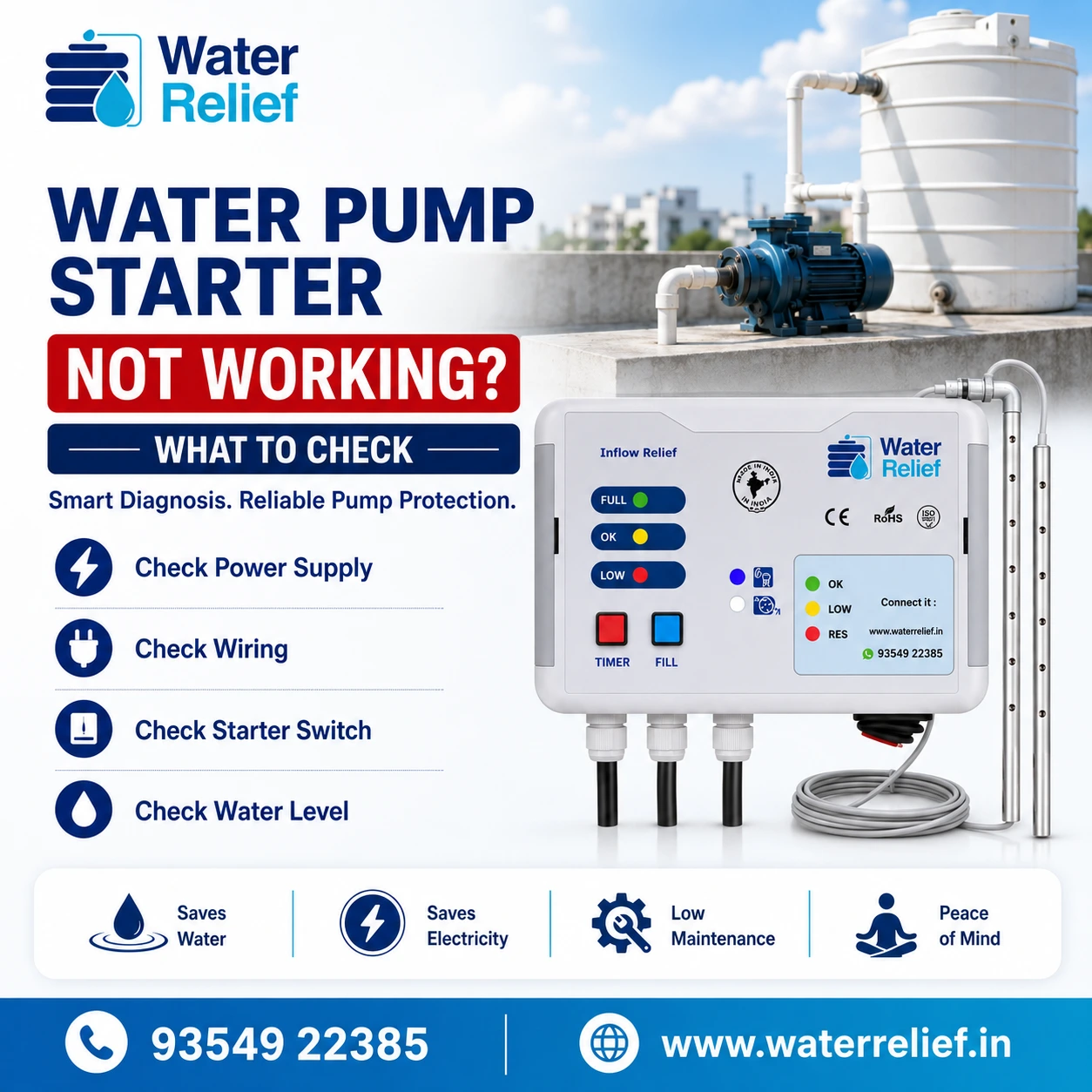
Water Pump Starter Not Working is a common issue in homes, apartments, offices, shops, societies and commercial buildings. When the starter does not work, the pump may not start at all. Because of this, the tank may not fill and daily water supply can get disturbed.
This problem can happen due to many reasons. Sometimes the issue is in the starter switch. In other cases, wiring, voltage, motor load, water level or pump safety system may be the reason. So, proper checking is important before replacing the starter.
Water Relief helps make pump operation safer with smart automation. The system controls the pump based on tank water level and supports better pump safety. As a result, manual mistakes reduce and water management becomes easier.
What Is Water Pump Starter Problem?
Water Pump Starter Problem means the pump starter is not able to start or control the pump properly. The starter may not respond, the motor may not start, or the system may trip again and again.
This issue should not be ignored. A faulty starter can affect pump performance and may also damage the motor if used again and again without checking.
Common signs include:
- Pump not starting
- Starter button not working
- Starter making sound but pump not running
- Motor trips after starting
- Pump starts and stops suddenly
- Burning smell near starter
- Loose connection
- Low voltage issue
- Overload problem
If these signs appear, avoid repeated starting. Instead, check the system properly.
Main Causes of Water Pump Starter Not Working
There can be several reasons behind Water Pump Starter Not Working. Some are electrical issues, while others are related to pump load or water supply.
Common causes include:
- Low voltage
- Loose wiring
- Faulty starter switch
- Damaged contactor
- Overload relay trip
- Motor overload
- Dry run condition
- Faulty capacitor
- Burnt coil
- Short circuit
- Pump jam
- No water in source tank
Therefore, Pump Starter Troubleshooting should be done step by step.
Pump Starter Troubleshooting
Pump Starter Troubleshooting means checking all possible reasons behind starter failure. It helps find whether the problem is in the starter, pump, wiring, motor or water source.
Start by checking the power supply. After that, check wiring, starter button, overload relay and motor connection. Also, check if the pump is getting enough water.
Important points to check:
- Power supply
- MCB condition
- Starter switch
- Wiring connection
- Contactor
- Overload relay
- Motor load
- Pump noise
- Source tank water level
- Controller setting
If you are not trained, do not open electrical parts yourself. Since starter and wiring issues can be risky, call a qualified electrician or pump technician.
Low Voltage or Power Supply Issue
Low voltage is one of the common reasons for starter problems. If voltage is not stable, the starter may fail to start the motor.
Sometimes the starter clicks but the pump does not run. In other cases, the system trips quickly.
Low voltage can cause:
- Pump starting failure
- Motor heating
- Starter noise
- Frequent tripping
- Weak pump performance
- Damage risk
So, always check the voltage before blaming the starter.
Loose Wiring or Faulty Connection
Loose wiring can stop the starter from working properly. A weak connection can break the power supply to the motor.
This may cause sudden pump failure. It can also create sparks or heating near the starter box.
Check the wiring carefully. However, electrical work should be done by a trained person only.
Loose wiring can happen due to:
- Old wires
- Heat damage
- Moisture
- Poor installation
- Loose terminals
- Rodent damage
Fixing wiring early can prevent bigger pump problems.
Overload Relay Trip
The overload relay protects the pump motor from extra load. If the motor takes more current than normal, the relay may trip.
This is a safety feature. However, if it trips again and again, the pump system needs checking.
Overload may happen due to:
- Jammed pump
- Blocked pipe
- Motor fault
- Low voltage
- Wrong pump size
- Long running time
- Dry running
In this case, a Pump Protection System can help improve pump safety.
Dry Run Condition
Dry run happens when the pump runs without water. This can damage the motor and reduce pump life.
If there is no water in the source tank, the starter or protection system may stop the pump. This is done to prevent damage.
Dry Run Protection is useful in such cases. It helps protect the pump when water is not available.
Benefits of Dry Run Protection include:
- Better motor safety
- Less overheating
- Lower repair cost
- Longer pump life
- Safer pump operation
So, dry run safety is important for every water pump system.
Role of Automatic Water Pump Controller
An Automatic Water Pump Controller controls pump ON and OFF without manual switching. It starts the pump when water is needed and stops it when the tank is full.
This helps reduce manual mistakes. It also supports better pump operation.
If your starter often creates problems, automation can make pump control easier. The pump runs only when needed, which reduces unnecessary stress on the motor.
An Automatic Water Pump Controller helps with:
- Automatic pump start
- Automatic pump stop
- Better pump safety
- Less manual work
- Lower electricity waste
- Reduced overflow risk
- Safer daily operation
Therefore, it is useful for homes and buildings that depend on regular water pumping.
Role of Automatic Water Level Controller
An Automatic Water Level Controller checks tank water level with sensors. When the tank is low, the pump starts. Once the tank becomes full, the pump stops automatically.
This system reduces the need to check tanks manually. It also helps prevent overflow and extra pump running.
An Automatic Water Level Controller is useful for:
- Homes
- Apartments
- Societies
- Offices
- Shops
- Schools
- Restaurants
- Commercial buildings
Because the pump works based on tank level, daily water control becomes simple and safe.
Water Pump Automation System
A Water Pump Automation System makes pump and tank control automatic. It reduces human errors and improves daily water management.
Manual starters depend on people. Someone must switch on the pump and later switch it off. During busy hours, this can be missed.
A Water Pump Automation System helps by:
- Starting the pump at the right time
- Stopping the pump when the tank is full
- Reducing overflow
- Supporting pump safety
- Saving water
- Reducing manual work
- Improving daily convenience
As a result, water supply becomes easier to manage.
Pump Protection System
A Pump Protection System helps protect the pump from unsafe running. It supports safety against overload, dry run, voltage issues and wrong operation.
If your starter fails often, the pump may be facing stress. A protection system helps reduce risk and improves motor life.
A Pump Protection System helps with:
- Motor safety
- Overload control
- Dry run safety
- Safer pump running
- Lower repair cost
- Longer pump life
- Better water control
So, it is a useful feature for homes, societies and commercial properties.
How Water Relief Helps
Water Relief helps manage pump and tank operation with smart automation. If your Water Pump Starter Not Working issue happens often, first check the starter, wiring, voltage, motor and water source.
After that, automation can help manage pump operation in a better way.
Water Relief supports:
- Automatic Water Pump Controller
- Automatic Water Level Controller
- Water Pump Automation System
- Pump Protection System
- Dry Run Protection
This helps reduce manual work and supports safer pump use.
What You Should Check First
If your water pump starter is not working, check these points first:
- Power supply
- MCB condition
- Starter button
- Wiring connection
- Voltage level
- Overload relay
- Motor sound
- Source tank water level
- Pump jam issue
- Controller setting
If the problem continues, call a trained technician. Starter problems can involve electrical risk, so avoid unsafe handling.
Why Repeated Starting Is Risky
Many people press the starter button again and again when the pump does not start. However, this can make the problem worse.
Repeated starting can cause:
- Motor heating
- Starter damage
- Wiring damage
- MCB trip
- Overload issue
- Higher repair cost
- Pump failure
So, if the starter does not work, check the cause first. Do not keep forcing the pump to start.
Final Thoughts
Water Pump Starter Not Working can happen due to low voltage, loose wiring, faulty starter, overload relay trip, dry run condition or pump motor issues. If ignored, it can disturb water supply and damage the pump system.
Water Relief helps improve pump control with Automatic Water Pump Controller, Automatic Water Level Controller, Water Pump Automation System, Pump Protection System and Dry Run Protection.
So, if you are facing a Water Pump Starter Problem, Water Relief can help you manage your pump system in a smarter and safer way.
FAQs
1. Why is my water pump starter not working?
Your starter may not work due to low voltage, loose wiring, overload relay trip, faulty switch, motor issue or dry run condition.
2. What is Water Pump Starter Problem?
Water Pump Starter Problem means the starter is not able to start or control the water pump properly.
3. What is Pump Starter Troubleshooting?
Pump Starter Troubleshooting means checking power supply, wiring, starter, overload relay, motor and water source to find the issue.
4. Can an Automatic Water Pump Controller help?
Yes, an Automatic Water Pump Controller helps manage pump ON and OFF automatically and reduces manual mistakes.
5. What does an Automatic Water Level Controller do?
An Automatic Water Level Controller checks tank water level and controls the pump automatically.
6. What is Water Pump Automation System?
A Water Pump Automation System controls pump operation automatically based on tank level and system need.
About author

Related posts
Smart water management for commercial laundry helps control water tanks and pumps automatically in facilities where water demand remains high throughout the day. The system... Continue reading
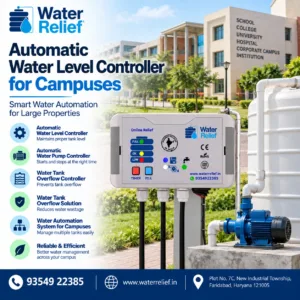
An Automatic water level controller for campuses helps manage multiple water tanks and pumps across large properties without repeated manual checking. It monitors tank levels,... Continue reading
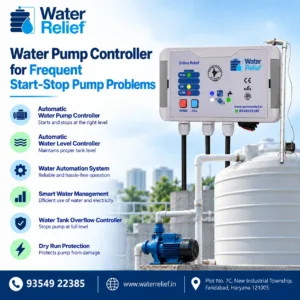
A Water Pump Controller for Frequent Start-Stop Pump Problems helps manage pump operation more efficiently when a motor keeps switching on and off repeatedly. Frequent... Continue reading
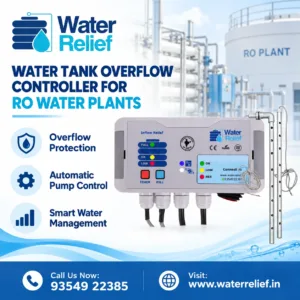
A Water tank overflow controller for RO water plants helps stop unnecessary water loss by monitoring tank levels and controlling pump operation automatically. It detects... Continue reading
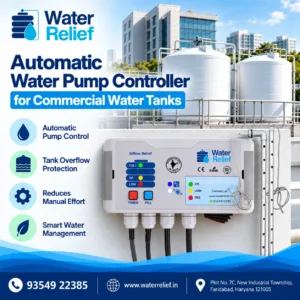
An Automatic Water Pump Controller for Commercial Water Tanks helps manage large water tanks without repeated manual switching. It monitors the tank level, starts the... Continue reading

Add comment