
No products in the cart.
Return To Shop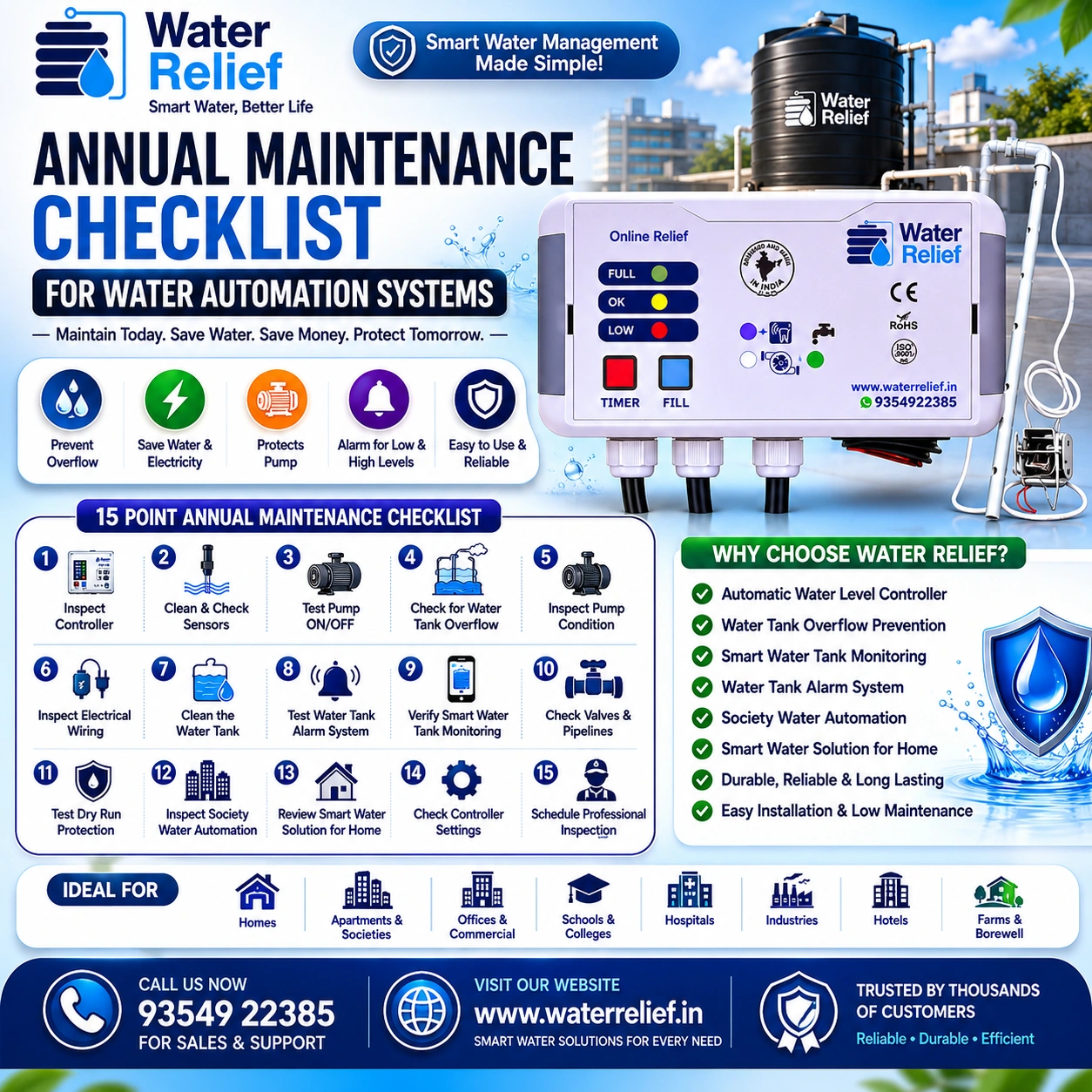
An Annual Maintenance Checklist for Water Automation Systems is important for every home, apartment, society, office, school, hospital, factory, and commercial building using automated water control. A water automation system helps manage pumps, tank levels, overflow protection, and water monitoring, but regular maintenance ensures that the system continues to perform safely and efficiently throughout the year.
Many properties install an Automatic Water Level Controller to avoid manual pump operation, reduce water tank overflow, save electricity, and improve water availability. However, like any smart system, it needs periodic inspection. Water Relief provides reliable water automation solutions designed for Indian water conditions, and proper annual maintenance helps keep these systems durable, accurate, and efficient.
With the right checklist, property owners can avoid sudden pump failure, sensor issues, overflow problems, alarm faults, and unnecessary repair costs.
Why Annual Maintenance Is Important
Water automation systems work daily. They control pumps, monitor tanks, detect water levels, and help avoid wastage. Over time, dust, moisture, wiring issues, mineral deposits, loose connections, and sensor scaling can affect performance.
Annual maintenance helps:
- improve system accuracy
- prevent unexpected faults
- protect pumps and motors
- reduce water wastage
- avoid water tank overflow
- improve safety
- increase system life
A well-maintained system also improves the reliability of your Smart Water Solution for Home and commercial water setups.
1. Inspect the Automatic Water Level Controller
The first step is checking the Automatic Water Level Controller unit.
During inspection, check:
- display lights
- ON/OFF indicators
- controller body
- manual switch operation
- auto mode function
- wiring terminals
- timer buttons
- reset function
If the controller is showing wrong indications or not switching the pump properly, it should be serviced immediately.
Water Relief systems are designed for reliable automation, but regular inspection keeps the controller working smoothly.
2. Check Sensor Condition
Sensors play a major role in water level detection. If sensors are dirty, scaled, loose, or damaged, the system may show incorrect readings.
Check whether:
- sensors are properly placed
- wires are not broken
- sensor rods are clean
- tank water levels are detected correctly
- sensor insulation is safe
Cleaning sensors during annual maintenance helps maintain accurate level detection.
3. Test Pump ON/OFF Automation
The main purpose of a water automation system is automatic pump control.
Test whether the pump:
- starts automatically when water level is low
- stops automatically when the tank becomes full
- does not run unnecessarily
- responds correctly in manual and auto mode
This test is very important because improper pump control may cause water tank overflow or water shortage.
4. Check for Water Tank Overflow Protection
Overflow protection is one of the biggest benefits of automation.
During maintenance, test whether the system stops the motor when the tank reaches full level.
If overflow continues after the tank is full, inspect:
- sensor position
- wiring
- controller settings
- relay operation
- tank level detection
Water Relief automation helps prevent overflow, but annual inspection ensures the protection remains active.
5. Inspect Water Tank Alarm System
A Water Tank Alarm System alerts users when water level becomes too low, too high, or reaches a specific level.
During annual service, check:
- alarm sound
- warning lights
- level alerts
- fault alerts
- low and high-level indication
A working alarm system gives extra safety and helps prevent water wastage.
6. Review Smart Water Tank Monitoring
Smart Water Tank Monitoring helps users track tank levels and pump activity more clearly.
During maintenance, verify:
- water level indicators
- monitoring accuracy
- display response
- alert signals
- pump status updates
Smart monitoring is useful for homes, apartments, societies, offices, and large buildings where manual checking is difficult.
7. Inspect Pump and Motor Condition
Water automation is closely connected to pump health. A good controller protects the pump, but the pump itself also needs inspection.
Check:
- motor sound
- overheating
- vibration
- water flow
- power consumption
- cable condition
- starter panel
- motor load
If the pump makes unusual noise or heats quickly, professional inspection is recommended.
8. Check Wiring and Electrical Connections
Loose or damaged wiring can affect system performance and safety.
Inspect:
- power cables
- controller wiring
- sensor cables
- motor connection
- earthing
- relay wiring
- terminal tightness
Electrical inspection should be done carefully by a trained technician.
9. Clean the Water Tank
Tank cleaning should be part of annual system maintenance.
A dirty tank can affect sensors and water quality. Sludge, algae, mud, and mineral deposits may also interfere with sensor readings.
Tank cleaning helps:
- improve water hygiene
- protect sensors
- reduce blockage
- improve automation accuracy
Ideally, tanks should be cleaned every 3 to 6 months, while automation inspection can be done annually.
10. Test Manual Mode
Even if your system works automatically, manual mode should also be tested.
Manual mode is useful during:
- maintenance
- emergency operation
- sensor fault
- special water filling needs
Make sure manual ON/OFF buttons are working properly.
11. Check Auto Mode Settings
Auto mode is the main operating function of the system.
Check whether:
- automatic pump start works
- automatic pump stop works
- water levels are detected correctly
- timer function is working
- reset function is normal
Water Relief systems are built for easy operation, but yearly testing helps avoid unexpected issues.
12. Inspect Tank and Pipe Connections
Sometimes system issues are caused by plumbing problems rather than the controller.
Check:
- tank inlet pipe
- outlet pipe
- overflow pipe
- valves
- leakage points
- pressure issues
- air blockage
Fixing plumbing issues improves water flow and system performance.
13. Check for Moisture or Water Damage
Water automation controllers should be protected from direct water exposure.
Inspect the controller area for:
- moisture
- leakage
- rust
- corrosion
- damp walls
- water seepage
Keep the controller installed in a dry and safe location.
14. Review Society Water Automation Systems
For apartments and societies, Society Water Automation systems may include multiple tanks and pumps.
Annual maintenance should include:
- all tank sensors
- main controller
- pump panels
- alarm system
- backup pump operation
- overhead and underground tank connections
Society systems require more detailed checking because many residents depend on the same water supply.
15. Update Maintenance Records
Keep a maintenance record for future reference.
Record:
- inspection date
- technician name
- parts checked
- issues found
- repairs done
- next service date
This helps property owners track system performance over time.
Benefits of Annual Maintenance with Water Relief
Water Relief automation systems are designed to make water management easier, safer, and more efficient.
Regular maintenance helps ensure:
- better pump protection
- fewer breakdowns
- lower electricity usage
- reduced water wastage
- improved tank monitoring
- reliable automation
- longer system life
A properly maintained Water Relief system keeps your water supply stable throughout the year.
FAQs
1. What is an Annual Maintenance Checklist for Water Automation Systems?
It is a yearly inspection guide used to check controllers, sensors, pumps, alarms, wiring, and tank systems to ensure smooth water automation performance.
2. How often should water automation systems be serviced?
A complete inspection should be done at least once a year. Tanks and sensors may need cleaning every 3 to 6 months depending on usage.
3. Can maintenance prevent water tank overflow?
Yes, regular maintenance helps ensure sensors and controllers work correctly, preventing water tank overflow.
4. What should be checked in an Automatic Water Level Controller?
Check display indicators, auto mode, manual mode, wiring, relay function, sensor response, and pump ON/OFF operation.
5. Is Smart Water Tank Monitoring useful for societies?
Yes, Smart Water Tank Monitoring helps societies track tank levels, reduce manual checking, and improve water supply control.
6. Does Water Relief provide smart water automation solutions?
Yes, Water Relief provides smart automation solutions for homes, societies, offices, schools, hospitals, factories, and commercial buildings.
Final Thoughts
An Annual Maintenance Checklist for Water Automation Systems helps keep your water automation setup reliable, safe, and efficient throughout the year. Regular inspection of the Automatic Water Level Controller, sensors, pump, wiring, Water Tank Alarm System, and Smart Water Tank Monitoring features prevents unexpected problems and improves system life.
Water Relief provides dependable automation systems for homes, societies, commercial buildings, and institutions. With proper maintenance, Water Relief helps prevent water tank overflow, improve pump performance, and support smarter water management for every property.
About author

Related posts
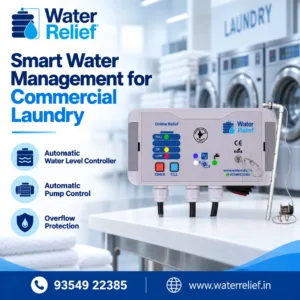
Smart water management for commercial laundry helps control water tanks and pumps automatically in facilities where water demand remains high throughout the day. The system... Continue reading
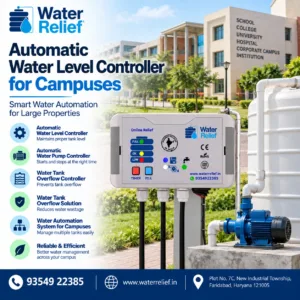
An Automatic water level controller for campuses helps manage multiple water tanks and pumps across large properties without repeated manual checking. It monitors tank levels,... Continue reading
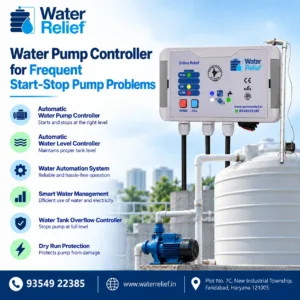
A Water Pump Controller for Frequent Start-Stop Pump Problems helps manage pump operation more efficiently when a motor keeps switching on and off repeatedly. Frequent... Continue reading
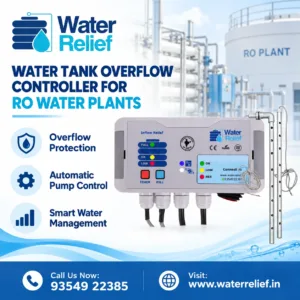
A Water tank overflow controller for RO water plants helps stop unnecessary water loss by monitoring tank levels and controlling pump operation automatically. It detects... Continue reading
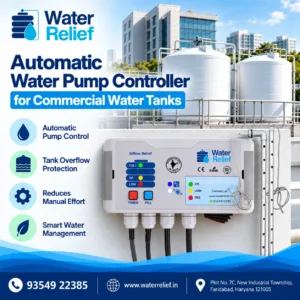
An Automatic Water Pump Controller for Commercial Water Tanks helps manage large water tanks without repeated manual switching. It monitors the tank level, starts the... Continue reading

Add comment