
No products in the cart.
Return To Shop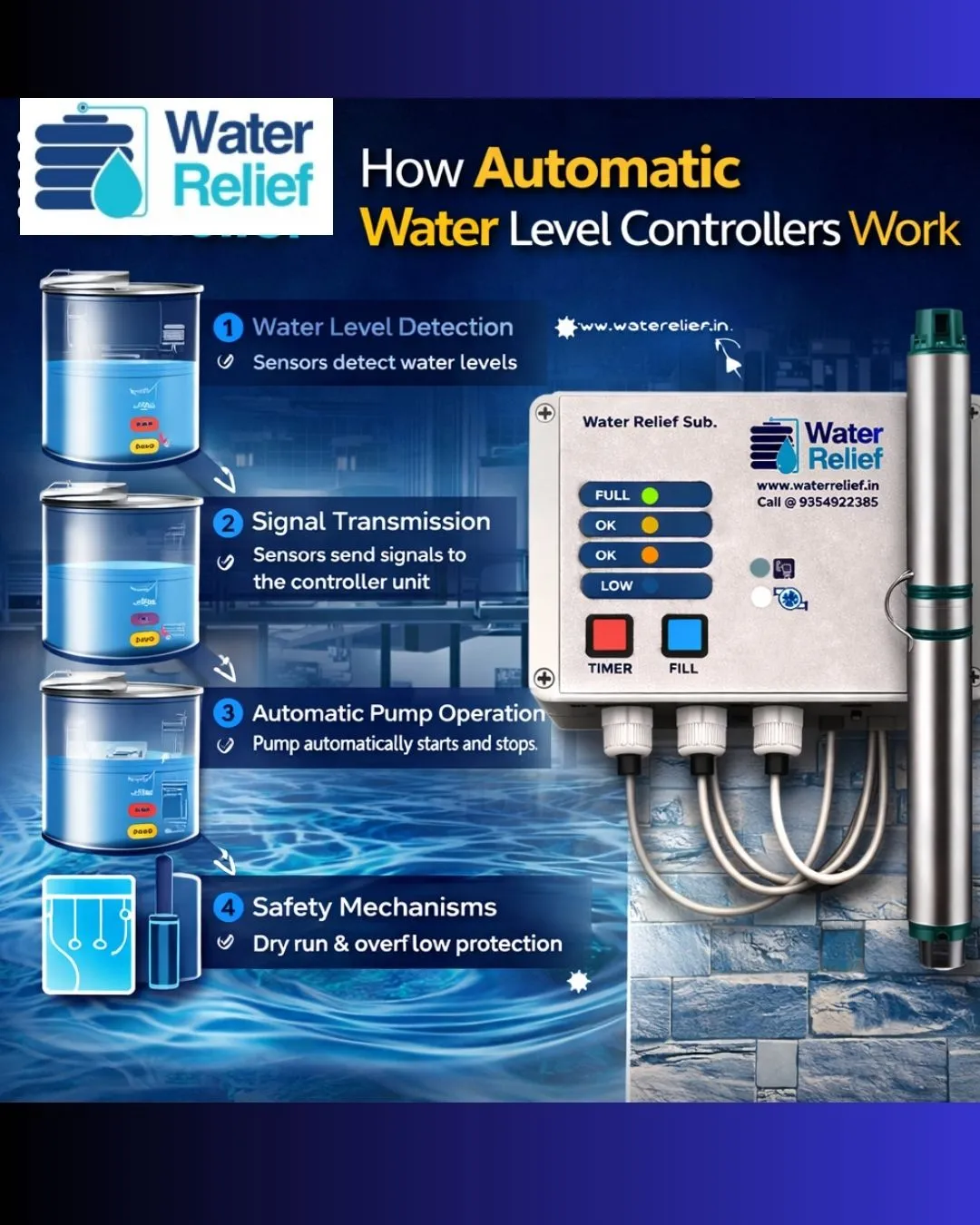
Water management is a critical part of modern homes, offices, and commercial buildings. One of the most common problems people face is water tank overflow or pumps running unnecessarily. These issues not only waste water but also increase electricity bills and damage equipment.
This is where automatic systems come into play. Understanding how automatic water level controllers work can help you make smarter decisions for your property. Water Relief offers advanced solutions that make water management simple, efficient, and reliable.
What Is an Automatic Water Level Controller?
An automatic water level controller is a smart device that monitors water levels in tanks and controls the operation of water pumps automatically.
Instead of manually turning the pump ON or OFF, the system does everything for you.
Main Purpose:
- maintain optimal water levels
- prevent overflow
- avoid dry running
- reduce electricity consumption
Water Relief provides a highly efficient system designed for both residential and commercial use.
How Automatic Water Level Controllers Work
The working of an automatic water level controller is based on sensors and control mechanisms.
Step-by-Step Working Process:
1. Water Level Detection
Sensors are installed inside the water tank to detect different water levels such as:
- low level
- mid level
- full level
These sensors continuously monitor the water level.
2. Signal Transmission
When the water level changes, sensors send signals to the controller unit.
For example:
- if water level is low → signal to start pump
- if tank is full → signal to stop pump
3. Automatic Pump Operation
Based on the signals received:
- the pump turns ON when water is low
- the pump turns OFF when the tank is full
This entire process happens automatically without manual intervention.
4. Safety Mechanisms
Modern controllers include safety features like:
- dry run protection (prevents pump damage)
- overflow prevention
- voltage protection
Water Relief integrates all these features into one smart system.
Types of Sensors Used
Automatic water level controllers use different types of sensors:
1. Conductive Sensors
Detect water using electrical conductivity.
2. Float Sensors
Use floating mechanisms to measure water level.
3. Ultrasonic Sensors (Advanced)
Use sound waves to measure water levels accurately.
Each type has its own advantages depending on the application.
Key Components of a Water Level Controller
1. Sensor Unit
Detects water levels inside the tank.
2. Control Panel
Processes signals and controls pump operation.
3. Pump Connection
Connects the controller to the water pump.
4. Power Supply
Provides energy to operate the system.
Why Choose Water Relief Automatic Controller
Water Relief offers a powerful and reliable system designed for Indian conditions.
Key Features:
- automatic motor ON/OFF
- overflow prevention
- dry run protection
- water level indicators
- easy installation
Benefits of Automatic Water Level Controllers
1. Prevents Water Overflow
Stops the pump when the tank is full, saving water.
2. Saves Electricity
Reduces unnecessary pump usage.
3. Protects Pump Motor
Prevents damage caused by dry running or overuse.
4. Reduces Manual Effort
No need to monitor water tanks constantly.
5. Ensures Continuous Water Supply
Maintains proper water levels at all times.
6. Improves System Efficiency
Optimizes overall water management.
Where Can You Use Automatic Water Level Controllers?
Water Relief systems are suitable for:
- homes
- apartments
- offices
- hotels
- hospitals
- factories
They support:
- overhead tanks
- underground tanks
- borewell systems
- municipal supply
Common Problems Solved by Water Relief
1. Water Tank Overflow
Automatically stops the pump at full level.
2. Pump Running Continuously
Prevents unnecessary motor operation.
3. Dry Running
Protects pump when water source is empty.
4. Manual Errors
Eliminates human mistakes in water management.
Why Manual Systems Are Outdated
Manual systems depend on human monitoring.
This leads to:
- delayed pump operation
- water wastage
- higher electricity bills
Automation ensures accuracy and efficiency.
Water Relief replaces outdated systems with smart solutions.
How Water Relief Improves Daily Life
1. Convenience
No need to manually operate pumps.
2. Efficiency
Optimizes water and electricity usage.
3. Reliability
Ensures uninterrupted water supply.
4. Cost Savings
Reduces maintenance and electricity costs.
Long-Term Advantages
Installing an automatic water level controller provides:
- long-term cost savings
- reduced water wastage
- extended pump life
- improved efficiency
Smart Water Management for the Future
With increasing water scarcity and rising electricity costs, automation is becoming essential.
Smart systems help:
- conserve water
- reduce operational costs
- improve sustainability
Water Relief provides future-ready solutions for smart water management.
Final Thoughts
Understanding how automatic water level controllers work helps you realize the importance of upgrading to smart systems.
Manual methods are no longer efficient in today’s fast-paced world.
Water Relief offers a reliable, efficient, and smart solution that prevents overflow, protects pumps, saves electricity, and ensures continuous water supply.
If you want a hassle-free water management system, Water Relief is the perfect choice.
About author

Related posts
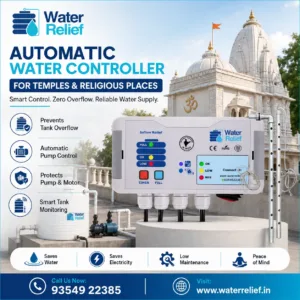
Automatic Water Controller for Temples is a useful solution for temples, gurudwaras, mosques, churches, ashrams and other religious places. These places need water every day.... Continue reading
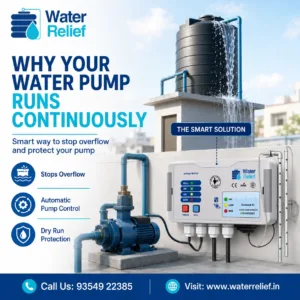
If your Water Pump Runs Continuously, you should not ignore it. A pump that keeps running can waste water, increase electricity bills and damage the... Continue reading
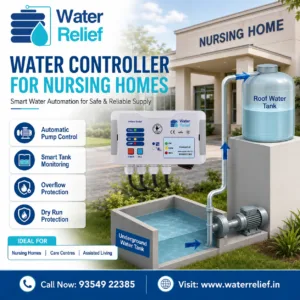
Water Controller for Nursing Homes is an important solution for healthcare spaces that need a steady water supply every day. Nursing homes use water for... Continue reading
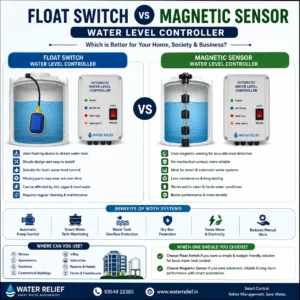
Float Switch vs Magnetic Sensor is an important comparison for anyone planning to install a water level controller. Homes, societies, apartments, offices and commercial buildings... Continue reading
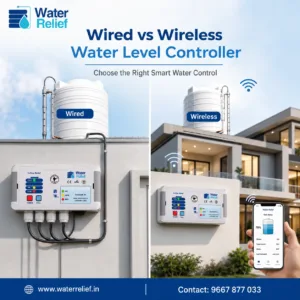
Wired vs Wireless Water Level Controller is an important topic for homes, apartments, societies and commercial buildings. Every property needs proper water control. If the... Continue reading

Add comment